If you’ve ever stared at a lab bench full of glossy, finicky scientific equipment and wondered which piece makes the impossible feel routine, let me introduce you to the workhorse that powers almost every breakthrough in genetics, from diagnosing a rare pediatric disease to tracing the origin of a ancient woolly mammoth bone: the DNA sequence analyzer. As someone who’s spent the last 12 years building, troubleshooting, and refining these machines for labs around the world, I’ve seen firsthand how misunderstood this tool can be—especially for teams new to genomics, or even seasoned researchers who’ve only used one as a “black box” that spits out numbers. Let’s pull back the curtain, no jargon overload, no overly technical rabbit holes, just the real story of what these machines do, why they matter, and why our team designs them to work as hard as your lab does. Analyzer
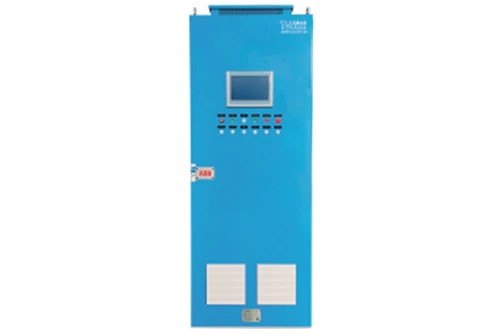
First, let’s get the basics straight. A DNA sequence analyzer is an instrument that reads the exact order of the four chemical building blocks—called bases, abbreviated A, T, C, G—that make up a strand of DNA. That sequence is the genetic instruction book for every living thing; a single change in that order can explain everything from why someone metabolizes a drug differently to why a crop is drought-resistant. But here’s the thing: you can’t just pluck a strand of DNA out of a sample (whether that’s a swab of a patient’s cheek, a drop of river water, or a chunk of 50,000-year-old bone) and drop it into a machine to read it. DNA is tiny, only nanometers long, and a single human cell has about two meters of DNA crammed inside its nucleus. No machine can grab that whole strand and read it all at once—so sequence analyzers work with pieces, called fragments, and string their readings together to build the full genome.
Wait, let’s break down how that actually works, because it’s not magic, it’s clever engineering. For the most common type of analyzers we build—used for Sanger sequencing, the gold standard for small, targeted DNA pieces like individual genes or viral genomes—here’s the day-to-day workflow our machines make straightforward. First, a researcher prepares their sample: they copy the specific DNA segment they want to read thousands of times, so there’s enough material to work with, and mark each fragment with a unique fluorescent tag. The A bases get one color, T another, C a third, G a fourth—easy to tell apart, even in a tiny reaction well.
Next, that mix of tagged fragments goes into the analyzer. Our machines use capillary electrophoresis, a process where the fragments are pulled through a tiny, gel-filled tube (a capillary) by an electric current. Smaller fragments move faster through the gel, so they line up in order: the first fragment is the shortest, with the fluorescent tag on its end matching the last base of the DNA sequence we’re reading, the next is a little longer, and so on. As each fragment passes a tiny detector at the end of the capillary, the machine reads its color, converts that color back to a base (A/T/C/G), and builds a raw sequence file. That file still needs a little cleaning up—weeding out noise from faint fluorescent signals that might be a misread, aligning overlapping fragments to make sure the sequence is accurate—but our machines are calibrated to cut that cleanup time by 30% compared to older models, because we know researchers don’t have time to re-run samples or sift through messy data.
For newer labs working on larger projects, like sequencing an entire bacterial genome or a cancer patient’s tumor DNA, there’s another type of analyzer we design, built for next-generation sequencing (NGS). These work a little differently: instead of reading one fragment at a time, they sequence millions of fragments in parallel, which is why they can sequence an entire human genome in a day, rather than the weeks Sanger analyzers used to take a decade ago. But here’s the part no one talks about when people hype NGS as “faster”: the analyzer doesn’t just sequence, it handles huge, messy data. Our NGS analyzers are built with on-board processing power to do basic quality checks in real time, so you don’t have to wait hours to find out your sample was contaminated or the reaction failed. That’s a big deal for core labs that run hundreds of samples a week—you don’t want to waste a day waiting for results only to realize you have to re-run all of them.
Over the years, I’ve talked to so many researchers who treat their DNA sequence analyzer like a vending machine: put in samples, get out sequence, and ignore it until it breaks. But that’s a mistake. The best analyzers aren’t just boxes that run reactions—they’re tools that adapt to your lab’s needs. Let me give you an example: last year, I worked with a small academic lab in rural Ohio that studies rare bee species to track how pesticides affect their DNA. Their old analyzer was big, required a dedicated technician to run it, and only worked with one type of sample prep kit. We worked with them to build a custom analyzer that could run both Sanger and small NGS runs, fit on their existing lab bench (since they had no extra space for a large instrument), and work with the low-cost, custom sample prep kits they’d developed to process tiny bee tissue samples (some of their samples were less than a milligram of tissue—you can’t get much smaller than that). Six months later, their lead researcher emailed to say that machine had cut their sequencing costs by 40% and let them process twice as many samples a week, which meant they could publish three papers on bee conservation that they would’ve missed otherwise. That’s the impact these machines have—they don’t just produce data, they make research possible for teams that don’t have big budgets or massive core facility backing.
Of course, no tool is perfect, and DNA sequence analyzers have come a long way in solving old problems, but they still have limitations. They can’t read through repetitive DNA sequences, like the parts that make up 10% of the human genome, and very old or degraded DNA (like samples from 100,000-year-old fossils) is still tricky to sequence accurately. That’s why our team is always tweaking our machines: we’re working on improved fluorescent tags that are brighter and more stable, so degraded samples give cleaner reads, and better alignment software that can handle tricky repetitive sequences without slowing down processing. We also prioritize ease of use for teams that don’t have dedicated genomics experts—our machines have a touchscreen interface with pre-loaded protocols for common tasks, so a grad student who’s never run a sequencing reaction can process a sample correctly on their first try.

If you’re in the market for a DNA sequence analyzer, here’s what to ask before you buy, because not all machines are made the same. First, ask about throughput: how many samples can it run in a day, and what’s the quality of those reads? A machine that runs 96 samples but only gives you accurate reads for 60 of them is a waste of time and money. Second, ask about flexibility: can it work with the sample prep kits you already use, or will you have to buy new, more expensive kits just for the machine? Third, ask about support: what happens if the machine breaks at 8 PM on a Friday, right before a big grant deadline? Our team offers 24/7 on-call support, and we have spare parts stocked at regional warehouses across the US and Europe, so we can get a technician to your lab within 48 hours of a request—no waiting a week for a part to ship from overseas.
Disinfectant Generator At the end of the day, a DNA sequence analyzer is more than a lab instrument—it’s a partner in your research. Whether you’re a clinician diagnosing a rare genetic disease, a crop scientist developing drought-resistant corn, or a conservation biologist tracking endangered species, the accuracy, speed, and reliability of your analyzer will make or break your work. Our team has spent years refining these tools to fit real lab needs, not just technical specs, and we’re always here to help you find the right solution for your specific project. If you’re ready to talk through your sequencing needs, whether you’re replacing an old machine, expanding your core lab’s capacity, or trying a new type of sequencing for the first time, reach out to our team to connect on a consultation. We’d love to hear about your work and help you find an analyzer that grows with you.
References
- Shendure J, Ji H. Next-generation DNA sequencing. Nat Biotechnol. 2008;26(10):1135-1145.
- Sanger F, Nicklen S, Coulson AR. DNA sequencing with chain-terminating inhibitors. Proc Natl Acad Sci U S A. 1977;74(12):5463-5467.
- Metzker ML. Sequencing technologies—the next generation. Nat Rev Genet. 2010;11(1):31-46.
- Fréal K, et al. Challenges and solutions for sequencing ancient and degraded DNA. Philos Trans R Soc Lond B Biol Sci. 2020;375(1795):20190545.
Zhejiang Tianxingjian Water Co., Ltd.
With over 20 years’ experience, we are one of the most professional analyzer manufacturers in China. We warmly welcome you to buy durable analyzer in stock here and get quotation from our factory. All customized equipment are with high quality and low price.
Address: No.128 Anhe Road, Zhongxing Village, Zhangzhen Town, Shangyu District, Shaoxing City, Zhejiang Province, P.R. China
E-mail: chen.f@tjian.com
WebSite: https://www.tianjianshuiwu.com/
