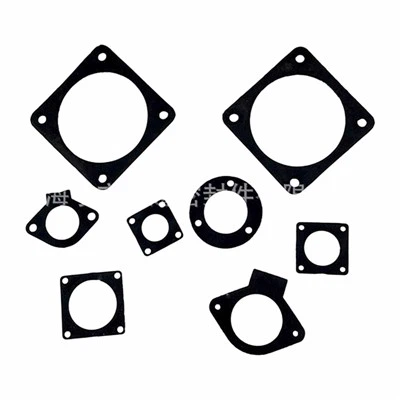
As a supplier of rubber gaskets, I often encounter customers who are confused about the differences between rubber gaskets and silicone gaskets. In this blog post, I’ll delve into the characteristics, applications, and performance of these two types of gaskets to help you make an informed decision when choosing the right gasket for your needs. Rubber Gasket
Material Composition
Rubber gaskets are typically made from natural rubber or synthetic rubber compounds. Natural rubber is derived from the latex of rubber trees, offering excellent elasticity and resilience. Synthetic rubbers, such as neoprene, nitrile, and EPDM, are engineered to have specific properties like oil resistance, chemical resistance, and weather resistance.
On the other hand, silicone gaskets are made from silicone rubber, a polymer composed of silicon, oxygen, carbon, and hydrogen. Silicone rubber has a unique molecular structure that gives it exceptional heat resistance, low-temperature flexibility, and electrical insulation properties.
Physical Properties
Hardness
Rubber gaskets can have a wide range of hardness levels, typically measured on the Shore A scale. Hardness can vary from very soft (around 10 Shore A) to very hard (up to 90 Shore A). The hardness of a rubber gasket affects its sealing performance, compression set, and durability. Softer gaskets are more flexible and can conform to irregular surfaces, while harder gaskets provide better resistance to deformation and extrusion.
Silicone gaskets also come in different hardness levels, but they generally have a softer feel compared to rubber gaskets. Silicone gaskets typically range from 20 to 80 Shore A. The softer nature of silicone gaskets allows them to create a tight seal even under low compression forces.
Tensile Strength
Tensile strength is the maximum stress a material can withstand before breaking. Rubber gaskets generally have higher tensile strength compared to silicone gaskets. This makes rubber gaskets more suitable for applications where the gasket may be subjected to high mechanical stress or pressure.
Silicone gaskets, while having lower tensile strength, offer good tear resistance and flexibility. They can stretch and return to their original shape without losing their sealing properties, making them ideal for applications where the gasket needs to flex or bend.
Compression Set
Compression set is the ability of a gasket to recover its original shape after being compressed. A low compression set indicates that the gasket will maintain its sealing performance over time. Rubber gaskets can have varying compression set values depending on the type of rubber and the manufacturing process. Some rubber compounds, such as EPDM, have excellent compression set resistance, making them suitable for long-term sealing applications.
Silicone gaskets are known for their low compression set, especially at high temperatures. This means that silicone gaskets can maintain their sealing performance even after being subjected to prolonged compression, making them ideal for applications where a tight seal is required over an extended period.
Chemical Resistance
Oil and Fuel Resistance
Rubber gaskets, particularly nitrile rubber gaskets, are well-known for their excellent oil and fuel resistance. Nitrile rubber can withstand exposure to a wide range of oils, fuels, and solvents without swelling or deteriorating. This makes nitrile rubber gaskets a popular choice for automotive and industrial applications where contact with oil and fuel is common.
Silicone gaskets, on the other hand, have limited oil and fuel resistance. While they can withstand some exposure to mild oils and fuels, they are not suitable for applications where continuous contact with oil or fuel is required.
Chemical Resistance
Rubber gaskets can be formulated to have varying degrees of chemical resistance depending on the type of rubber and the additives used. For example, EPDM rubber gaskets have excellent resistance to acids, alkalis, and weathering, making them suitable for outdoor and chemical processing applications.
Silicone gaskets also have good chemical resistance, especially to water, steam, and some chemicals. However, they may not be as resistant to certain chemicals as rubber gaskets. For example, silicone gaskets can be affected by some solvents and strong acids.
Temperature Resistance
High-Temperature Resistance
Silicone gaskets are renowned for their exceptional high-temperature resistance. They can withstand temperatures ranging from -60°C to 230°C (-76°F to 446°F) without losing their physical properties or sealing performance. This makes silicone gaskets ideal for applications where high temperatures are involved, such as in automotive engines, industrial ovens, and aerospace components.
Rubber gaskets have a lower high-temperature resistance compared to silicone gaskets. Different types of rubber have different temperature limits, but most rubber gaskets can withstand temperatures up to 120°C to 150°C (248°F to 302°F). However, some specialty rubber compounds, such as fluorocarbon rubber, can withstand higher temperatures.
Low-Temperature Resistance
Silicone gaskets also have excellent low-temperature flexibility. They can remain flexible and maintain their sealing performance at temperatures as low as -60°C (-76°F). This makes silicone gaskets suitable for applications in cold environments, such as in refrigeration systems and outdoor equipment.
Rubber gaskets can have varying degrees of low-temperature flexibility depending on the type of rubber. Some rubber compounds, such as neoprene and EPDM, have good low-temperature flexibility and can withstand temperatures down to -40°C (-40°F). However, other rubber compounds may become brittle and lose their sealing performance at low temperatures.
Applications
Rubber Gaskets
- Automotive Industry: Rubber gaskets are widely used in the automotive industry for applications such as engine seals, oil pan gaskets, and transmission seals. Nitrile rubber gaskets are commonly used in fuel systems due to their excellent oil and fuel resistance.
- Industrial Machinery: Rubber gaskets are used in industrial machinery for sealing applications such as pumps, valves, and compressors. EPDM rubber gaskets are often used in outdoor applications due to their weather resistance.
- Plumbing and HVAC: Rubber gaskets are used in plumbing and HVAC systems for sealing pipes, fittings, and valves. Neoprene rubber gaskets are commonly used in water and sewage systems due to their resistance to water and chemicals.
Silicone Gaskets
- Food and Beverage Industry: Silicone gaskets are widely used in the food and beverage industry due to their non-toxicity, heat resistance, and flexibility. They are used in applications such as food processing equipment, beverage dispensers, and kitchen appliances.
- Medical Industry: Silicone gaskets are used in the medical industry for applications such as medical devices, pharmaceutical equipment, and surgical instruments. They are known for their biocompatibility and resistance to sterilization processes.
- Electronics Industry: Silicone gaskets are used in the electronics industry for sealing electronic enclosures, protecting against dust, moisture, and electromagnetic interference. They are also used in high-temperature applications such as computer processors and power supplies.
Cost
In general, rubber gaskets are more cost-effective compared to silicone gaskets. The cost of rubber gaskets depends on the type of rubber, the manufacturing process, and the quantity ordered. Synthetic rubber compounds, such as nitrile and EPDM, are relatively inexpensive and widely available.
Silicone gaskets are more expensive due to the higher cost of the raw materials and the manufacturing process. However, the long-term performance and durability of silicone gaskets can offset the initial cost in some applications.
Conclusion
In conclusion, both rubber gaskets and silicone gaskets have their own unique properties and applications. Rubber gaskets are known for their high tensile strength, oil and fuel resistance, and cost-effectiveness. They are suitable for applications where mechanical stress, chemical exposure, and cost are important factors.

Silicone gaskets, on the other hand, are known for their exceptional heat resistance, low-temperature flexibility, and biocompatibility. They are ideal for applications where high temperatures, cold environments, and food or medical contact are involved.
Gasket When choosing between a rubber gasket and a silicone gasket, it’s important to consider the specific requirements of your application, such as temperature, chemical exposure, sealing performance, and cost. If you need help selecting the right gasket for your needs, feel free to contact me for a consultation. I’m here to provide you with the best solutions and high-quality rubber gaskets.
References
- ASTM International. (2023). Standard Terminology Relating to Rubber. ASTM D1566-23.
- Rubber Manufacturers Association. (2023). Rubber Product Design Manual.
- Silicone Engineering. (2023). Silicone Rubber Properties and Applications.
Haining Chaoyue Seals Co., Ltd.
As one of the most professional rubber gasket manufacturers and suppliers in China, we offer a wide range of products with superior quality. Please feel free to wholesale high quality rubber gasket made in China here from our factory. Also, custom service is available.
Address: Building 9, 158 Lianhong Road, Yuanhua Town, Jiaxing, Zhejiang, China.
E-mail: chaoyue@cyseals.com
WebSite: https://www.hncyseal.com/
