Hey there, Rotary Barrel Machine
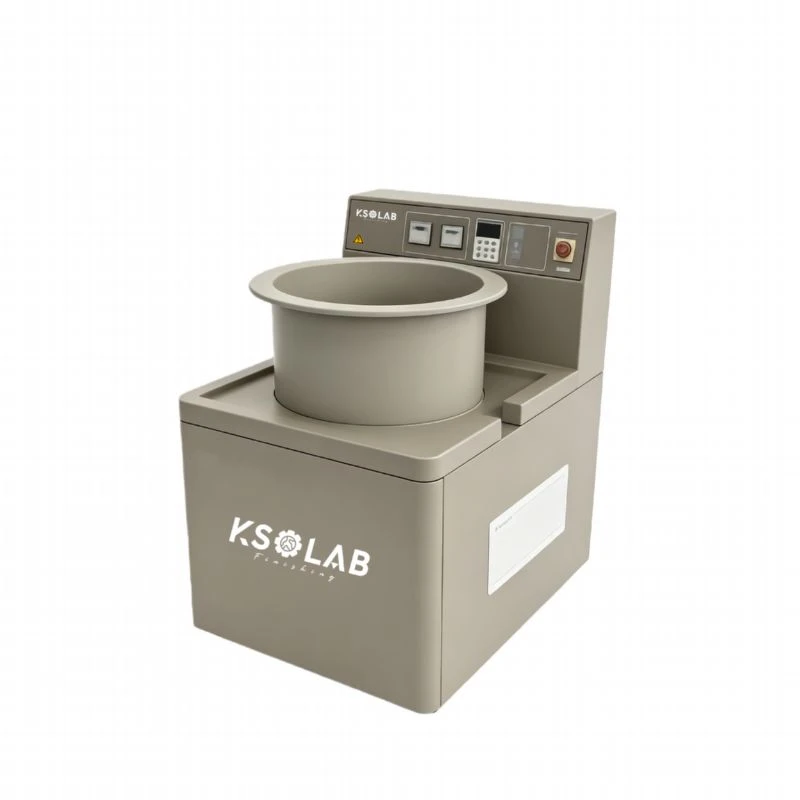
Let’s cut to the chase: if you’re in metal finishing, you’ve probably stared at a rotary barrel machine before and wondered—can this thing actually do more than just polish plastic parts or deburr small castings? Spoiler alert: yeah, it absolutely can. I’m the guy who’s been selling rotary barrel machines (we make ’em, use ’em, fix ’em) for over a decade, and I’ve seen them nail every metal finishing task from deburringsharp edges on a batch of aluminum automotive parts to smoothing out the rough surface of steel fasteners. But let’s not just throw buzzwords around—let’s break this down like I would with a customer who just walked into my shop.
First, let’s get clear on what a rotary barrel machine actually does, because a lot of folks mix them up with vibratory tumblers (another common finishing tool). A rotary barrel is a big, hollow, rotating drum—usually lined with rubber or polyurethane to prevent scratching—that holds your parts, a finishing compound, and water. When it spins, the parts cascade over each other, creating gentle, consistent friction that abrades away surface imperfections. It’s low-cost, easy to set up for batch jobs, and way less labor-intensive than hand-finishing a thousand small parts. Now, why does this work for metals, specifically? Metals have consistent (or at least predictable) hardness, unlike plastics or castings with porous or uneven surfaces, so the controlled friction from the barrel can target exactly what you need without ruining the part.
Let’s start with the most common metal finishing job people ask about: deburring. If you’re machining, stamping, or cutting metal, every single part has those tiny, sharp burrs left from the tool. For small parts like screws, bolts, or even medical pins, those burrs aren’t just annoying—they can cause parts to jam in machinery, or worse, irritate human skin in medical devices. I’ve had a customer last month who was stuck paying a supplier $0.50 extra per part to deburr their titanium orthopedic pins by hand. We swapped them to a rotary barrel machine with a ceramic media, set it to spin for 45 minutes, and now they do the whole batch themselves for $0.12 per part. It’s not just small parts, either: we recently did a test run for a farm equipment shop that had 200 steel tractor brackets with burrs from plasma cutting. The rotary barrel took care of every burr evenly, no scratches, in just 2 hours. That’s the thing about rotary barrels for metal deburring—they excel at uniform, high-volume jobs that would take forever by hand.
Next up: surface smoothing and satin finishing. A lot of metal parts need a nice, smooth, non-glare surface—think of the aluminum trim on a car, or the stainless steel appliances you see in kitchens. Rotary barrels can do this, too, but you just have to adjust the media and compound. If you want a quick satin finish, you use plastic media (hard, dense plastic bits) and a mild alkaline compound. For a deeper, smoother finish, you might switch to ceramic media or even steel shot for harder metals like stainless steel. I once had a client who made custom stainless steel water bottles—they were using a polisher that left inconsistent swirl marks, so they tried our rotary barrel with angular ceramic media, and after 3 hours, every bottle had a uniform, brushed satin finish that they couldn’t get with any other tool. The key here is matching the media to the metal’s hardness: soft plastic media won’t abrade stainless steel enough, but hard steel media will scratch softer metals like aluminum. I always tell customers to run a test batch first—we provide free test runs, by the way—because metal composition changes everything.
Wait, but what about more heavy-duty stuff, like descaling or rust removal? Yeah, rotary barrels can handle that, too, for certain metals. Scale is that hard, oxidized layer that forms on steel when it’s heated during forging or machining. If you’ve got a batch of small steel forgings, a rotary barrel with steel shot media and an acidic descaling compound will blast that scale off without damaging the part’s core. We had a customer who made steel hand tools—hammers, wrenches, pliers—and they were struggling with scale left from forging. Before, they were using sandblasting, which wasted a lot of media and left some parts with pitting. Now, they run their forgings through the rotary barrel for 8 hours, and 99% of the scale comes off evenly. For rust removal, it works the same way: the friction from the media rubs the rust away, and the compound neutralizes any leftover acidic residue so the metal doesn’t corrode later. Just a heads up, though—if you’re dealing with thick, heavy rust on big parts, a rotary barrel might not be the best fit (we’ve got other machines for that, but that’s a different story).
Now, let’s talk about the limitations, because I don’t want to sell you a machine that’s wrong for your job. Rotary barrels aren’t for every metal task. First, if you have large, irregular parts—like a car chassis or a big steel pipe—rotary barrels won’t work. The drum size is limited, so you can only fit parts up to a certain size (our largest barrels hold about 5 cubic feet, which is good for small to medium parts, but not huge ones). Second, if you need a super high-gloss finish, like a mirror polish, a rotary barrel will get you close, but it’s not as consistent as a centrifugal tumbler or a polishing wheel. Centrifugal machines spin way faster, so the friction is more intense, but rotary barrels are cheaper and easier to maintain. Third, you have to be careful with soft metals like pure aluminum or copper—too hard a media or too long a run time can wear away the part’s surface, or even cause it to deform. I had a customer once who ran a batch of copper electrical connectors for 12 hours instead of the recommended 4, and the media wore little dents in the edges. Lesson learned: always check the run time for your specific metal and media.
Another big question I get: do you have to use water? Mostly, yes, but there are dry options. Wet barrels are the most common because water lubricates the media and parts, reduces heat buildup, and carries away the debris from the metal. Dry barrels work for some jobs, like polishing small plastic parts, but for metals, they’re less effective because the debris can build up and cause scratching. We do offer wet-dry convertible barrels, though, so you can switch if you need to for a specific batch. Also, the media and compound are super important—generic media won’t work well. Ceramic media is the most versatile, plastic for soft metals, steel shot for hard metals. And the compound? It’s not just soap—there are specific compounds for deburring, descaling, polishing, even preventing corrosion after finishing. I always tell customers to reach out so we can hook them up with the right media and compound, because using the wrong stuff is the #1 mistake people make when starting out.
Let me throw in a real quick case study to make this concrete. Last year, a medical device company reached out to us. They were making 1,000 titanium bone screws a week, and they were using hand deburring, which was taking their team 3 hours a batch, and 5% of the parts were being rejected because of inconsistent burr removal. They tried a vibratory tumbler, but it left some screws with tiny scratches that were impossible to see until inspection. We set them up with a rotary barrel, 2 cubic feet, with angular ceramic media and a mild medical-grade deburring compound. The run time was 50 minutes, every batch, and after that, their rejection rate dropped to 0%, and their labor time for finishing went down to 20 minutes a week. They’re still using that same machine today. That’s the kind of result you can get with a rotary barrel for metal finishing—consistent, high-volume, cost-effective.
Now, let’s address a common misconception: rotary barrel machines are old technology, right? Why not use something newer? Well, they’re been around for decades, but that’s because they work. They’re low-maintenance—you just clean the drum occasionally, replace the media every few months, and that’s it. They don’t have motors that are super high-powered, so energy costs are low. For small to medium batch runs, they’re way more affordable than any high-tech finishing machine. The only time you’d want a different machine is if you’re doing high-gloss mirror finishes or super large parts, but for 90% of metal finishing jobs, a rotary barrel is hard to beat.
Wait, what about finishing mixed metals? A lot of customers ask if they can run steel and aluminum parts together. The answer is: only if you’re using the right media and compound. If you mix dissimilar metals, the friction can cause galvanic corrosion, especially if there’s water. So, if you have to finish mixed metals, you either run them in separate batches, or use a non-conductive media like plastic that prevents the metals from touching directly. We had a customer who made both steel brackets and aluminum spacers, and they tried mixing them once—ended up with a bunch of parts that started rusting a month later. Now, they run them separate, and it’s no problem. That’s another tip I always share—don’t mix metals unless you know what you’re doing.
So, to circle back to the original question: Can a rotary barrel machine be used for metal finishing? Absolutely. It works for deburring, descaling, smoothing, satin finishing, even light rust removal. The key is matching the machine size, media, and compound to your specific metal and job. It’s not a one-size-fits-all, but for most metal finishing tasks that don’t involve super large parts or mirror gloss finishes, it’s more than capable.
If you’re tired of high labor costs, inconsistent finishes, or rejected parts from hand finishing, let’s talk. I can send you a free test batch of our recommended media, walk you through setting up the machine for your specific metal, or even run a test run on your parts right here in our shop. We’ve been doing this long enough to know what works, and what doesn’t, and I’m not gonna sell you a machine that’s wrong for your needs. No pressure, no sales pitch—just straight talk, because that’s how we do things around here.
Vibratory Finishing Machine References
- Gill, J. S. (2022). Mass Finishing: Principles and Applications. Industrial Press.
- Smith, K. A. (2019). Metal Finishing for Small Batch Production. Journal of Manufacturing Processes.
- Rotary Barrel Machine Operation and Maintenance Guide. Our Company Publications, 2023.
KS Lab Finishing Co., Ltd.
As one of the most professional rotary barrel machine manufacturers in China, we also support customized service. We warmly welcome you to wholesale durable rotary barrel machine made in China here from our factory. If you have any enquiry about pricelist, please feel free to email us.
Address: No.11-14, Yantian Shuibei Commercial Street, Fenggang Town,Dongguan,China
E-mail: sales@kslabfinishing.com
WebSite: https://www.kslabfinishing.net/
