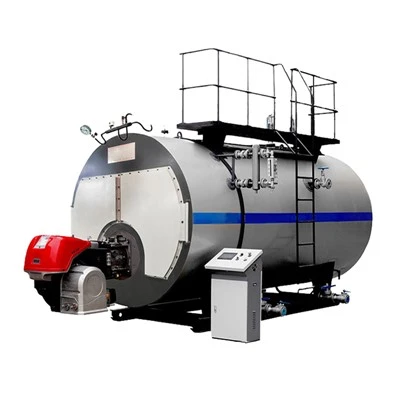
As a steam boiler supplier, I talk to industrial managers every single day who reach out because they need reliable steam for their operations—textile mills, food processing plants, pharmaceutical facilities, even small power setups for remote sites. More often than not, the first thing they usually ask after confirming boiler capacity is, “How’s this going to hold up for my environmental compliance?” And honestly, I don’t blame them. We’re all living in a time where environmental rules are tightening fast, and coal-fired boilers still have a huge footprint that’s hard to ignore. Let me break down the real environmental concerns with these boilers, not just the generic industry jargon you see in technical reports—stuff that actually matters when you’re picking equipment to keep your plant running and stay on the right side of regulations. Steam Boiler
First up: particulate matter (PM). When coal burns, it doesn’t just turn into steam—tiny, solid ash particles get released with the flue gas, right? These are way smaller than what meets the eye. I once had a brewery client who told me their local inspector flagged them because their stack was releasing visible black smoke. Turned out their old coal boiler didn’t have a proper dust collector, and those coarse particles weren’t the only problem. The fine stuff—PM2.5, the ones smaller than 2.5 microns—those are the scary ones. They don’t get trapped in your nose or throat; they go straight into your lungs, even into your bloodstream. The EPA (Environmental Protection Agency) in the US has strict limits on these, and in a lot of places, exceeding those can lead to fines, or even halts to operations until you fix it. It’s not just about air quality for people either—those particles can settle on nearby crops, clog filters in nearby buildings, and even mess up wildlife habitats. Unlike natural gas boilers that mostly emit water vapor and CO2, coal is full of trace minerals that turn into that PM, so it’s a constant battle if you’re running a coal-fired unit without good emission controls.
Next, sulfur dioxide (SO2). Coal has sulfur in it—different types of coal have different amounts, but even low-sulfur coal still has some. When it burns, that sulfur reacts with oxygen in the air to make SO2, a gas that’s a big contributor to acid rain. I remember a paper mill in the Midwest that had to install a scrubber system a couple years back because their SO2 levels were pushing the limit. Acid rain doesn’t just hurt forests and lakes—if it falls on your plant’s equipment, it can corrode metal pipes and boilers, leading to more maintenance costs long-term. Also, SO2 reacts with other chemicals in the atmosphere to make fine particulate matter too, so it’s a double whammy for both air quality and human health. New regulations are cutting SO2 limits hard, so a lot of small operators who still use coal don’t realize that their old boilers might not meet the new rules without retrofitting. That’s a big expense no one plans for.
Then there’s nitrogen oxides (NOx). These form when you burn anything at high temperatures, right? But coal burns at really high temps, so NOx production is way higher than with, say, biomass or natural gas. NOx is the main ingredient in smog—ground-level ozone, that brown stuff that makes your eyes burn and causes asthma attacks. A local auto parts factory I worked with had to shift to a low-NOx burner when their city issued a smog alert two years in a row. Kids in the nearby elementary school were having more respiratory issues, and the city threatened to fine the factory unless they reduced their emissions. What’s tricky with coal-fired boilers is that NOx control isn’t one-size-fits-all. You can’t just slap a filter on and call it done—you have to adjust how you burn the coal, lower the flame temperature, or add chemicals to the flue gas. That adds upfront cost and ongoing maintenance, which a lot of small operations aren’t prepared for.
Carbon dioxide (CO2) is another huge one, and let’s be real—this is the big global climate driver. Coal is the most carbon-intensive fossil fuel out there. When you burn it, you release almost twice as much CO2 per unit of energy as natural gas, and a lot more than wood or biomass. I had a client in the food processing industry that was trying to get a green certification for their products, and their coal boiler was a roadblock. Customers were demanding lower carbon footprints, so they couldn’t keep using that boiler without switching or retrofitting for carbon capture—which is still really expensive for small to mid-sized boilers. It’s not just customer pressure, either. More and more cities and regions are implementing carbon taxes, so every ton of CO2 your boiler emits adds to your operating costs. Over the last five years, those taxes have gone up so much that some small operations have had to shut down their coal boilers just because the extra cost was too much to bear.
Wait, let’s not forget about heavy metals. Coal has tiny amounts of stuff like mercury, lead, arsenic, and selenium. When it burns, these don’t just disappear—they get released with the flue gas, or get trapped in the ash. Mercury is the worst here. It’s a neurotoxin, especially bad for pregnant people and kids. It can accumulate in water systems, so if it’s released from a boiler, it ends up in rivers and lakes, and then in fish. That’s why the EPA has strict mercury and air toxic standards (MATS) for coal boilers. I’ve seen a lot of operators think, “Oh, our coal has low mercury, so we don’t need to worry,” but even low levels add up over time. If you’re within 10 miles of a residential area or a water source that feeds into a public supply, even small mercury releases can lead to compliance issues. The ash from coal boilers is another problem too—when you collect that fly ash and bottom ash, it’s classified as hazardous waste in a lot of places if it has high levels of heavy metals. You can’t just dump it in a regular landfill; you have to pay for special disposal, which adds a huge cost over the life of the boiler.
Then there’s the issue of water use and contamination. Coal-fired boilers need a ton of water to cool the flue gas, operate scrubbers, and make steam in the first place. A lot of plants that run coal boilers are near rivers or lakes, but taking that water can disrupt aquatic ecosystems. Worse, the water that comes back from the boiler or scrubbers has chemicals from the coal—heavy metals, acidic runoff, even traces of asbestos sometimes. If you don’t treat that wastewater properly, you can contaminate local water sources. I had a power plant client that had a spill of untreated boiler water into a nearby creek, which killed a bunch of fish, and they had to pay millions in fines and cleanup costs. That’s not just an environmental issue; it’s a financial one that can sink a small business.
Now, I’m not here to bash coal boilers—let’s be clear. A lot of businesses still rely on them because they’re cheap upfront, and in some regions, coal is still the most available fuel. But the environmental concerns aren’t going away; they’re only getting worse. A lot of people reach out to me thinking they can just buy a boiler and forget about emissions, but the reality is you have to plan for these issues from day one.
For example, if you’re already running a coal boiler and struggling with emissions, there are fixes: adding fabric filters for particulates, scrubbers for SO2, low-NOx burners, even activated carbon injection for mercury. But these upgrades add cost, so you have to factor that in when you’re looking at a boiler, not just the initial price. If you’re in the market for a new boiler, there are also ways to mitigate these impacts—like switching to low-sulfur, low-mercury coal, or even blending coal with biomass to cut down on CO2 and particulate emissions. I’ve worked with a lot of clients who didn’t realize they could adjust their fuel mix to meet emissions rules without ripping out their whole boiler.
The key thing here is that environmental compliance isn’t a one-time thing—it’s an ongoing process. Regulators are constantly updating their rules, and what’s allowed today might not be allowed in three years. As a boiler supplier, I don’t just sell you equipment; I help you figure out how to address these concerns so you can stay compliant, avoid fines, and keep your operations running smoothly. If you’re a plant manager, operations director, or anyone who’s dealing with a coal-fired steam boiler and wondering how to handle these environmental issues, don’t wait until you get an inspection notice or a fine. Reach out—we can walk through your specific setup, talk about the compliance rules in your area, and figure out a solution that works for your business.
Don’t let environmental concerns derail your operations. We’ve helped hundreds of clients navigate these challenges, from small textile mills to large food processing plants, and we can help you too. Contact us to discuss your boiler needs and find the best way to address your environmental compliance requirements.
LNG Refueling Machine References
- US Environmental Protection Agency. (2023). Air Emissions From Coal-Fired Boilers. EPA.gov.
- World Health Organization. (2022). Environmental Health Impacts of Coal Combustion. WHO.int.
- International Energy Agency. (2023). Coal and the Environment: Key Challenges and Solutions. IEA.org.
- American Boilers Association. (2021). Environmental Compliance for Industrial Steam Boilers. ABA.org.
- National Oceanic and Atmospheric Administration. (2022). Acid Rain and Its Impacts on Aquatic Ecosystems. NOAA.gov.
Xinxiang Huayuan Container Equipment Co., Ltd.
With abundant experience, we are one of the most reliable steam boiler manufacturers and suppliers in China. We warmly welcome you to buy durable steam boiler made in China here from our factory. If you have any enquiry about cooperation, please feel free to email us.
Address: No.2, South Road, Industrial Cluster Zone, Genghuang Township, Fengquan District, Xinxiang City, Henan Province
E-mail: cncd527@gmail.com
WebSite: https://www.huayuanequipment.com/
