If you’ve ever spent time on a production floor, you know how much industrial gripping systems keep operations on track. Whether it’s a automotive assembly line moving engine blocks, a food packaging plant placing pre-made boxes, or a electronics factory handling delicate circuit boards, grippers are the unsung middlemen that get parts where they need to be, when they need to be there. As a supplier of these systems, I’ve spent thousands of hours walking alongside plant managers, maintenance technicians, and automation engineers, listening to the same frustrations over and over again. What seems like a simple “hold and move” component almost always hides a host of small, persistent problems that add up to big downtime, lost production, and higher maintenance costs. Today, I want to break down the most common issues I see, how they sneak up even on well-maintained systems, and what’s actually happening when they go wrong. Gripping Systems
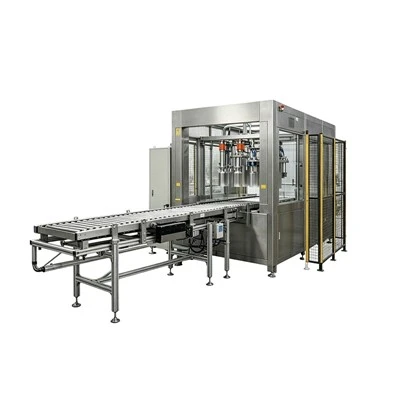
First, there’s the problem of inconsistent grip force—arguably the most pervasive gripper issue I encounter. This isn’t just a case of a gripper that drops a part once or twice; it’s the kind of inconsistency that makes technicians check a hundred times before every cycle, or causes a line to stop because a 500-gram metal bracket shifts just enough to miss its mount. A lot of people assume gripper force is a set-it-and-forget-it number, but that’s rarely the truth. Over time, the components that control that force wear out: pneumatic seals lose their elasticity, so air pressure drops unevenly from one cycle to the next, or mechanical linkages develop tiny play that changes how much force is applied at the jaw. Even environmental factors play a role. On a hot, humid food processing floor, moisture can seep into pneumatic lines, leading to pressure fluctuations. In a cold automotive stamping plant, metal parts contract, so a gripper calibrated for room temperature might apply too little force to hold a cold, warped sheet metal panel. I’ve seen one high-volume appliance manufacturer spend six weeks troubleshooting a line where fridge door handles kept slipping during assembly—turns out, their original grippers were calibrated for 20°C, but the factory’s heating had broken, and average floor temp dropped to 10°C, cutting effective grip force by nearly 15%. What made this worse was that no one had documented the force calibration specs in their maintenance logs, so technicians had no way to tell the system was misaligned until we dug into the data.
Next, premature wear on jaw surfaces is a problem that often flies under the radar until it causes a major failure. Gripper jaws are designed with custom contact surfaces—sometimes rubber, sometimes nylon, sometimes textured metal—to grip specific parts without slipping or leaving marks. But over thousands of cycles, those surfaces degrade in ways that aren’t always obvious. For example, a rubber coating that’s supposed to grip smooth glass might develop micro-tears from repeated contact with sharp edges on the parts, even if the operator never notices a single slip. Once those tears form, the grip becomes uneven, and small particles of rubber break off, getting stuck between the jaw and the part, making slippage worse. For manufacturers handling fragile components like medical devices, this is a nightmare: a tiny rubber flake left on a surgical implant can lead to product recalls. Another common wear issue is from wrong jaw material selection. A plant that uses generic metal jaws for gripping delicate plastic injection mold parts might scratch the surface, requiring rework or scrapped units, while rubber jaws used on oily metal parts wear out 3x faster because the oil breaks down the rubber’s binder. I worked with a aerospace component maker last year that was replacing gripper jaws every three months, simply because they picked a standard rubber material instead of an oil-resistant compound suited to their machining shop. The fix cost half as much as the constant replacements, and downtime dropped by 40%.
Then there’s the challenge of poor compatibility between grippers and the parts being handled—specifically, mismatched shape and friction requirements. A lot of times, engineers pick a gripper based solely on load capacity, without stopping to consider how the part’s geometry will interact with the jaws. For example, a cylindrical part like a hydraulic hose might work with standard parallel jaws, but if the jaws are too flat, they only contact the hose at two points, leading to rolling during movement. That might sound minor, but in a packaging line, a rolling hose can get caught on a conveyor edge, stopping the entire line. Even worse are irregularly shaped parts, like cast engine blocks or custom plumbing fixtures, where no two units are exactly the same. Grippers designed for rigid, uniform parts struggle here; they can’t adjust their contact points to fit small variances in the part, leading to inconsistent grip. I’ve seen a construction equipment factory test three different grippers for their engine blocks, all rated for the same 50kg load, but only one worked consistently—because it used adaptive, self-adjusting jaws that could conform to the block’s rough, uneven surfaces, instead of rigid, fixed jaws. This isn’t just a problem with new systems, either: retrofitting an existing line to handle a new part often causes this exact issue, because plant teams reuse old grippers that aren’t suited to the new component.
Another underdiscussed problem is maintenance neglect, which amplifies all the other issues I’ve mentioned. Industrial facilities are busy places, and gripper systems are often low on the priority list for routine checks—until they break. A technician might check a robot arm’s motors daily, but only look at grippers when a part drops. Over time, small issues go unaddressed: a loose jaw bolt that’s slowly reducing grip force, a clogged pneumatic filter that’s lowering pressure, or a jaw surface that has built up residue from manufacturing processes. I once visited a automotive plant where a line had an average of one unplanned shutdown per week, all caused by gripper issues. When we reviewed their maintenance logs, we found they changed their robot arm’s oil every 500 hours, but they didn’t grease their grippers’ linkages until 5,000 hours—by which point the linkages were so stiff, the gripper couldn’t close fast enough, leading to missed cycles. The fix here was simple: adding gripper-specific maintenance checks to their weekly routine, like inspecting jaw surfaces, testing grip force, and cleaning pneumatic lines, and within a month, unplanned shutdowns dropped to zero. This is a common pattern—teams focus on the “big” parts of the automation system, and the gripper, even though it’s the part that actually makes contact with the product, gets overlooked.
Electrical and control system incompatibility is another problem that’s become more common as factories adopt smart, Industry 4.0 systems. Modern grippers often have sensors to measure grip force, monitor jaw position, and even alert technicians when a part is wearing out. But if the gripper’s controller isn’t properly integrated with the line’s PLC (programmable logic controller), those sensors send bad data, or don’t communicate at all. For example, a gripper with a force sensor might be sending a signal that it’s applying too much force to a part, but the PLC isn’t set up to read that signal, so it keeps running, leading to damaged products. I worked with a electronics manufacturer that had installed new smart grippers on their phone assembly line, but within two weeks, they were sending false “part slipping” alerts, causing the line to stop multiple times a day. It turned out the gripper’s communication protocol wasn’t compatible with their existing PLC—they’d bought a gripper that worked for other plants, but didn’t take time to check the integration specs with their own system. This problem isn’t just for new installations, either. As factories upgrade their automation software, older grippers that used to work fine can start to cause issues because they don’t play nice with the new control systems.
Beyond these technical issues, there’s the hidden cost of downtime that gripper problems cause. A single unplanned shutdown on a high-volume line can cost tens of thousands of dollars in lost production, not to mention the cost of overtime to catch up, or penalties for delayed shipments. I’ve seen a food processing plant lose $20,000 in one day because their gripper system failed, and they couldn’t package frozen pizzas before the end of their shift, leading to spoiled product. The worst part is that most of these problems are preventable—with the right calibration, regular maintenance, proper jaw material selection, and careful integration with control systems.
At the end of the day, industrial gripping systems are a lot like a pair of work gloves: you don’t notice them until they fail, but they’re essential to getting the job done right. Whether you’re dealing with inconsistent force, worn jaw surfaces, compatibility issues, or maintenance oversights, the key is to treat grippers as a critical component, not an afterthought. If you’re tired of gripper-related downtime, or you’re designing a new line and want to avoid these common pitfalls, reach out to talk through your needs.
Spray Coating Machines References
- Industrial Automation Association. (2022). Common Failure Modes of End-of-Arm Tooling (EOAT) in Manufacturing. Automation Standards Report.
- Smith, J. (2021). Wear Analysis of Gripper Jaw Surfaces for Light Industrial Components. Journal of Manufacturing Technology, 45(2), 112-128.
- Lee, S., & Park, H. (2023). Compatibility Challenges in Smart Gripper Systems for Industry 4.0 Applications. International Journal of Industrial Engineering, 30(4), 295-307.
- Thompson, R. (2020). Maintenance Best Practices for End Effectors in High-Volume Production Lines. Plant Maintenance Journal, 18(3), 45-52.
Wanyuan Yuanwei Automation Equipment Co., Ltd.
With abundant experience, we are one of the most professional gripping systems manufacturers and suppliers in China. Please feel free to wholesale high quality gripping systems for sale here from our factory. Good service and punctual delivery are available.
Address: No.392, Wanbai Road, Baisha Town, Wanyuan City, Dazhou City, Sichuan Province
E-mail: wanyuanyuanwei@outlook.com
WebSite: https://www.yuanweiautomation.com/
