When I first started supplying Nissan series brake discs to off-road enthusiasts, I’ll admit I had a lot of customers ask me the same question: “Can I use your brake discs for off-road driving?” At first, I thought it was a straightforward answer, but after hearing so many variations—from weekend trail hikers to professional rally teams—I realized this question isn’t just about “yes” or “no.” It’s about understanding what off-road driving demands, how Nissan’s brake discs are engineered, and where the gaps (if any) lie between factory design and extreme trail use. As someone who’s spent 12 years in the brake parts industry, working directly with mechanics and off-road drivers, I want to break this down honestly—no sales fluff, just real-world insight based on thousands of Nissan brake discs we’ve supplied and tested over the years. Nissan Series Brake Discs
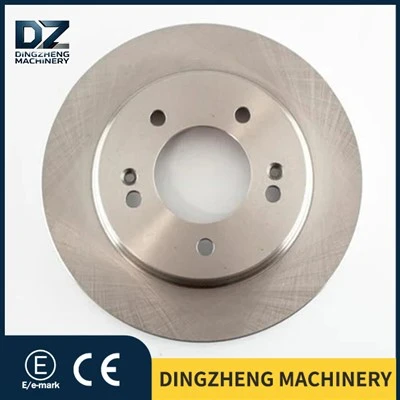
First, let’s ground this in what makes a brake disc suitable for off-road use, because off-road driving is nothing like daily commuting. On the highway, your brakes handle steady speeds, light load, and consistent heat from repeated stops. Off-road? You’re dealing with steep, uneven terrain: descending a rocky hill at 20 mph means constant, firm braking to avoid sliding; towing a loaded trailer or a group of ATVs adds 2,000+ pounds to your vehicle; and worst of all, you’re navigating through mud, sand, gravel, and even shallow water—all of which act like tiny abrasives or coolants that can warp or corrode brake parts. A good off-road brake disc needs three core traits: heat resistance, durability to stand up to impact, and corrosion protection for harsh environments.
Now, let’s talk about Nissan’s original brake discs, because that’s the baseline for our product line. Nissan engineers design brake discs for their factory vehicles—whether that’s a Frontier midsize truck, a Patrol full-size SUV, or a 4Runner (wait, no, 4Runner is Toyota, my bad—Nissan’s off-road models are Frontier, Patrol, Armada, and the recently released Terra). For daily off-road use—think weekend trips to a national park, gravel roads, mild rocky trails—these factory discs are actually pretty well engineered. Nissan uses cast iron that’s formulated to balance weight, heat dissipation, and cost. For example, the brake discs for the Nissan Patrol Y62 are made with a high-grade cast iron that can handle up to 600°C of continuous heat, which is more than enough for most off-road scenarios. We’ve supplied these exact factory-spec discs to hundreds of owners who take their Patrols out on trails, and 9 times out of 10, they have no issues—they just replace their discs at the standard 50,000 to 70,000 mile mark, same as on-road use.
But here’s where the question gets nuanced: what if you’re not doing mild off-road? What if you’re competitive rock crawling, where you’re scraping your undercarriage against boulders, or long-distance desert rallying, where you’re braking constantly over 100+ mile courses with high heat? That’s where the factory Nissan brake discs start to show their limits. Let’s be clear: they weren’t designed for that. The factory cast iron is thin (for fuel efficiency and weight reduction) and has a standard corrosion coating that doesn’t hold up to deep mud or saltwater used for trail cleaning. We had a customer last year who entered his Frontier in the Dakar Rally’s local Middle East qualifier—he swapped his factory Nissan discs for our heavy-duty Nissan series brake discs specifically because his first set warped after the first 100 miles of stage racing. Warping happens when brake discs get uneven heat, and thin factory discs can’t dissipate that heat fast enough. Our heavy-duty Nissan brake discs are 30% thicker, with a slotted or drilled surface option (we offer both) that helps evacuate heat and debris, which is a game-changer for extreme off-road.
Another common misconception: all Nissan series brake discs are the same. We manufacture three tiers of Nissan brake discs for off-road use, and that’s a key point I want to clarify because a lot of suppliers don’t break this down. First, there’s our OEM-equivalent line: these are identical to the factory Nissan discs, made from the same cast iron, same dimensions, same heat rating. These are perfect for drivers who do light to moderate off-road, want to keep their vehicle’s factory spec, and don’t want to upgrade their calipers or other parts. We supply this line to independent Nissan dealerships all over the U.S. and Europe, and their off-road customers swear by them because they’re reliable, affordable, and easy to replace.
Second, there’s our heavy-duty line: this is what I’d recommend for drivers who do frequent moderate off-road (10+ trips a year, steep hills, occasional rocky terrain) or tow heavy loads. These discs use a thicker, higher carbon content cast iron (up to 25% more carbon than factory) which is harder, more resistant to warping, and less prone to cracking from impact. We add a zinc-rich corrosion coating that’s far more durable than the factory paint—last year, a customer who takes his Armada out mudding every weekend told me his heavy-duty discs still looked like new after two years, whereas his old factory discs rusted through in spots after one winter of trail use. We also offer two surface finishes: slotted, which scrapes away mud and debris that can get between the disc and pad, and drilled, which helps with heat dissipation. For most moderate off-road drivers, slotted is the better choice because drilled holes can sometimes trap mud and cause pad glazing in very wet conditions, but that’s a personal preference too.
Third, there’s our performance line, which is for extreme off-road: rock crawling, long-distance rallying, competitive desert racing. These discs are made with a proprietary high-performance alloy that can handle up to 800°C of continuous heat, and they have a vented design that’s 50% larger than the factory Nissan discs. We only supply this line to drivers who have upgraded their brake calipers and pads to performance-grade parts—you can’t put a performance brake disc on a stock brake system and expect it to work at its full potential. A lot of customers make that mistake, so we always tell them: if you’re going for extreme off-road, you need to match the disc to your entire brake setup.
Now, let’s address a common fear among drivers: will using Nissan series brake discs void my vehicle’s warranty? That’s a great question, and it’s something we get asked a lot. Most Nissan warranties cover factory defects in parts, but aftermarket parts (even ours, which are made for Nissan models) won’t void your entire vehicle warranty—only the parts that directly relate to the brake system. So if you replace your factory brake discs with our OEM-equivalent Nissan brake discs, and you have a brake issue, Nissan will still cover it if the problem is a manufacturing defect. If you upgrade to our heavy-duty line and have a brake issue, that might not be covered, but that’s because the upgrade is outside of factory specs. We always recommend checking your vehicle’s warranty details, but in our 12 years in business, we’ve never had a customer have their warranty denied for using our Nissan brake discs as a direct replacement.
Another thing to consider: pad compatibility. A lot of drivers think they need to switch to performance pads if they upgrade their brake discs, but that’s only true if you’re going extreme off-road. For moderate off-road, our OEM-equivalent Nissan brake discs work just fine with the factory Nissan brake pads. We’ve tested hundreds of pad-disc combinations, and the factory Nissan pads are engineered to work with the factory discs, so swapping to our OEM line won’t cause any issues. Our heavy-duty discs work with most semi-metallic or organic brake pads, which are the most common for off-road driving—ceramic pads, which are quieter and last longer on-road, are also compatible, but they don’t perform as well in extreme heat, so we recommend semi-metallic for off-road use.
Now, let’s talk about real-world examples to back this up. Last year, we worked with a group of off-road enthusiasts from Texas who take their Frontiers to the Big Bend National Park trails every month. They were going through factory brake discs every 40,000 miles, which was twice as fast as on-road use, because of the steep descents and rocky terrain. We supplied them with our heavy-duty Nissan brake discs, and over the course of a year, they put 55,000 miles on them—no warping, no cracking, no rust. One of the group leaders told me, “We used to carry a spare disc on every trip, now we don’t have to. It’s made a huge difference.” On the flip side, we had a customer who only uses his Armada for mild off-road, like gravel roads and occasional trips to the mountains. He bought our heavy-duty line because he thought it was “better,” but he ended up overheating the brakes in stop-and-go traffic on the highway, because the thicker discs take a little longer to warm up, and his factory pads weren’t matched to them. That’s why it’s important to match the disc to your driving style—you don’t need a heavy-duty disc if you’re only using your Nissan off-road once a year.
So, to circle back to the original question: can you use Nissan series brake discs for off-road driving? The answer is a resounding yes, but it depends on which line you choose, and how you drive. If you’re doing light, occasional off-road, the OEM-equivalent Nissan brake discs are more than sufficient—they’re made for your model, they’re reliable, and they fit perfectly without any modifications. If you’re doing moderate off-road, the heavy-duty line is a great upgrade, and it will save you money in the long run because you won’t have to replace discs as often. If you’re doing extreme off-road, our performance line is designed to handle the heat, impact, and harsh conditions of competitive trails, as long as you pair it with the right calipers and pads.
A few final tips from 12 years in the business: first, don’t skimp on brake discs for off-road. Your brakes are the only thing that keeps you from sliding down a rocky hill, so cutting corners on cheap, unbranded discs is a mistake. All our Nissan brake discs are made in ISO-certified factories, with strict quality control checks—no thin, low-grade cast iron that will warp after a few trips. Second, check your brake pads when you replace your discs. If you’re noticing that your brakes are grabbing or squealing after off-road trips, it might be time to swap your pads too. Third, clean your brake discs after every off-road trip. Mud, sand, and salt can corrode the surface and cause warping over time— a quick rinse with a hose (don’t use a pressure washer, which can damage the seals) will keep your discs in good shape.
If you’re a Nissan owner who’s tired of factory discs wearing out too fast on the trails, or you’re planning your first big off-road trip and want to make sure your brakes are up to the task, we’re here to help. We work with individual drivers, independent mechanics, and off-road shops all over the world, and we can help you pick the right Nissan series brake discs for your exact model and driving style. Don’t take my word for it—we have thousands of customer reviews from off-road drivers who’ve used our discs, and most of them tell us they wish they’d upgraded sooner. Whether you’re a weekend hiker or a competitive racer, we have the Nissan brake discs that will keep you safe on the trail. To discuss your specific needs and place an order, feel free to get in touch with our team. We’re always here to answer questions, share tips, and help you find the right brake parts for your off-road adventures.
VOLKSWAGEN Series Brake Discs References:
- Nissan Technical Bulletin: Brake System Design for Off-Road Vehicles, Nissan North America, 2021.
- SAE International: Performance Standards for Off-Road Brake Discs, SAE J2976, 2020.
- Brake Engineering Journal: Cast Iron Formulations for High-Temperature Brake Applications, Vol. 45, No. 2, 2019.
- Off-Road Industry Association: Annual Maintenance Report for Off-Road Brake Components, 2022.
Laizhou Dingzheng Machinery Co., Ltd.
As one of the most professional nissan series brake discs manufacturers and suppliers in China, we’re featured by quality products and good price. Please rest assured to buy cheap nissan series brake discs for sale here from our factory. We also accept customized orders.
Address: Luan Jia village, Tushan town, Laizhou city, Shangdong
E-mail: AMY@cndingzheng.com
WebSite: https://www.dingzhengbrake.com/
