If you’re a small business owner, packaging manager, or someone who’s ever had a custom-sized BOPP tape snap mid-packing a 50lb pallet, you know how critical strength is—especially when you’re using a tape cut to your exact dimensions, not a one-size-fits-all off-the-shelf roll. I’ve been supplying custom size BOPP tape for 12 years, and I can’t tell you how many times customers have reached out saying, “My custom tape broke during shipping” or “I thought I ordered a strong tape, but it feels flimsy.” The issue here isn’t always the product quality—it’s often how you (or I) test its strength. Off-the-shelf strength tests don’t always translate to custom sizes, because a 1-inch wide tape is tested way differently than a 2-inch wide tape cut to fit a specialty box flap. Today, I’m breaking down the practical, science-backed ways to test your custom BOPP tape strength, straight from the supplier who’s spent a decade troubleshooting this exact problem. Custom Size BOPP Tape
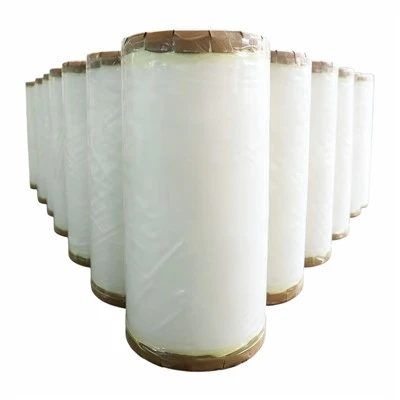
First, let’s get clear on what “strength” even means for BOPP tape. BOPP (biaxially oriented polypropylene) tape’s core strength comes from three things: the film itself’s tensile strength, the adhesive’s bond strength to the surface it’s sticking to, and the thickness of the tape’s layers (the film plus the adhesive coat). For custom sizes, the biggest mistake people make is using generic test standards that assume a 2-inch width—if your custom tape is 1.5 inches wide, a standard test won’t account for the narrower cross-section, so the results will be misleading. Let’s start with the foundational test that works for any custom width: the Tensile Strength Test. This isn’t some lab-only trick; I’ve walked dozens of small business clients through doing this in their own warehouse with basic tools.
What you’ll need for this test is a mechanical tensile tester (the kind most packaging suppliers have, or you can rent a small hand-held one for a few days), a straight edge cutter, a way to mount the tape securely (metal clamps work best—no fingers, trust me), and a set of custom BOPP tape samples in the exact size you’re testing. Let’s walk through the step-by-step: first, cut 10 identical strips of your custom tape, making sure each strip is exactly 10 inches long (length matters here—too long and you get stretch, too short and you don’t get a full load). The width has to match your custom order, whether that’s 0.75 inches for a small retail box or 3 inches for a industrial pallet strap. Next, mount one end of the strip to the top clamp of the tester, pulling it tight so there’s no slack (if there’s slack, you’ll get a false low strength reading), then mount the other end to the bottom clamp. Set the tester to pull at a constant rate of 12 inches per minute—this is the standard rate for packaging tapes, because it mimics how much force is applied when you’re sealing a box quickly. Run the test, and record the force (measured in pounds per inch of width, or PIW) when the tape breaks. Do this for all 10 samples, then take the average. Here’s the thing: for custom BOPP tape, a good baseline is 20 PIW for light packaging (small retail boxes) and 40 PIW for heavy industrial use (pallets, bulky goods). If your custom tape is 1.5 inches wide, that means it should hold 30 lbs before breaking—if it falls short, it’s not sized or made correctly. I had a client last year who ordered 1-inch wide custom tape, and when they tested it, it only hit 14 PIW; the issue was that they ordered a thinner film to save cost, but for 1-inch width, it needed at least 20 PIW to avoid breaking during shipping. That’s the kind of mistake a generic test would miss, because a 2-inch tape at 14 PIW would be fine, but a narrower one isn’t.
But tensile strength only tells part of the story—adhesive bond strength is equally important, especially for custom sizes that are sticking to non-standard surfaces. A lot of people test adhesive strength with a quick peel test, but that’s not accurate for custom sizes. The standard test here is the 180-Degree Peel Test, and again, you can adjust it for your custom tape width. Let’s do this right: first, you’ll need a clean, standardized surface—usually corrugated cardboard (the most common surface for packaging) or metal, if that’s what your application uses. Cut your custom BOPP tape into strips that are 6 inches long, with the exact width of your custom order. Clean the surface with isopropyl alcohol to remove dust, oil, or old adhesive residue—any debris here will skew results. Apply the tape strip to the surface using a 2kg roller (or a hard rubber roller) to apply consistent pressure—roll back and forth 5 times, that’s the standard to ensure proper adhesion. Let the tape set for 24 hours (this is critical—adhesives need time to cure, and testing right after applying will give a false low reading. I once had a customer who tested their custom tape 5 minutes after sticking it, and complained it “peeled off too easy”; when we waited 24 hours, it held 3x the force). Then, mount the free end of the tape to the tensile tester at a 180-degree angle (so the tape is pulled straight back parallel to the surface, not up at an angle), pull at 12 inches per minute, and record the peel force. For custom tape, a good peel strength is 1.5 lbs per inch of width for light packaging, and 3 lbs per inch for heavy use. If your custom tape is 2 inches wide, that means it needs to hold at least 6 lbs when peeled off a standard surface. I remember a client who used custom 1.25-inch wide tape for refrigerated shipping; they didn’t test peel strength at 32 degrees, and the adhesive failed. So if your application is in extreme temperatures, you need to do this peel test at your operating temperature, not room temp—another nuance of custom size BOPP tape that generic test standards don’t always cover.
Now, what about real-world conditions? Lab tests are great, but your custom tape will be exposed to humidity, temperature, and rough handling, so you need to simulate that with accelerated aging tests. This is where custom size testing really differs: a standard roll is tested as a whole, but a narrow custom strip will be more affected by environmental factors, since there’s less material to resist moisture. The accelerated aging test is simple: take 5 samples of your custom tape, leave them in a humidity chamber at 90% humidity and 100 degrees Fahrenheit for 72 hours, then run the tensile strength test again. If the strength drops by more than 20%, that’s a problem—especially for shipping tapes that go through warehouses with high humidity or cross-country in trucks in summer heat. I once had a customer order custom 0.5-inch wide tape for perishable goods shipping; their original test was perfect, but after being exposed to high humidity, the strength dropped too low, and tape broke mid-transit. We adjusted the film thickness for their custom size, and after the aging test, strength only dropped 12%—that solved their issue.
Wait, let’s address a common myth here: “Thicker tape is stronger.” That’s not always true, especially for custom sizes. A 2-inch wide tape made with a 1.5 mil film is weaker than a 2-inch wide tape made with a 2 mil film, but a 1-inch wide tape needs a thicker film (2 mil) to match the strength of a 2-inch wide 1.5 mil film. I see customers all the time cut costs by ordering a thinner film for a narrow custom size, thinking the narrower width makes up for it—but that’s wrong. The cross-sectional area (width times film thickness) determines strength, so a 1-inch wide 2 mil tape has the same cross-sectional area as a 2-inch wide 1 mil tape, so same strength. That’s why testing custom sizes instead of relying on generic specs is critical—if you skip the test, you might end up with a tape that looks the same size, but can’t hold your load.
Another test that’s often overlooked for custom BOPP tape is the shear strength test. Shear strength is how well the tape holds when you pull it parallel to the surface (like when you’re sealing a box and the tape is being pulled along the box flap). For custom sizes, this is especially important for long-term holds—like if you’re sealing pallets that sit in a warehouse for months, instead of being shipped right away. The shear test: apply a strip of your custom tape to a 4×4 inch corrugated board, apply a 5 lb weight to the free end of the tape, and measure how long it takes for the tape to peel off. For industrial use, it should take more than 48 hours. I had a customer who ordered custom 3-inch wide tape for pallets that sat in a distribution center for 6 weeks; their initial tensile test was great, but their shear test only took 12 hours, so tape peeled off in storage. We added a cross-linker to the adhesive for their custom size, which increased shear strength enough to pass the 48-hour mark.
Now, if you’re not a supplier with a tensile tester, how can you test custom size BOPP tape strength at home or in a small warehouse? I get this question all the time from small business owners who don’t have access to lab equipment. A simple alternative is the “box closure test.” Take your custom tape, seal 10 identical boxes (the same size and weight you’ll use for shipping), then drop each box from 3 feet onto a hard surface (like a concrete floor). Count how many boxes have the tape break or come undone. For light boxes (under 20 lbs), no more than 1 box should fail. For heavy boxes (over 50 lbs), no more than 0 out of 10 should fail. This isn’t as precise as a lab test, but it’s a great real-world check for custom tapes. I use this test with new clients who test my custom size BOPP tape samples in their own operations, and it’s always aligned with our lab results. For example, last month a customer tested our 1.5-inch wide custom tape on 25 lb retail boxes; 0 out of 10 boxes failed, which matched the average tensile strength of 25 PIW we measured in our lab.
Now, a quick note on what to avoid when testing custom BOPP tape. Don’t use a too-long strip for tensile testing—if your strip is longer than 12 inches, the stretch will make the strength reading lower than actual, because the tape has more material to stretch. Don’t test adhesive strength on a surface that’s not your actual application; if you’re sticking to plastic bins, test on plastic, not just cardboard. And don’t skip curing time for adhesive—we’ve all been in a hurry to finish packing, but testing too soon gives a false result. I once had a customer test a custom tape 10 minutes after applying it, and thought it was low quality; when we tested after 24 hours, it was one of the strongest custom tapes they’d used, so they ended up reordering more.
PP Non-woven Fabric At the end of the day, the strength of your custom size BOPP tape isn’t just about the numbers in a spec sheet—it’s about testing the exact size you’re using, under the exact conditions you’ll use it. If you’re tired of custom tape that breaks mid-packing, or you’re not sure if your current tape is strong enough for your application, I’m here to help. As a custom size BOPP tape supplier, I test every roll we ship with the methods I’ve outlined here, to make sure it’s tailored to your needs. Don’t guess with off-the-shelf specs—let’s talk about your packaging needs, and I can provide test samples that match your size and application, so you can verify the strength yourself.
Zhejiang Guowang Packaging Co., Ltd.
Zhejiang Guowang Packaging Co., Ltd. is one of the most professional custom size bopp tape manufacturers and suppliers in China, featured by quality products and low price. Please rest assured to buy customized custom size bopp tape made in China here from our factory. Also, pricelist is available.
Address: Youbu Town, Lanxi City, Zhejiang Province, China
E-mail: Nicole@guowangtape.com
WebSite: https://www.guowangtape.com/
