If you’ve ever tackled suspension work on your own or hired a shop to replace worn control arms, you’ve probably walked away wondering one thing: Do I really need an alignment after this? As a control arm supplier with over a decade of working with both DIY mechanics and professional automotive technicians, I get this question all the time—because it’s not just a casual concern; it’s the difference between a smooth, safe ride and premature tire wear, uneven handling, or even damage to other suspension parts. Let’s break this down, straight from someone who knows control arms inside and out. Control Arm

First, let’s start with what control arms do. These aren’t just metal bars that connect your wheels to the frame—they’re the backbone of your vehicle’s front (or sometimes rear) suspension. They control the movement of your wheels as you drive, handling bumps, turns, and straight-line stability. A typical control arm has two attachment points: one at the wheel hub (the ball joint or spindle connection) and one at the chassis (the frame or subframe, usually held in place by two or three bolts). Each of these attachment points is set to a specific angle when your car leaves the factory—camber, caster, and toe, the three core alignment measurements that keep your tires straight and your ride balanced.
Now, why would replacing control arms throw these angles off? Even if you remove the old control arm and bolt the new one in the same spot, there’s almost always a small shift. Old control arms often have worn bushings or ball joints that let them flex slightly over years of use. When you pull that worn part off, that flex is gone—so the new, stiff control arm seats a little differently than the old one did. Even if you try to line up the old bolts exactly, minor wear on the chassis bolt holes (a common issue on older vehicles) or slight differences in manufacturing tolerances between new control arms and the ones they’re replacing can shift angles by a fraction of a degree. For context, a 0.5-degree shift in toe can cause a tire to wear twice as fast as it should; a 1-degree shift in camber can lead to uneven tire pressure and reduced grip in turns.
But wait—some people will tell you, “I replaced my control arms and didn’t get an alignment, and my car drove fine.” That’s possible, but it’s not a guarantee. If you drove a vehicle with severely worn control arms for years, your suspension may have already shifted into a “compensated” position to handle that wear. When you swap in new control arms, you’re snapping that suspension back to its original factory design, which means your alignment is automatically off. A small sedan with minor wear might not feel the shift at first, but a truck or SUV that’s been carrying heavy loads, or a performance vehicle with tight suspension tolerances, will notice the difference quickly—maybe in the form of a pull to one side, a vibration at highway speeds, or tires wearing on the inside edge within a few thousand miles.
Let’s also talk about the hidden risks of skipping an alignment after control arm replacement. Even if your car feels fine today, the misalignment will cause unnecessary stress on other suspension components. Your tie rods, wheel bearings, and bushings all work together with the control arms to keep your wheels aligned. If your control arms are set at the wrong angle, those parts have to work harder to compensate, leading to premature wear. I’ve seen customers come to us with a new set of control arms they installed themselves, saying their tire wore out in 12,000 miles—when the real issue was they skipped the alignment, and the extra stress on the tie rods caused uneven tire scrub. For anyone who values their tires (let’s be real, they’re a big expense) or wants their vehicle to handle safely, that’s a risk you don’t have to take.
Now, let’s clear up a common misconception: not all control arm replacements are the same. If you’re replacing a lower control arm on a front-wheel-drive compact car, the alignment shift might be smaller than if you’re replacing a control arm on a heavy-duty pickup. If your control arms are uniball-style (no rubber bushings) vs. rubber-bushed, there’s also more flexibility in the latter—so the risk of shifting is lower, but still not zero. Even if you’re using a precision-machined control arm from a reputable supplier (like the ones we make here), the factory doesn’t account for the slight wear on your vehicle’s chassis, so a final alignment step is still necessary to get everything perfect.
Another angle: what if I use a “self-locating” control arm? Some newer vehicles have control arms designed to bolt into the exact factory position without needing adjustments, right? That reduces the risk, but it doesn’t eliminate it. Self-locating arms rely on the chassis being in good shape—if your vehicle has rusted or worn subframe mounts, even a self-locating arm will sit at a slight angle. I’ve worked with technicians who install self-locating control arms and still recommend an alignment as a final check, to make sure nothing’s off by even a tenth of a degree. It’s a cheap insurance policy compared to the cost of misalignment damage.
So, how do you know when you definitely need an alignment after control arm replacement? Let’s list the signs: if your vehicle pulls to one side when driving straight (no matter how many times you adjust your tire pressure), if your steering feels off-center when going straight, if you see uneven tire wear after a few miles, or if your technician notices a difference in the control arm’s mounting position during installation. Even if none of these signs are present, it’s still a good idea to get an alignment as a preventive measure. It only takes a few minutes at a shop, costs a fraction of what you paid for your control arms, and will ensure your vehicle is safe, efficient, and long-lasting.
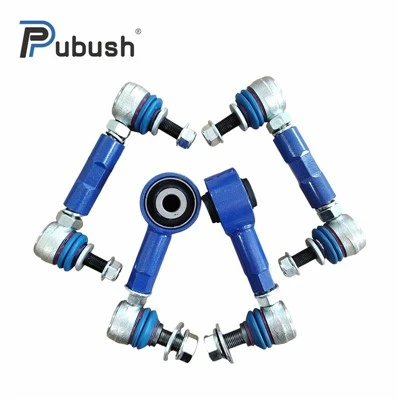
As a control arm supplier, I’ve seen firsthand how a small mistake like skipping an alignment can turn a good suspension repair into a headache. We design our control arms to match or exceed OEM specs, but we always tell our customers that installing a new control arm isn’t the end of the job—getting the alignment right is. It’s not just about following a rule; it’s about making sure the work you do is done correctly, so your car runs the way it should. If you’re working with a professional shop, they’ll almost certainly bring this up with you, because they know the risks too. If you’re a DIY mechanic working in your garage, don’t cut corners here—set aside the $50-$100 for an alignment, and you’ll save yourself a lot of trouble down the line.
Shock Absorber If you’re in the market for quality replacement control arms, we’re here to help. Whether you’re a DIY enthusiast, a small repair shop, or a large fleet manager, we can provide precision-engineered control arms designed for all makes and models, with the durability to last. Contact us to discuss your suspension needs, ask questions about installation tips, or request a quote for your next project.
References
- Automotive Service Association. (2022). Suspension Alignment Best Practices for Control Arm Replacement.
- National Highway Traffic Safety Administration. (2021). Vehicle Suspension System Component Maintenance Guidelines.
- SAE International. (2020). Tolerance Standards for Control Arm and Chassis Mounting.
- Tire Industry Association. (2023). Tire Wear Causes and Prevention After Suspension Repairs.
- Automotive News. (2022). Common Mistakes in Aftermarket Suspension Component Installation.
Xingtai Refined Machinery and Auto Accessory Co., Ltd.
Xingtai Refined Machinery and Auto Accessory Co., Ltd. is one of the most professional control arm manufacturers and suppliers in China, featured by quality products and low price. Please rest assured to wholesale durable control arm made in China here from our factory. Customized orders are welcome.
Address: XINGTAI REFINED MACHINERY AND AUTO ACCESSORY CO., LTD507 NORTH TAIHANG ROAD, XINGTAI CITY, HEBEI PROVINCE, PR.
E-mail: Lindy@pubush.com
WebSite: https://www.pubush-suspension.com/
