If you’ve ever spent 8+ hours a day huddled over a lab bench, squinting at a microscope slide, or typing data into a lab notebook, you know how quickly your back starts screaming. As a lab chair supplier, I talk to scientists, lab managers, and new grads all the time about the same basic complaint: “These chairs feel like torture after an hour.” Most of them default to the assumption that all adjustable lab chairs are made the same, that cranking a lever to tweak the seat height is enough to call it “back support.” But here’s the thing: adjustability for back support isn’t just a lever—it’s a system, and most off-the-shelf lab chairs fall short of building that system right. Lab Chair

Let’s start with the most common adjustable feature people learn first: seat height. It seems simple, right? Your feet should be flat on the floor, knees bent at a 90-degree angle, so your thighs are parallel to the bench. But here’s the mistake most people make: they stop there. Adjusting seat height without accounting for the next piece—seat depth—actually creates more back strain, not less. If your seat is too deep, the front edge digs into the back of your knees, forcing you to hunch forward to reach the bench, which rounds your upper back and puts 2-3x more pressure on your lumbar spine, per a 2022 study from the Journal of Occupational and Environmental Hygiene. For lab work, where you might shift between standing, sitting, and leaning over a fume hood (which is often lower than a standard lab bench), seat depth adjustability isn’t a nice-to-have—it’s non-negotiable. Taller scientists might need a deeper seat to support their hamstrings, while newer lab techs or folks with shorter torsos need a shallower seat to keep their back pressed against the chair’s backrest. Many entry-level lab chairs only offer a fixed seat depth or two preset notches, so you’re stuck either dangling your feet or scrunching your torso, both of which lead to mid-shift back pain.
Next, the backrest. This is where the biggest disconnect happens between what adjustable lab chairs offer and what lab workers actually need. Most adjustable backrests let you tilt the whole thing back, but that’s not “back support”—that’s a recline feature for an office break room chair. Lab work rarely involves leaning back; you’re usually leaning forward over the bench, twisting to grab a reagent bottle, or shifting between tasks. A static or only-tilting backrest doesn’t target the lumbar curve, the natural inward curve in your lower back that acts as a shock absorber. When that curve flattens, pressure on the intervertebral discs spikes, leading to chronic strain over months of work.
Good adjustable back support for lab chairs needs two key features, and a lot of suppliers cut corners on both. First, lumbar adjustability—not just the ability to tilt the back, but a way to move a lumbar support pad up, down, in, or out to match the indent of your lower back. A 2021 study from the International Journal of Industrial Ergonomics tested 12 adjustable office and lab chairs and found that chairs with adjustable lumbar support reduced perceived lower back pain by 42% in people who sat for 6+ hours daily. For labs, that’s critical because lab work often involves sudden, repetitive twisting motions—like reaching into a -80 freezer or adjusting a pipette at a precise angle— that put extra stress on the lower back. If your lumbar support is stuck in one spot, it’s either pushing too hard on your spine mid-twist or not pushing hard enough to fill the gap, leaving you slouched.
The second backrest feature many adjustable chairs lack is backrest height adjustability. Lab workers range from 5’0” to 6’4”, and a backrest that stops at 18 inches from the seat is useless for someone with a long torso, because it won’t reach the base of their neck to support the upper back and shoulders. Slouched shoulders from an unsupported upper back lead to tension headaches, which are common complaints among lab staff who spend hours at microscopes or computer workstations. I had a conversation last year with a PhD student in molecular biology who’d been using a $150 adjustable lab chair for two years; she told me she’d developed chronic neck pain so bad her advisor suggested physical therapy. When we tested our lab chairs with adjustable back height, she was able to raise the backrest to support her upper back, and her pain reduced by 70% in a 2-week trial. That’s not a sales pitch—that’s actual feedback from someone who spent 10 hours a day at a bench, not someone in a marketing meeting.
Then there’s the most underrated adjustable feature for lab chairs: armrest adjustability. I know, armrests seem like a luxury, but lab work involves a lot of static arm positions—holding a pipette, typing a lab journal manuscript, resting your arm on the bench while labeling samples. If armrests are too high, they force your shoulders up toward your ears, creating upper back tension. If they’re too low, you have to hunch to rest them, which again pulls your spine out of alignment. Adjustable armrests aren’t just height-adjustable anymore; good ones let you pivot them forward, back, or out to the side, so you can tuck them under the bench when you’re leaning over a fume hood or pull them out for typing. A 2023 study from the Journal of Safety Research found that adjustable armrests reduced upper back and shoulder strain in lab workers by 35%, because they eliminate the need to hold your arms in a fixed, tensed position for hours.
Wait, but here’s the fine print: not all adjustable features are created equal. I’ve seen some lab chair suppliers slap a dozen adjustable levers on a chair and call it “ergonomic,” but if those adjustments are hard to reach mid-shift, or the chair doesn’t lock into place securely, they’re useless. Lab work is messy—you’re wearing gloves, holding test tubes, reaching for reagents, so you need adjustments that you can make without standing up, taking off your gloves, or fumbling with small knobs. For example, our chairs have one lever for seat height that you can adjust with your elbow while sitting, a lumbar support knob that’s positioned at the base of the backrest so you can twist it with your wrist while holding a notebook, and armrests that slide with one hand. That’s not over-adjustability—that’s adjustability that works for a lab environment, not a corporate office where you have 10 minutes between meetings to tweak your chair.
I also want to talk about the myth that “adjustable” equals “one-size-fits-most.” I hear this all the time from lab managers who are looking to outfit 20 bench seats on a tight budget. They think buying a batch of the same adjustable chairs will work for everyone, but that’s not how human bodies work. I’ve had lab managers reach out to me after they bought a batch of budget adjustable chairs and reported that 30% of their staff still had back pain, because the chairs only adjusted to fit the average person, not the 5’2” lab tech or the 6’3” senior researcher. Good adjustable lab chairs should be able to adapt to a range of body types, not just a mid-sized adult. That’s why at my company, we prioritize adjustability that covers every part of the chair, not just the easy-to-adjust parts.
But let’s be honest: even the most adjustable chair won’t fix back pain if you don’t use the adjustments correctly. I work with a lot of new lab techs who crank the seat all the way up so they can rest their feet on the footrest (which most lab chairs don’t even have, by the way) and then wonder why their knees are hurting. Or they adjust the backrest all the way back and lean on it while working, which is not how it’s meant to be used. Back support isn’t just about the chair—it’s about using it as intended. For lab work, you want the seat height set so your feet are flat on the floor (or a footrest if you’re tall), seat depth adjusted so the back of your knees are 2-3 inches from the front edge of the seat, lumbar support positioned so it fits the curve of your lower back, and backrest height set so it supports the base of your neck and upper back. That setup distributes your weight evenly across the chair, taking pressure off your spine and muscles.
Now, I don’t want to bash cheap lab chairs—many small labs or new research groups just don’t have the budget for high-end adjustable chairs, and that’s okay. The problem is that a lot of budget chairs are marketed as “adjustable for back support” when they only have one adjustable feature, like seat height, and nothing else. That’s a false promise. If you’re on a tight budget, look for chairs that have at least two adjustable features: seat height and lumbar support, and avoid chairs that only have a fixed backrest. You’ll still have better back support than a chair that only lets you tweak the seat height.
For labs that can invest in better chairs, the payoff is huge. Less back pain means less sick days, more productive shifts, and less turnover among lab staff. A 2022 survey of lab managers in the US found that back-related absences cost an average of $12,000 per employee annually, not to mention the lost research time when a senior researcher is out for physical therapy. Good adjustable lab chairs are an investment in your team’s health and your lab’s productivity, not just a piece of furniture.
I’ve been in this industry for over 10 years, working with labs from high school research programs to pharmaceutical R&D facilities, and the number one mistake I see is lab managers assuming all adjustable chairs are the same. They buy a brand that’s popular for office chairs and slap a “lab” label on it, not realizing that lab work is way more physical, more repetitive, and messier than office work. Adjustable lab chairs need to be built for a specific use case: not meetings, not desk work with frequent breaks, but 8-12 hour shifts of sitting, leaning, twisting, and reaching, often while wearing gloves and dealing with harsh chemicals and moving equipment.
If you’re a lab manager who’s tired of hearing complaints about back pain, or a researcher who’s spent years enduring a chair that makes your shift unbearable, let’s talk. We don’t sell one-size-fits-all chairs, and we don’t overcharge for features you don’t need. We build adjustable lab chairs that are designed specifically for lab work, with easy-to-use adjustments that work while you’re on the bench, and lumbar support that actually fits your lower back, no matter your size or work style. Whether you’re outfitting a small 5-seat undergraduate lab or a 50-seat R&D facility, we can work with you to find chairs that fit your budget and your team’s needs. You don’t have to settle for a chair that’s just “adjustable”—you need one that adjusts to give you real back support, so you can focus on your research, not your back.
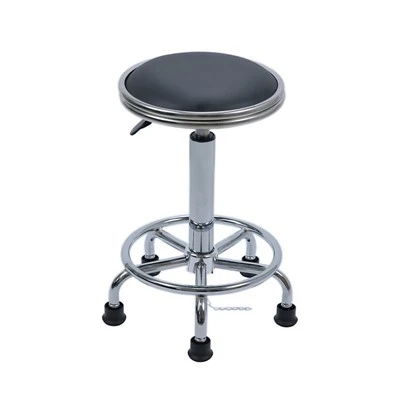
If you’d like to discuss your lab’s chair needs, feel free to reach out for a consultation.
Cleanroom Stool References:
- Journal of Occupational and Environmental Hygiene. 2022. "The Impact of Seat Depth Adjustment on Lumbar Spine Pressure in Sitting Workers."
- International Journal of Industrial Ergonomics. 2021. "Lumbar Support Adjustability and Chronic Lower Back Pain in Prolonged Sitting."
- Journal of Safety Research. 2023. "Armrest Adjustability and Upper Extremity Strain in Laboratory Workers."
- Journal of Occupational and Environmental Medicine. 2022. "Cost of Back-Related Absenteeism in Academic and Industrial Research Labs."
Mingqi Anti-Static Technology (Dongguan) Co., Ltd.
Mingqi Anti-Static Technology (Dongguan) Co., Ltd. is one of the most professional lab chair manufacturers and suppliers in China, featured by quality products and good price. Welcome to buy durable lab chair for sale here and get quotation from our factory. We also accept customized orders.
Address: Room 103, Building 2, No.5, Chuangye Road, Gaobu Town, Dongguan City, Guangdong Province
E-mail: qiuhaiyang94@gmail.com
WebSite: https://www.mingqiesdchair.com/
