What Are the Storage Time Limits for Hot Rolled Products?
If you’ve ever ordered hot rolled steel for a construction project, manufacturing line, or structural application, you know how critical it is to get materials that are as fresh as they are strong. As a hot rolled products supplier who’s been in this industry for 12 years, I’ve seen first-hand what happens when storage timelines are overlooked: rust that eats through structural beams, surface degradation that ruins fabrications, and even safety risks when materials don’t meet required mechanical properties. Today, I’m breaking down the science behind storage time limits for hot rolled products, why they matter, and what we do at our facility to help customers avoid costly delays. Hot Rolled Products
What Are Hot Rolled Products, and Why Do Their Storage Needs Differ?
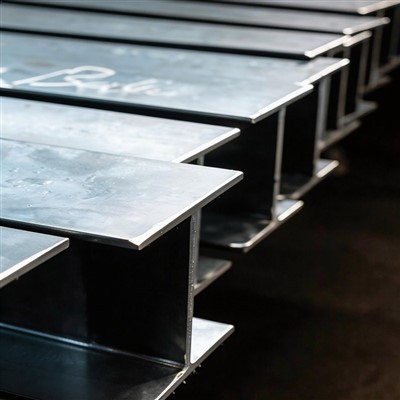
First, let’s ground this in what hot rolled products actually are. Unlike cold rolled steel, which is processed at room temperature, hot rolled steel is formed at temperatures above 1,700°F—high enough to keep metal recrystallized, resulting in a rougher, scaled surface and slightly lower strength than its cold worked counterpart. Common products include structural beams (I-beams, H-beams), sheet metal, plate steel, rail tracks, and rebar used in concrete.
The key to understanding storage time limits lies in two inherent properties of hot rolled steel: its surface scale and its susceptibility to atmospheric corrosion. That dark, flaky layer you see on hot rolled products—called iron oxide scale—forms the moment the hot metal hits ambient air after rolling. While this scale acts as a temporary barrier, it’s porous and can trap moisture and contaminants underneath, leading to pitting corrosion over time. Unlike cold rolled steel, which often has a protective oil coating, hot rolled products typically leave the mill with only that natural scale, making their storage timeline more dependent on environmental conditions.
The Core Factors That Determine Storage Time Limits
There’s no one-size-fits-all answer to “how long can hot rolled products sit in storage.” The timeline shifts dramatically based on four main variables, and we walk customers through these every time they place an order.
1. Environmental Conditions
This is the biggest wildcard. A hot rolled beam stored in a dry, covered warehouse in a desert climate will last far longer than an identical beam piled outdoors in a humid, coastal region with salt air. The American Iron and Steel Institute (AISI) categorizes atmospheric corrosion into three levels: rural (lowest corrosion, ~0.001 inches of steel loss per year), industrial (moderate, ~0.003 inches), and marine (highest, ~0.01 inches or more). For rural warehouses, we recommend a maximum indoor storage time of 12 months for uncoated hot rolled products. For outdoor storage, even in a rural area, that drops to 3–6 months because rain and dew accelerate moisture penetration through the scale. In coastal areas, outdoor storage shouldn’t exceed 1–2 months, as salt particles act as electrolytes to speed up rust formation.
2. Product Type and Surface Preparation
Not all hot rolled products are created equal. Thicker materials like structural plate or heavy I-beams have a smaller surface-to-volume ratio, so corrosion progresses more slowly than thin hot rolled sheet metal or rebar. Rebar, for example, has a high surface area and often has imperfections in its scale, making it more prone to pitting. Our data shows that hot rolled sheet can develop visible rust spots in as little as 8 weeks if stored outdoors in humid conditions, while a 12-inch thick structural beam might show minor surface discoloration only after 6 months.
Surface treatments also play a role. Some customers specify hot rolled products with a light primer coat or a rust-inhibitive oil application, extending storage time by 2–3 times. We offer these treatments as a standard add-on, and we always advise customers to request them if storage will exceed 3 months.
3. Storage Practices
How you stack, cover, and inspect hot rolled products can make or break their storage timeline. At our facility, we train our warehouse team to follow specific protocols that add 3–6 months to the typical storage limit. First, we separate products by type and place them on elevated racks—never directly on the concrete floor, which traps moisture. We also leave gaps between stacks to allow air circulation, which prevents condensation buildup between layers. Outdoor storage stacks are covered with heavy, breathable tarps (not plastic, which traps moisture) and raised 12 inches off the ground.
The mistake we see most often is improper stacking: piling rebar directly on top of sheet metal, or overloading stacks which can crack the oxide scale, exposing fresh steel to corrosion. We also encourage regular inspections every 4–6 months for products in long-term storage. Small rust spots can be sandblasted and primed, preventing them from spreading and compromising the product’s structural integrity.
4. Mechanical Property Requirements
Even if rust is not visible, long-term storage can affect the mechanical properties of hot rolled products, especially over 18 months. Our quality control team runs tests on materials that have been in storage for a year or more, and we’ve found that some grades of low-carbon hot rolled steel can experience a slight increase in brittleness if stored in extreme cold temperatures for extended periods. For structural applications where safety is non-negotiable (like bridge construction or high-rise buildings), we recommend using hot rolled products within 9 months of delivery, regardless of storage conditions. For non-critical applications, like manufacturing agricultural equipment or general fabrications, the timeline can stretch to 18–24 months if stored properly.
Common Misconceptions About Hot Rolled Product Storage
Over the years, I’ve heard plenty of myths that lead customers to make costly mistakes. Let’s clear up a few:
Myth 1: “If it’s not rusted, it’s fine.”
Not true. Surface rust is just the visible sign of corrosion. Even if a product looks clean, the oxide scale can still be delaminating, and hidden pitting can weaken structural integrity. We once had a customer who ordered 50 tons of hot rolled plate that had been stored outdoors for 10 months. The surface looked rust-free, but when we tested it, the pitting had reduced the plate’s thickness by 12%—enough to require replacing half the order at the customer’s expense.
Myth 2: “Indefinite indoor storage is safe.”
While indoor storage is far better than outdoor, it’s not infinite. Dust, humidity from HVAC systems, and even cleaning chemicals in warehouses can break down the oxide scale over time. We recommend not storing hot rolled products indoors for more than 24 months, even under ideal conditions.
Myth 3: “Hot rolled steel doesn’t rust as fast as stainless steel.”
That’s true, but it’s a low bar. Hot rolled steel is carbon steel, which rusts approximately 100 times faster than 304 stainless steel. Neglecting storage timelines for carbon steel hot rolled products will lead to far faster degradation than most customers anticipate.
How We Help Our Customers Manage Storage Timelines
As a hot rolled products supplier, our job doesn’t end when products leave our warehouse. We work closely with every customer to create a storage plan tailored to their location, application, and timeline. Here’s what we offer:
First, we provide a material-specific storage certificate with every order, outlining recommended timelines for indoor and outdoor storage, plus instructions for proper stacking and inspection. For customers with long lead times between ordering and installation, we offer customized surface treatments, like water-based rust inhibitors that are compliant with environmental regulations and add 6–8 months to storage life.
We also have a fleet of on-site storage yards for customers who can’t store materials on their own property. Our yard is covered, elevated, and climate-controlled (we use dehumidifiers in humid months) to ensure products stay in optimal condition for up to 18 months. We schedule regular deliveries in line with a customer’s installation timeline, so they never have to worry about storing materials too long.
Final Thoughts: Plan Ahead to Avoid Costly Delays

At the end of the day, the best way to manage storage time limits for hot rolled products is to plan ahead. Don’t order materials months in advance “just in case”—work with a supplier to align delivery dates with your project timeline. If you do need to store materials, follow the protocols: elevate stacks, cover outdoor products, inspect regularly, and don’t hesitate to add protective treatments.
Engineering Steel Plates If you’re working on a project and need hot rolled products with clear storage guidance, or you want to discuss a custom storage solution for your materials, reach out to our team to learn how we can support your needs.
References
- American Iron and Steel Institute. (2020). Storage Guidelines for Carbon Steel Products. AISI Technical Bulletin TB-107.
- Steel Structures Painting Council. (2019). Atmospheric Corrosion of Steel: Mitigation and Storage Best Practices. SSPC Publication 14.
- International Organization for Standardization. (2018). ISO 12944-5: Paints and Varnishes – Corrosion Protection of Steel Structures by Protective Paint Systems – Part 5: Protective Paint Systems. ISO.
- Hot Rolled Steel Manufacturers Association. (2021). Field Storage Performance of Hot Rolled Structural Products. HRMA Report 21-03.
Kennen Steel International Co., Ltd.
With abundant experience, we are one of the most professional hot rolled products manufacturers and suppliers in China. We warmly welcome you to buy high quality hot rolled products in stock here and get quotation from our factory. For price consultation, contact us.
Address: No. 10, South Road, Area C2, Lecong Iron & Steel World, Shunde District, Foshan City, Guangdong Province
E-mail: info@kennensteelco.com
WebSite: https://www.kennensteelco.com/
