If you’ve ever sourced FKM rubber sheets for industrial applications—whether for aerospace, chemical processing, automotive sealing, or even food and beverage manufacturing—you’ve likely come across the term “elasticity” more times than you can count. As an FKM rubber sheet supplier, I get this question every single week: “What is the actual elasticity of FKM, and why does it matter more than just a number on a spec sheet?” Today, I’m pulling back the curtain on what elasticity really means for our FKM products, beyond the textbook definitions, and how that performance directly impacts your operations. Let’s cut through the jargon and get to the practical, real-world stuff that matters for your seals, gaskets, and component parts. FKM Rubber Sheet
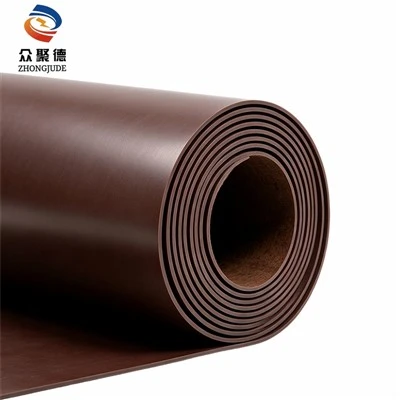
First, let’s start with a quick, grounded refresh on elasticity, because this isn’t abstract physics—this is the science that keeps your equipment running without leaks, breakdowns, or replacements. Elasticity, in simple terms, is a material’s ability to return to its original shape and size after being stretched, compressed, or deformed. For rubbers, it’s often measured using two key metrics: tensile modulus (how much force is needed to stretch the material a certain amount) and elongation at break (the maximum stretch before it tears). But FKM—also called fluoroelastomer, for those new to the material—isn’t your run-of-the-mill natural rubber or EPDM. Its elasticity is tailored for extreme conditions that would make other rubbers fail, and that’s where it gets specific.
From our decades of experience as an FKM rubber sheet supplier, most customers don’t realize that FKM’s elasticity isn’t a one-size-fits-all number. It varies based on two big factors: the grade of FKM and the way it’s formulated and cured. Let’s break that down. There are four main FKM grades on the market, each with a different elasticity profile: the standard Type 1 (most common for general industrial use), Type 2 (for higher temperature and chemical resistance), Type 3 (for super extreme chemical exposure), and Type 4 (low-temperature FKM, which is a lifesaver for cold climates).
Standard Type 1 FKM rubber sheets, the workhorse for most of our clients, have a tensile modulus at 100% elongation of roughly 7 to 12 MPa (megapascals). That means if you stretch the sheet to twice its original length, it takes a force of 7-12 MPa to hold that stretch. Elongation at break for Type 1 is typically between 200% and 300%—so you can stretch it to three times its original length before it tears. That’s impressive, right? Compare that to EPDM, which usually maxes out around 400% elongation, but FKM’s tradeoff is that it’s stiffer, so it doesn’t stretch as far but holds its shape better under pressure.
Now, Type 2 and Type 3 FKM, which we supply for chemical processing and aerospace applications, have a slightly higher modulus—around 10 to 15 MPa at 100% elongation—because they’re formulated with higher fluorine content to resist acids, fuels, and hot gases. Their elongation at drop is a bit lower too, ranging from 150% to 250%, but that’s a deliberate choice. The higher fluorine makes them more resistant to degradation, so even if they can’t stretch quite as much, they won’t swell or break down when exposed to 300°C exhaust fumes or concentrated sulfuric acid.
The wild card is Type 4 low-temperature FKM. A lot of operations that work in cold storage, polar climates, or cryogenic processes used to stick to silicone rubber, but silicone is terrible at resisting chemicals. Type 4 FKM has modified polymer chains that don’t stiffen when temperatures drop below -40°C, while standard FKM turns brittle at -20°C. Its elasticity profile is a little different: modulus at 100% elongation is around 8 to 11 MPa, and elongation at break stays around 200% even at -40°C, which is unheard of for most elastomers. We’ve had a food and beverage client in northern Canada use our Type 4 FKM sheets for tank gaskets in their frozen food processing plant, and they told us it’s the first material that hasn’t cracked after a Minnesota winter’s 30 below zero nights.
But here’s the part most spec sheets won’t tell you: elasticity in FKM isn’t just about the number—it’s about how it performs over time. Natural rubber will stretch and creep (permanently deform) if held under pressure for long periods, but FKM’s cross-linked polymer structure makes it far more resistant to creep. That’s a huge win for gaskets that need to seal a flange joint for 5, 10, even 20 years. As an FKM rubber sheet supplier, we test every batch of our products for compression set, which is a direct measure of elasticity under long-term pressure. Compression set is expressed as a percentage: if a material has a 10% compression set, that means after being compressed by 25% for 22 hours at 150°C, it only bounces back 90% of the way. Our standard Type 1 FKM has a compression set of less than 15% at 150°C, which means it will maintain its shape and seal for years, instead of leaving gaps that cause leaks.
I want to be clear, though—elasticity isn’t always a good thing. Some customers come to us with a request for “super stretchy FKM” and don’t realize that more stretch means less chemical resistance. If you need a seal for a gasoline pump, a stretchy FKM will swell in fuel and lose its elasticity over time. That’s why matching the elasticity of FKM to your application is the difference between a part that works for six months and a part that works for a decade. Last year, we had a client in the automotive aftermarket who’d been using a generic EPDM sheet for their fuel line gaskets, but they were seeing 10% failure rates within a year because EPDM swells in ethanol-blended gas. They switched to our Type 2 FKM sheet, which has a slightly lower elongation at break (220% vs. EPDM’s 350%) but a compression set of less than 8% at 120°C, and they haven’t had a single failure since. That’s the value of getting the elasticity right, not just picking a material with the highest stretch number.
Another common question I get: how does temperature affect FKM’s elasticity? FKM is known for high heat resistance, but its elasticity peaks around 20°C to 100°C, the sweet spot for most industrial processes. Above 200°C, FKM’s polymer chains start to break down, and its elasticity drops sharply—even the best Type 3 FKM will lose 30% of its elongation at break after 1,000 hours at 250°C, which is why we never recommend it for applications above 230°C. On the flip side, below -20°C, standard FKM stiffens, and its modulus jumps so high that it can crack under minor pressure—hence why our Type 4 low-temperature grade exists. We once had a customer in the oil and gas industry in Alaska try to use standard FKM for pipeline gaskets, and within a month, the gaskets cracked during a pressure test at -25°C. They switched to Type 4 FKM, and it’s still holding strong three years later.
As an FKM rubber sheet supplier, I also tell customers that elasticity is affected by how you process the material. If you cut or punch an FKM sheet too quickly, or use a dull die, you can cause micro-tears in the material that lower its effective elasticity, leading to premature failure. We always recommend that our clients use sharp, properly aligned tooling when cutting FKM sheets, and that they avoid stretching the material beyond 50% of its elongation at break during installation. That’s a small detail, but it makes a huge difference in how well the part performs over time.
I know a lot of engineers and procurement teams rely on spec sheets, but I want to emphasize that those numbers are just a starting point. The elasticity of FKM isn’t a static value—it’s a function of grade, formulation, processing, and the conditions it’s going to be exposed to. That’s why we work one-on-one with every client, not just to send them a quote, but to walk through their application, their operating temperatures, the chemicals they’re working with, and their performance goals, to help them pick the right FKM grade with the right elasticity profile.
If you’re working on a project that needs reliable sealing, gaskets, or structural parts that can handle extreme conditions, you don’t have to guess about FKM’s elasticity. We’ve been supplying FKM rubber sheets for over 15 years, and our team has helped thousands of clients solve problems that generic elastomers couldn’t. Whether you need a small batch of custom-sized FKM sheets for a prototype, or bulk orders for a full production line, we can provide detailed test data on every grade, and we’re happy to answer any questions you have about elasticity, resistance, or application compatibility.

Ready to stop dealing with seals that leak, crack, or fail prematurely? Reach out to our team to discuss your project, and we’ll help you find the perfect FKM rubber sheet for your needs.
Acid Resistant Rubber Sheet References
- A. K. Bhowmick, Handbook of Elastomers, 2nd ed., CRC Press, 2001.
- M. Morton, Rubber Technology, 3rd ed., Van Nostrand Reinhold, 1987.
- DuPont Performance Elastomers, FKM Fluoroelastomer Product Guide, 2019.
- ASTM D412, Standard Test Methods for Vulcanized Rubber and Thermoplastic Elastomers—Tension, 2022.
- ASTM D395, Standard Test Methods for Rubber Property—Compression Set, 2021.
Hebei Zhongjude Power Technology Co., Ltd.
With abundant experience, we are one of the most reliable fkm rubber sheet manufacturers and suppliers in China. Welcome to buy bulk high quality fkm rubber sheet for sale here and get quotation from our factory. For price consultation, contact us.
Address: Shenghe Plaza, No. 88 Qilian Street, High-tech Zone, Shijiazhuang City, Hebei Province, China
E-mail: zhongjude@outlook.com
WebSite: https://www.zjdinsul.com/
