Hey there, fellow LED specifiers, installers, and project managers! Let’s cut to the chase—if you’re shopping for a waterproof LED driver, picking the wrong wattage is like trying to fit a 10-pound bag into a 5-pound box. It’s messy, inefficient, and can end up costing you way more in repairs than just getting it right the first time. As a waterproof LED driver supplier who’s been in this game for over a decade, I’ve seen every mistake under the sun: guys slapping a 50W driver on a 30W strip and wasting energy, or a 20W on a 40W load and burning out a week later. So let’s break down how to nail the wattage every single time—no jargon, just real advice that works. Waterproof LED Driver
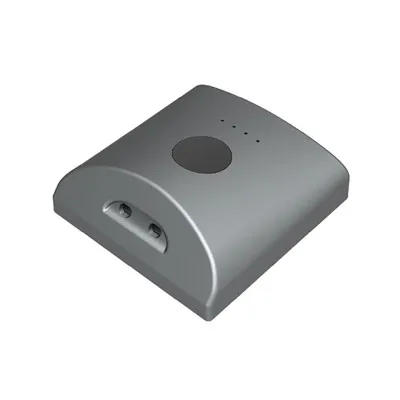
First, let’s start with the basics: what even is a waterproof LED driver, and why does wattage matter here? Unlike regular indoor drivers, ours are sealed tight (IP67, IP68, you name it) to handle rain, snow, condensation, even being submerged a little. But their whole job is to convert high-voltage AC power from your wall to low-voltage DC that your LEDs actually need. Wattage is the total power the driver can output—so if your LED setup uses 35W, you don’t want a driver that only does 30W (that’s underpowered) or 50W (overpowered, inefficient, and can stress the LEDs over time). Wait, hold up—“overpowered” might sound like it’s extra good, but no, LEDs are designed for specific currents. A driver with too much wattage might not regulate the current correctly, leading to shorter LED lifespan. I’ve had a customer last year who used a 60W driver on a 35W outdoor floodlight; his lights flickered nonstop, and half of them died within 2 months. That’s the kind of headache we’re here to help you avoid.
Now, step 1: Calculate your total LED load. This is non-negotiable. You can’t guess—you have to get the exact wattage of every LED fixture, strip, or bulb you’re powering. Let’s say you’re doing a backyard patio with 4 LED floodlights, each rated 10W. That’s 4 x 10W = 40W total. Wait, but—here’s a trick a lot of pros miss: add a 10-20% buffer. Why? Because LEDs can draw a tiny bit more power when they’re brand new, or if the voltage at your site dips a little (outdoor power lines aren’t perfect). Also, if you ever add an extra light down the line, you don’t want to rewire the whole thing. So for that 40W load, a 44W or 48W driver is perfect. If you go with 50W, that’s okay too—just don’t jump to 60W. The buffer isn’t there to pad your order; it’s to prevent stress. I once worked with a landscaper who skipped the buffer, installed 5 x 8W path lights (40W total) with a 40W driver, and when one light’s LED module failed and shorted, it took the driver with it. If he’d gone to 48W, that short wouldn’t have burned out the driver. Lesson learned.
Step 2: Factor in the waterproof driver’s efficiency rating. This is another big one that most people overlook. A driver’s efficiency is how much of the power it draws from the wall actually gets sent to your LEDs. For example, if a driver is 90% efficient, and your load is 40W, the driver needs to draw 40 / 0.9 ≈ 44.4W from the wall. Wait, that’s why the buffer matters here! If you buy a low-efficiency driver (like 80%), you’ll need a bigger wattage to make up for the power lost as heat. Our waterproof drivers are all 92-95% efficient—we test every single one before it leaves our warehouse. I tell customers who buy cheap no-name drivers from Amazon: yeah, they’re cheaper upfront, but 80% efficiency means 20% of the power is wasted as heat, which can make the driver overheat faster in outdoor conditions. So when you’re calculating, don’t just go by your LED load—check the driver’s efficiency to get the real required wattage. Let’s say your load is 30W, and you’re using a 85% efficient driver: 30 / 0.85 ≈ 35.3W, so a 40W driver. If you use our 93% efficient driver, it’s 30 / 0.93 ≈ 32.2W, so a 35W driver—smaller wattage, no wasted cash.
Step 3: Consider installation conditions. Waterproof drivers aren’t one-size-fits-all for where they’re mounted. If you’re putting the driver inside a dry, covered location (like a patio ceiling under an overhang), you can stick closer to your calculated wattage. But if it’s exposed—say, mounted on the side of a building in direct Florida sun, or buried a foot underground (for a submersible LED setup)—you need a bigger buffer. Heat is the enemy of electronics, right? A driver in 100°F weather runs hotter than one in 70°F, so it can’t handle as much power. We recommend adding 15-20% extra wattage for drivers in extreme temperatures. For example, a 50W load in mild weather would need a 55-60W driver, but a 50W load in extreme heat or cold needs a 60-65W driver. Also, if the driver is going to be submerged (IP68), the water actually helps cool it, so you can stick to the standard 10% buffer. I sold a bunch of IP68 drivers for a pond light project last summer; the customer originally ordered 30W drivers for a 28W load, but we suggested 32W because the pond water was 85°F—he followed that, and they’re still running flawlessly 8 months later. No overheating, no failures.
Step 4: Don’t mix different LED types without recalculating. If your setup is a mix of LED strips, floodlights, and bulbs, don’t just add their wattages together and pick a driver. Wait, technically you do add them, but some LEDs have different power draw than their rated wattage. For example, a 12V LED strip might have a higher current draw than a 12V bulb with the same wattage. Our drivers are labeled for 12V, 24V, or line voltage, so make sure the driver’s voltage matches your LEDs too. That’s a whole other topic, but for wattage: if you have two 15W floodlights and one 10W strip, total load is 40W. But if the strip is 24V and the floodlights are 12V, you need a driver that can handle both voltages—so you can’t just use any 40W driver. I see this mistake all the time: people buy a 40W 12V driver for a mix of 12V and 24V LEDs, and the 24V ones don’t work. So voltage compatibility plus total wattage is non-negotiable.
Wait, let’s talk about what not to do. First, don’t go for the smallest possible driver to save money. A customer of mine last year tried that: he had a 50W outdoor sign, bought a 40W driver because it was $10 cheaper, and 3 days later, the driver burned out and took half the sign’s LEDs with it. He ended up paying $50 for a replacement plus $30 in labor to install it, so that $10 savings cost him way more. Second, don’t ignore waterproof driver ratings. A driver rated “waterproof” but only IP65 isn’t for submerged use—if you mount an IP65 driver where it gets rained on nonstop, it can leak. And if the wattage is wrong, even a top-tier driver will fail faster. Third, don’t assume all brands’ wattages are the same. Some no-name brands list “peak wattage” instead of “continuous wattage”—that’s a scam. Peak wattage is the maximum power for a few seconds, not what it can handle 24/7. Our drivers all list continuous wattage, which is what you need for long-term outdoor use. I’ve had customers bring in competitors’ drivers that say “50W peak” but only do 35W continuous—they tried to use them for a 30W load, and they burned out in a week. Always check for continuous vs. peak.
Now, let’s do a real-world example to make this concrete. Suppose you’re doing a commercial storefront with:
- 2 x 15W LED face lights (12V)
- 1 x 10W LED channel strip (12V)
Total load: (2×15) +10 = 40W.
Installation: Mounted under a storefront overhang, so mild weather, no extreme heat/cold.
Driver efficiency: Our standard waterproof drivers are 93% efficient.
Calculation: 40W / 0.93 ≈ 43W. Add a 10% buffer for new LED draw, so 43 x 1.1 ≈ 47.3W. So the right driver is a 50W waterproof LED driver. That’s it—no overpaying for a 60W, no underpowering with a 40W. This setup will run 24/7, rain or shine, for years.
Another example: A backyard swimming pool with submersible LED lights, 3 x 12W lights = 36W total. Installation: Submerged (so IP68, cooling from water), efficiency 93%. Calculation: 36 / 0.93 ≈ 38.7W. Submersible setting, so only 5% buffer. 38.7 x 1.05 ≈ 40.6W. So a 40W IP68 driver is perfect. That’s way smaller than if it were mounted on the deck in direct sun—if it were on the deck, we’d go to 45W.
So what if you’re still confused? Let’s be real—this stuff can get tricky, especially if you’re dealing with a big project. As a waterproof LED driver supplier, I don’t just sell drivers; I help customers get the right ones. If you’re working on a project with multiple LEDs, weird installation conditions, or you’re not sure about voltage and efficiency, just reach out. No pushy sales stuff, just honest advice. I can even help you calculate the exact wattage you need, send you specs for our drivers, and make sure you get the right IP rating too.
Wait, one last thing: Wattage isn’t the only thing that matters for waterproof drivers, but it’s the foundation. Even the most rugged IP68 driver will fail if it’s underpowered or overpowered. We’ve designed our drivers to be durable—marine-grade casing, short-circuit and overheat protection, so they can handle the outdoors—but they only work right if you match the wattage correctly.
At the end of the day, choosing the right waterproof LED driver wattage is simple: calculate your exact LED load, adjust for efficiency, add a buffer based on installation conditions, and stick to continuous wattage (not peak). Skip the cheap shortcuts, and don’t hesitate to ask for help if you’re unsure.
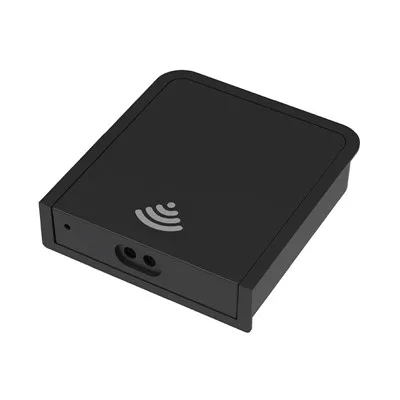
If you’re gearing up for a project, whether it’s a small residential patio or a large commercial installation, connect with our team to talk through your needs. We’ve got waterproof drivers in 10W to 100W+ ranges, all tested for outdoor use, and we’ll make sure you get the wattage that fits your setup perfectly. No guesswork, no headaches—just drivers that work when you need them.
Cabinet Sensor Switch References:
- LED Lighting Association. (2022). Waterproof LED Driver Specifications and Installation Guidelines.
- International Electrotechnical Commission (IEC). (2021). Standard for LED Drivers for Outdoor and Submersible Applications (IEC 61347-2-13).
- Energy Star. (2023. Guidelines for LED Driver Efficiency and Wattage Matching for Residential and Commercial Applications.
- Lighting Design & Application Magazine. (2022). Common Mistakes in LED Driver Wattage Selection for Outdoor Installations.
Dongguan Lanbaoli Intelligent Technology Co., Ltd.
As one of the most professional waterproof led driver manufacturers and suppliers in China, we’re featured by quality products and low price. Welcome to buy advanced waterproof led driver for sale here from our factory. If you have any enquiry about quotation, please feel free to email us.
Address: 10th Floor, Building 32, Golden Town, No.7 Technology Avenue, Houjie Town, Dongguan City, Guangdong Province
E-mail: anna@lampow.cn
WebSite: https://www.lblsensor.com/
