If you’ve ever dealt with slitting materials like thin metal foil, adhesive tape, or flexible packaging film, you know it’s not just about cutting something into strips. As a precision slitting machine supplier, I see way too many folks skip over one tiny but make-or-break detail: tension control. It’s easy to brush it off as a “set it and forget it” dial, but mess with tension, and you’ll end up with jagged edges, misaligned strips, or even material tears that waste hours of work and thousands in stock. Let’s break down why tension isn’t just important—it’s the backbone of high-precision slitting. High Precision Slitting Machine

First, let’s ground this in what tension actually does for your material, because that’s where the confusion usually starts. Tension is just the steady, controlled pull we put on a material as it moves through the slitter—no too tight, no too loose, just consistent enough to keep it flat and aligned. For thin, flexible materials especially, inconsistency here will ruin every cut. I had a customer last quarter running 12-micron aluminum foil for lithium-ion battery tabs; they’d been using a generic slitter with basic tension settings, and half their output was getting scrapped because the foil would wiggle mid-slit. When we adjusted their tension system to match the material’s specific stretch tolerance, their scrap rate dropped 68% in two weeks. That’s not a random win—that’s tension doing its job.
Think of it like stretching a rubber band: pull it too hard, and it snaps; pull it too soft, and it twists up. Same logic applies to every material we slit. Paper, for example, has a much lower stretch threshold than polypropylene film, so the tension has to be calibrated for each stock roll. If your slitter’s tension is uneven, the material will drift off track as it goes through the slitting blades. Those blades can’t cut a straight line if the material is wobbling—you’ll get strips that are off by a millimeter or more, which is a disaster for industries like medical packaging, where even a tiny misalignment can make a seal fail. Or take electrical tape: if tension is too high, the adhesive backside will stretch, and when you unwind the strip later, it’ll shrink, causing wrinkles. That’s a problem no amount of sharp blades can fix.
Another big one: tension prevents what we call “winding defects” on the finished rolls. After slitting, you wind the cut strips onto cores for packaging or shipping. If the tension is wrong during winding, you get “ bird nests” (loose, tangled layers) or “pillows” (bulges where the winding is too loose). For flexible packaging, a wound roll with a pillow means the layers shift over time, leading to creases that ruin the packaging when it gets to the end user. My team worked with a snack packaging company last year that was having 15% of their slitted rolls rejected because of this—turns out their old slitter had a tension system that drifted as the roll got bigger. We upgraded their dancer arm tension system (that’s the most common reliable setup for precision slitters) and they cut their reject rate to 2% within a month.
Now, let’s talk about machine longevity, because that’s a pain point no one wants to deal with. When tension is unbalanced, it doesn’t just ruin your material—it puts unnecessary stress on the slitter’s components. If one side of the slitting line has way more tension than the other, the blades, rollers, and even the drive motors have to work harder to compensate. Over time, that leads to worn parts, misalignment, and costly breakdowns. I’ve seen customers skip tension calibration to save time, then end up replacing slitting blades every three months instead of every 12. The cost of a few minutes to set tension properly is nothing compared to the downtime and replacement parts.
Wait, but not all tension is created equal, right? A lot of people think tension is just a single number, but it’s actually a profile that changes as the material roll gets smaller. When you start with a full raw roll, the weight pulling on the material is different than when you’ve cut most of it away. A good high-precision slitting machine doesn’t just set tension once—it adjusts it in real time. That’s called closed-loop tension control, and it’s what separates entry-level slitters from ones that can handle tight tolerances. For example, if you’re slitting 5mm wide strips for RFID tags, you need tension that doesn’t stretch the tag’s antenna, because even a tiny stretch can make the chip stop working. That’s where precision tension matters more than just getting the cut right.
I get it, though—tension control can feel like a mystery if you’re not deep in slitting tech. A lot of small manufacturing teams treat it like a black box, twiddling dials until it “looks right,” which is a terrible approach. That’s why when we work with new customers, we don’t just sell them a slitter—we walk them through how to set tension for their specific material. We use things like load cells to measure tension accurately, and dancer arms to maintain consistent pull as the roll size changes. For materials with very low stretch, like coated paper, the tension might only be a few Newtons, but getting that exact number is non-negotiable. Too little, and the paper wrinkles; too much, and it tears.
Let’s also touch on edge quality, which is probably the most visible sign of bad tension. If you’ve ever seen a slitted roll with ragged edges, chances are tension was off. When a material moves through slitting blades, it needs to be held firmly enough that the cut is clean, but not so firm that the edges deform. For thin films, deformed edges mean you can’t stack the strips neatly, or they’ll curl when you heat-seal them for packaging. I had a customer who was making labels for beauty products—they needed slitted strips with perfectly straight edges for die-cutting. Their old slitter had inconsistent tension, so the edges were wavy, and their die-cutting machine was missing 20% of labels because the edge was too uneven. After we adjusted their tension settings, those wavy edges were gone, and their die-cutting yield jumped to 98%.
What about high-volume runs? If you’re slitting 24/7, tension stability is even more critical. Drifting tension means you have to stop the line every few hours to adjust, which adds up to lost production time. A high-precision slitter with good tension control can run for days without a single adjustment. We’ve got a client in Texas that slits aluminum foil for automotive battery components—they run 12-hour shifts, five days a week, and their tension system only needs a check once a shift. That’s the kind of efficiency that makes a big difference for bottom lines.
I know some of you might be thinking, “I can just add more tension to fix any problem.” That’s a common mistake. Too much tension not only stretches or tears material, but it can also cause the slitter’s web (that’s the name for the material as it moves) to “snag” on rollers, leading to jams that can damage the entire roll. We once had a customer who cranked up tension too high on a polycarbonate sheet—they ended up with a 2,000-pound roll that snapped, sent material flying, and damaged three rollers on the slitter. The repair cost them $12,000, plus a week of downtime. All because they didn’t understand that over-tensioning is just as bad as under-tensioning.
So, how do you know if your tension is working? There are a few quick checks you can do. First, pull a small section of the slit material and see if it stretches when you tug it—if it does, your tension is too high. Next, unroll a finished slit roll and look at the edges—if they’re wavy, tension is inconsistent. If you’re seeing a lot of scrap from misaligned strips, that’s another sign. But the best way is to use a tension gauge, which we provide with every slitter we sell—no guessing, just accurate numbers.
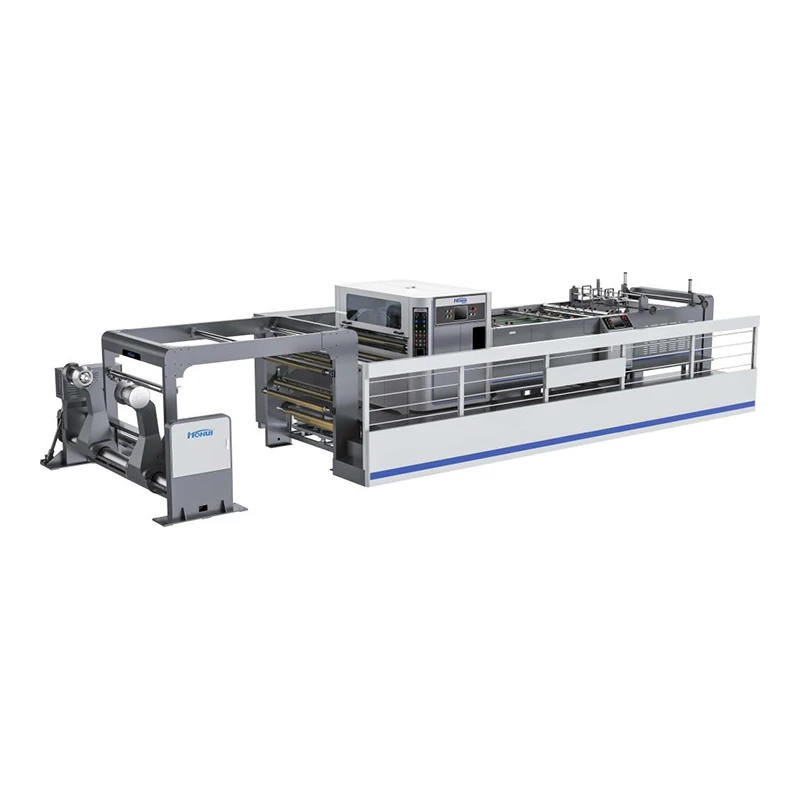
At the end of the day, high-precision slitting isn’t about having super sharp blades or a fast line speed. It’s about controlling the forces acting on the material as it’s cut, and tension is the biggest force. Skip getting it right, and you’ll waste material, lose production time, and deal with unnecessary repairs. If you’re currently having issues with your slitting output, or you’re in the market for a new precision slitting machine, I’d be happy to walk you through how tension control can make a difference for your process. Just reach out, and we can chat through your specific materials and needs to find the right setup for you.
Industrial Slitting Machine References:
- Grummon, D., & Karg, M. (2019). Web Handling: Principles and Practice of Tension Control. SAE International.
- Selmer, P. (2021). Precision Slitting of Flexible Materials: The Role of Tension and Web Alignment. Journal of Manufacturing Processes, Vol. 65, pp. 412-420.
- American Society for Testing and Materials (ASTM). (2020). Standard Guide for Tension Control of Moving Webs (ASTM D4742-20). ASTM International.
- Zhang, L., et al. (2022). Analysis of Tension Instability in High-Speed Slitting Lines for Thin Metallic Foils. International Journal of Machine Tools and Manufacture, Vol. 173, pp. 103897.
Honghui Machinery Equipment Co., Ltd.
As one of the most professional high precision slitting machine manufacturers in China, we have world-leading production equipment and strong manufacturing capabilities. Please rest assured to buy advanced high precision slitting machine made in China here from our factory. We also accept customized orders.
Address: No.28, Liuheng Road, Changping Town, Dongguan City, Guangdong Province, China
E-mail: info@cnhohui.com
WebSite: https://www.cnhohui.com/
