If you’ve ever worked with welding machines, you know that nothing kills a job faster than a power issue—especially a gauge outlet that doesn’t match your equipment’s needs. As a welding machine supplier who’s been in this game for over 12 years, I’ve heard every mistake in the book: a contractor running a 220-amp MIG welder on a 12-gauge extension cord, a hobbyist blowing a breaker because they grabbed the wrong outlet gauge, even a small fabrication shop that had to shut down for three days because their old outlet couldn’t handle their new heavy-duty welders. Today, I’m breaking down exactly what gauge outlet you need for your welding machine, no confusing tech jargon, just practical, real-world advice from someone who’s seen these issues first-hand. Welding Machine

First, let’s get one thing straight: the “gauge” here isn’t the wire inside the welder cable—it’s the outlet’s corresponding wire gauge, a measurement of the wire’s thickness that directly dictates how much electrical current it can safely carry. Think of it like a garden hose: a thin ½-inch hose can only push so much water, while a 1-inch hose can handle way more pressure without bursting. Same idea with electrical wire: a lower gauge number means a thicker wire, which can carry more amps without overheating, melting insulation, or starting a fire.
Welding machines draw a lot more power than your average household appliance. A toaster uses 12-15 amps, a window AC uses 15-20 amps, but even a small 110-volt MIG welder can pull 20-30 amps, and big industrial TIG or stick welders can hit 40-60 amps on the low end, up to 120-220 amps for heavy-duty models. That means picking the wrong gauge outlet isn’t just inconvenient—it’s a safety hazard, too. We’ve had customers come to us with charred outlet covers, melted extension cords, and even breakers that tripped mid-job because they didn’t match the gauge. I remember one customer, a guy named Jake who runs a small auto body shop in rural Ohio, thought he could use a standard 15-amp household outlet for his new 220-volt 180-amp MIG welder. He plugged it in, and 10 minutes later, the outlet sparked so bright it set off his fire alarm. He lost a day of work, had to replace the outlet, and almost got his shop inspected for code violations. That’s the kind of story I never want a customer of mine to live through.
So let’s get to the core question: what gauge outlet do you need? The answer depends on two key numbers: your welding machine’s rated amperage and whether it runs on 110-volt (120V) or 220-volt (240V) power. First, let’s lay out the standard gauge-to-amp ratio that the National Electrical Code (NEC) follows, which is the rule we use for every welding machine we sell. The basic rule is: for a continuous load (like a welding machine, which runs for extended periods), you need a wire that can handle 125% of the machine’s maximum amp draw. That’s non-negotiable—it’s how you avoid overheating.
Let’s break this down by common welding machine types, because that’s how most of our customers shop. First, small hobbyist welders, which are usually 110-volt MIG or stick welders, perfect for home projects or small repair jobs. These typically have a maximum amp draw between 20 and 30 amps. For that, you need a 10-gauge wire, which corresponds to a 30-amp outlet. Wait, why 10-gauge and 30-amp, not smaller? Because the NEC’s 125% rule: if your welder draws 24 amps max, 125% of that is 30 amps. A 12-gauge wire can only safely carry 20 amps for continuous use, which is too small. We sold over 500 of these small welders last year, and every instruction manual we include has this number bolded because so many people try to use 15-amp outlets (which are 14-gauge wire) for these, and it never ends well.
Next, mid-range welders, the workhorses for small fabrication shops, auto body, or contract welding. These are usually 220-volt welders with a maximum amp draw between 40 and 60 amps. For this, you need an 8-gauge wire and a 50-amp outlet. Let’s do the math: 50 amps is 125% of 40 amps, which is exactly the minimum amp draw for most mid-range models. We also see a lot of people here cutting corners, trying to use a 40-amp outlet for these, but that’s not enough. I had a customer last quarter, a guy named Maria who runs a custom fence business, try that. She installed a 40-amp outlet for her new 50-amp mid-range stick welder, and within a month, the outlet’s terminals started to corrode and overheat. She had to rewire her entire shop for the correct gauge, and she told me that mistake cost her $1,200 in labor and lost jobs. That’s why we always make sure to include a free outlet gauge guide with every mid-range welder we ship—we don’t want our customers learning that lesson the hard way.
Then there are the industrial welders, the big ones for heavy fabrication, construction, or shipyard work. These 220-volt models have a maximum amp draw between 70 and 220 amps. For the lower end of that range (70-100 amps), you need a 6-gauge wire and a 60-amp outlet. For the middle (100-150 amps), a 4-gauge wire and a 100-amp outlet. And for the heavy-duty ones that pull 150-220 amps? You need a 2-gauge wire and a 200-amp outlet. This is where a lot of first-time industrial buyers get confused because these outlets aren’t the standard you’ll find at a local hardware store—you’ll need to special-order them, and sometimes hire an electrician who specializes in industrial wiring to install them. But we always coordinate with our industrial customers to make sure they get the right outlet gauge before the welder arrives, because a big welder sitting on a loading dock waiting for an outlet is a waste of everyone’s time.
Wait, let’s add a few caveats that don’t get talked about enough. First, extension cords matter too. Even if you have the right outlet gauge, an extension cord with the wrong gauge can kill your welder’s performance. For example, if you have a 30-amp outlet (10-gauge wire), you need a 10-gauge extension cord, not 12-gauge. If you use a thinner extension cord, it will drop voltage, making your welder run too hot, and it can overheat. We always advise our customers to keep extension cords as short as possible—no more than 50 feet for small welders, 30 feet for mid-range, and no extension cords at all for industrial welders. Second, older homes: if you’re installing an outlet in a house built before 1990, you might have older wiring that can’t handle the gauge you need. We always recommend hiring a licensed electrician to check your home’s wiring before installing any outlet, even if you think you have the right gauge. Third, 110 vs 220 volts: never plug a 220-volt welder into a 110-volt outlet, even if the gauge is right. It won’t damage the welder, but it will run so slow it’s useless, and you’ll end up having to re-do your welds.
Now, let’s clear up some common myths that I hear every week. Myth #1: “A higher amp outlet is always better, so I should get the biggest gauge I can find.” No. A 200-amp outlet is way more expensive than a 30-amp outlet, and it’s a waste of money for a small 110-volt welder. You don’t need to oversize unless you plan to upgrade your welder in the future, but even then, 20% extra is enough, not 100%. Myth #2: “All welders use the same gauge outlet.” No. A 100-amp industrial welder is nothing like a 20-amp hobbyist welder, and their outlet needs are totally different. Myth #3: “I can use a regular household outlet for any welder.” Nope—household outlets are 15 or 20 amps, max, and they’re not made for the continuous high draw that welders need. We once had a customer try to use a 15-amp garage outlet for a 60-amp welder, and the outlet caught fire. He was lucky no one was hurt, but he never bought from another supplier after that, which is why we take this stuff so seriously.
As a welding machine supplier, our number one goal isn’t just to sell you a welder—it’s to make sure you can use it safely and effectively. That’s why we don’t just list “recommended gauge” in the product description; we have a free online tool on our website where you can enter your welder’s model number or amp draw, and it will tell you exactly what gauge outlet you need, plus a link to a local electrician if you need one. We also include a physical guide with every welder we ship, with diagrams and simple instructions, no fancy words. If you’re unsure, just reach out to our team—we’re here to answer questions, not push a sale.
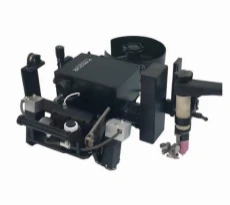
If you’re in the market for a welding machine, whether it’s your first one or your fifteenth, don’t guess on the outlet gauge. Pick up the phone, shoot us an email, or fill out our contact form to talk through your needs. We’ll match you with the right welder, the right outlet specs, and answer any other questions you have so you can get back to your job without delays or safety issues.
TIG Welding Machine References:
National Electrical Code (NEC) Article 630: Welders. NFPA, 2023.
OSHA Electrical Safety Guidelines for Welding Operations. U.S. Department of Labor, 2022.
AWS Welding Handbook, Volume 3: Welding Processes. American Welding Society, 2021.
EMI Pipeline Tech. Co., Ltd.
We’re well-known as one of the leading welding machine manufacturers and suppliers in China. We warmly welcome you to buy advanced welding machine made in China here from our factory. If you have any enquiry about cooperation, please feel free to email us.
Address: Building31,No.511,Huangpujiang North Road, Zhoushi Town, Kunshan City, Jiangsu Province,China
E-mail: zhaoqiang@emipipeline.com
WebSite: https://www.emiwelding.com/
