If you’ve ever worked in industrial processing—whether that’s refining oil, making chemicals, or even producing food-grade materials—you’ve probably heard “process heater” and “fired heater” thrown around like they’re the same thing. For years, I thought they were interchangeable too, until I started running my family’s fired heater supply business, where I’ve spent the last decade troubleshooting both for refineries, petrochemical plants, and mid-sized manufacturing sites. Let me break this down straight—no stuffy jargon, just the real differences I see on job sites every day, plus why which one you pick could make or break your operation. Fired Heater
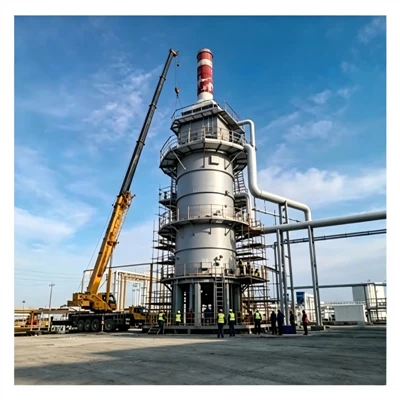
First, let’s nail the basics: both use heat to raise a process fluid (think crude oil, natural gas, or a specialty chemical) to a target temperature, right? But that’s where the similarity ends. Let’s start with fired heaters, since that’s what I supply every day. A fired heater’s whole thing is burning fuel—natural gas, diesel, even refinery off-gas—to make heat. That heat isn’t for space heating; it’s direct, controlled, and specifically focused on heating a process fluid that’s moving through tubes inside the unit. I’ve installed dozens of these, and here’s the key detail that sets them apart: they don’t rely on electricity or steam from another source. The heat is generated right in the heater’s firebox. That’s why you’ll see them in places where you need to hit high temps—like 800°F up to 1,500°F, sometimes even higher for heavy crude processing. Oh, and another big sign? Fired heaters have that firebox, usually lined with refractory brick to hold heat in, and the process tubes run through it, so the hot flame directly transfers heat to the metal tubes, which then heat the fluid inside.
Now, process heaters—those are the ones I used to mix up with fired heaters before I learned better. A process heater is a broader category, like a “catch-all” for any unit that heats a process fluid. The problem is, a lot of people use “process heater” when they’re actually talking about a specific type that doesn’t burn fuel directly. For example, a process heater might use steam coils submerged in a tank, or electric heating elements wrapped around a pipe, or even hot oil from another system. No open flame, no firebox, no direct fuel combustion. I had a client last year who was about to buy a fired heater from a competitor because they heard “process heating” was needed, but their application—heating a mild solvent to 350°F in a small batch operation—didn’t need the kind of high heat a fired heater delivers. That mistake would’ve cost them twice as much in fuel and maintenance, not to mention overheating their solvent.
Wait, let’s make that even clearer with real examples. Fired heater uses: a refinery’s crude preheating unit—you need to get heavy crude super hot so it flows through distillation columns, no way you can do that with steam. Or a petrochemical plant’s reactor feed, which needs 1,200°F to kick off chemical reactions safely. Those jobs demand direct flame heat, so fired heaters are the only call. Process heater examples: a food plant heating vegetable oil for frying (lower temp, 300-400°F, steam coils work just fine), or a pharmaceutical lab heating a small amount of chemical for testing (electric elements, clean, no flame risk), or a packaging plant heating resin pellets before molding (hot oil circulating through tubes, no combustion needed). That’s the real-world split—fired heaters = high temp, direct fuel combustion; process heaters = any heat source, lower temp usually, no flame.
Now, let’s get into the practical stuff that matters for anyone looking to buy. I talk to clients every week who ask, “Can a process heater do the same job as a fired heater?” Short answer: maybe not. Let’s talk about efficiency first. Fired heaters hit 80-90% thermal efficiency with modern designs—we add things like heat recovery units to capture waste heat from the exhaust, so you’re not throwing 20% of your fuel out the stack. Process heaters? Steam coils are only 50-70% efficient, because you’re losing heat through the coil’s casing and the steam line. Electric process heaters are even worse, especially at scale—if you’re heating 10,000 gallons an hour, electric would run up utility bills so fast it’s not worth it. That’s why big operations (refineries, chemical plants) stick with fired heaters, even if they cost more upfront, because the fuel savings pay for themselves in 1-2 years.
Another big difference: safety. Fired heaters do have an open flame, so you’ve got to have proper ventilation, flame detectors, and regular inspections to prevent leaks. But process heaters? Wait, no—don’t get me wrong, they’re not risk-free, but the risks are different. If you have a flammable fluid, an electric process heater’s element can spark, so you need explosion-proof wiring. A steam process heater is low-pressure, so less risk of rupture, but if your steam line fails, you lose heat fast. Fired heaters are built for high-pressure process fluids too—our fired heaters are designed to handle up to 2,000 PSI, which process heaters (most are under 500 PSI) can’t touch. That’s a non-negotiable for heavy industrial applications.
Wait, I should mention the grey area, because there’s always confusion. Some manufacturers call their “direct-fired process heaters” but that’s just a rebrand of a standard fired heater. We once had a client who came to us saying they needed a “process heater” but their specs required a 1,100°F temp, which is definitely direct-fired. The competitor quoted them a “process heater” that actually was a fired heater, but charged them 30% more because they used the wrong terminology. That’s the kind of mistake I see all the time—people get hung up on the name instead of the specs. The rule of thumb I use with every client: if you need heat from burning fuel, it’s a fired heater. If you’re using steam, electric, or another indirect source, it’s a process heater—even if someone calls it a “fired process heater.”
Now, why does this matter for your business? Let’s say you’re a plant manager who’s been tasked with upgrading a heating unit. If you pick a process heater when you need a fired heater, you’re not going to hit your process temp, which can cause your product to be off-spec, or even shut down operations until you fix it. Last year, a small chemical plant in Texas tried to use a steam process heater instead of a fired heater for their reactor feed. The steam only got them to 850°F, when they needed 1,000°F, so their reaction yield dropped 15%—that’s $50k a month in lost revenue, just because they mixed up the two. On the flip side, if you get a fired heater when you don’t need it, you’re paying for a bigger unit, higher fuel costs, and more maintenance than you need. I once talked a food manufacturing client out of buying a fired heater for their fry oil heating—they would’ve spent $200k on a unit they only needed to run at 40% capacity, when a $50k steam coil process heater did the job perfectly.
As a fired heater supplier, I see the good, the bad, and the ugly of both. Fired heaters aren’t the right fit for every job, but they’re the only option for high-temperature, high-pressure industrial applications. Process heaters have their place, especially for low-temp, small-batch, or flame-sensitive operations. The key is to match the heater type to your exact needs, not the name.

Now, if you’re currently looking to replace an old fired heater, or upgrade your process heating system, don’t waste time guessing. I’ve helped hundreds of clients sort out their needs, from small manufacturing plants to large refineries. We work on custom designs too, so if your specs are a little unique, we can build something that fits exactly what you need—no overpaying, no under-delivering. Reach out to connect with our team to walk through your project, whether you’re not sure which type you need, or you’re ready to pull the trigger on a fired heater.
Chemical Reactor References:
- Kemp, I.C. (2018). Process Heat Transfer: Principles and Applications. Butterworth-Heinemann.
- American Petroleum Institute (API) Standard 560, Fired Heaters for General Refinery Service, 2020 Edition.
- Garvin, J. (2021). Industrial Heating Systems: Selection, Operation, and Maintenance. CRC Press.
- National Fire Protection Association (NFPA) 86, Standard for Combustible Liquids Code, 2022 Edition.
- Energy Information Administration (EIA) Industrial Energy Efficiency Guide, 2023.
Zibo Gyro Industry Engineering
As one of the most professional fired heater manufacturers and suppliers in China, we have world-leading production equipment and strong manufacturing capabilities. Please feel free to wholesale advanced fired heater at competitive price from our factory. Customized orders are welcome.
Address: Jinling San Village, East of Qilu Chemical Industrial Park, Linzi District, Zibo City, Shandong Province
E-mail: vwang5871@gmail.com
WebSite: https://www.gyro-epcunit.com/
