If you’ve ever walked past a construction site after a heavy rain, or watched a brewery separate yeast from finished beer, or even seen a wastewater treatment plant working behind the scenes, you’ve witnessed centrifugal separation at work. The workhorse behind many of those processes is a piece of equipment I get asked about constantly, as a supplier of decanter centrifuges to industries across the globe. Most of the time, the people asking aren’t engineers—they’re plant managers, maintenance supervisors, or entrepreneurs trying to cut costs on waste disposal or product recovery. So let’s break it down simply, no jargon overload, and explain what a decanter centrifuge actually is, how it works, and why it’s irreplaceable for so many operations. Decanter Centrifuge
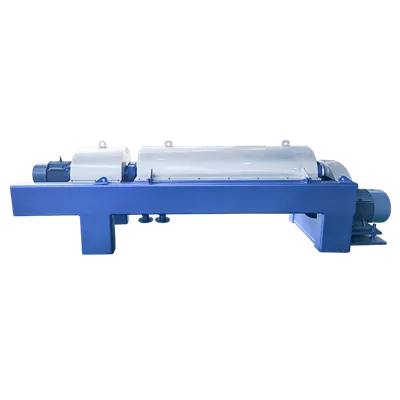
First, let’s start with the basics: a decanter centrifuge is a continuous, high-speed separation machine designed to split a mixture of two phases—usually a solid and a liquid, though sometimes two immiscible liquids—using centrifugal force, instead of gravity. Gravity works fine for separating, say, sand and water, but it’s slow. If you have a slurry that’s 20% solid, letting it settle in a tank can take hours, even days, and you end up with wet solids that are still too heavy to dispose of easily, or liquid that’s still cloudy with fine solids. A decanter cuts that time to minutes, or even seconds, and gives you a far drier solid output and clearer liquid output than gravity ever could.
Unlike other centrifuges you might have heard of, like a basket centrifuge that spins in batches, decanters run 24/7 for months at a time, making them perfect for industrial-scale production. That continuous operation is a big part of why they’re so popular. You don’t have to stop to unload a basket every hour; you feed the slurry in one end, get dry solids out the other, and clean, reusable liquid out the middle, nonstop.
Now, let’s get into the parts, because it’s the design that makes a decanter tick. The main body is a large, horizontal rotating bowl—this is the part that spins at high speed, usually between 1,500 and 4,000 RPM, depending on the model and the material being separated. Inside that bowl is a smaller rotating screw conveyor, called the scroll. The scroll and the bowl spin at slightly different speeds—usually a difference of 10 to 50 RPM, depending on the application. That tiny speed delta is the key to the whole process. Here’s how it works step by step: when you pump the slurry into the decanter, it’s fed through a rotating inlet in the center of the scroll. The slurry is thrown outward, against the wall of the bowl, by centrifugal force. Because solids are heavier than liquid, they get pressed against the inner wall of the bowl, forming a thick cake of solid material that builds up over time. The scroll, spinning a tiny bit faster than the bowl, pushes this solid cake along the wall toward the end of the decanter that’s tapered, or cone-shaped. At the very end of the cone, there are small openings called beach ports, and that’s where the solid exits the machine, dry and ready for disposal or further processing.
Meanwhile, the lighter liquid phase—often called the centrate—doesn’t get pressed all the way to the wall. It stays closer to the center of the rotating bowl. There are overflow weirs at the opposite end of the decanter, and the clear liquid flows over these weirs and out of the machine, where it can be reused for washing equipment, sent to a further processing step, or discharged safely.
Wait, but why is that speed difference so important? If the scroll spun at the exact same speed as the bowl, the solids wouldn’t move at all—they’d just sit against the wall. The small differential speed is what lets the scroll pull the solids along, even though both are spinning at thousands of RPM. It’s a delicate balance, and that’s where a good decanter design matters most. Too big a speed difference, and you risk wearing out the scroll too fast; too small, and the solids don’t move, and the decanter can clog. As a supplier, we spend a lot of time matching that differential to the specific slurry our customers are working with—whether that’s coal slurry, food processing waste, sludge from a municipal treatment plant, or yeast from a brewery.
Let’s talk about common applications, because that’s where most people see decanters in action, and why they’re such a versatile piece of equipment. In municipal wastewater treatment, decanters are used to dewater primary and secondary sludge. Instead of paying to haul away wet sludge that’s 80% water, a decanter can dry it down to 30-40% moisture, cutting disposal costs by more than half. That’s a huge savings for small towns or large metro areas alike.
In the oil and gas industry, decanters are used to separate drilling mud, separate oil from produced water, and treat waste from fracking operations. The environmental regulations around produced water are strict, so being able to clarify that water and reuse it for drilling, or discharge it safely, is non-negotiable. Decanters handle that separation far more efficiently than gravity tanks, and they’re built to withstand the corrosive chemicals in drilling fluids, with materials like stainless steel or special alloys that hold up to harsh conditions.
Food and beverage is another big sector. Breweries use decanters to separate yeast from beer after fermentation, so they can reuse the yeast for future batches, or sell it as a nutritional supplement. Winemakers use decanters to remove grape pulp and sediment from wine, resulting in a clearer, smoother final product. Processing plants for vegetable oils use decanters to separate oil from seeds or other plant material, and even in the meat industry, they separate fat from lean meat products or process animal byproducts into feed.
Even in construction and mining, decanters are used to dewater tailings from mining operations, separate sand from water in concrete production, and clean up runoff from construction sites. Anywhere you have a mixture of solid and liquid that needs to be separated efficiently, there’s a good chance a decanter centrifuge is the right tool.
Now, let’s address some common misconceptions I hear from new customers. A lot of people think decanters are only for big operations, but there are models for small-scale use too—we’ve supplied units to craft breweries with just a few thousand barrels a year, and to mines that process millions of gallons of slurry a day. Another misconception is that they’re hard to operate. Modern decanters come with automated controls, so you don’t need a PhD in engineering to run them. They have sensors that monitor speed, moisture content of the solid output, and flow rate, and they can adjust automatically to keep the separation consistent. The maintenance is straightforward too—regular checks of the scroll and bowl, replacing wear parts like the conveyor blades or seals, which is all standard industrial upkeep.
Wait, but what about the cost? It’s true that a decanter centrifuge is a capital investment, but most customers see a return on that investment within 12 to 24 months, depending on their application. The savings on disposal costs, product recovery, and reduced energy use compared to other separation methods add up fast. For example, a wastewater plant we worked with last year was paying $120 per ton to haul wet sludge; after installing a decanter, their disposal cost dropped to $40 per ton, and they even started selling the dried sludge as fertilizer for local farms, adding an extra revenue stream.
As a supplier, I can tell you that the biggest mistake new buyers make is picking a one-size-fits-all decanter. Every slurry is different—its density, particle size, viscosity, and even temperature affects how it separates. A decanter that works great for yeast will not work well for mining tailings. That’s why we don’t just sell a machine and walk away; we work with customers to test their slurry first, in our test facilities, to make sure we pick the right model, adjust the design if needed, and train their team to operate it properly. We also offer custom modifications, like special coatings for corrosive materials, extra large beach areas for very fine solids, or enclosed units for hazardous environments, so the decanter fits exactly what they need.
Let me share a quick story to illustrate that. A craft brewery out of Oregon reached out to us a couple years ago, saying they were losing thousands of gallons of beer every month because their old separation system was letting too much yeast go with the finished beer, and they couldn’t reuse the remaining yeast without it being contaminated. We brought a small test decanter to their facility, ran samples of their beer and yeast mix, adjusted the differential speed and bowl speed to match their specific mixture, and found that we could recover 98% of the yeast and reduce beer loss by 90%. They installed the unit, and within a year, they had recouped the cost of the decanter just from the recovered yeast and saved beer. That’s the kind of impact a good decanter can have for small operations, not just big corporations.
Another thing to consider is sustainability, which is a big focus for almost every industry now. Decanters help reduce waste: they cut the amount of solid material sent to landfills, reuse water instead of discharging it, and recover valuable products that would otherwise be lost. In an era of strict environmental regulations, being able to process waste on-site, reduce disposal costs, and meet compliance standards is a huge advantage. A decanter isn’t just a piece of equipment—it’s a tool that helps businesses operate more efficiently, more profitably, and more sustainably.
Now, if you’re reading this, and you’re considering a decanter centrifuge, what should you think about first? Start with your specific separation needs: what’s the slurry you’re working with, what’s the desired output (moisture content of solids, clarity of liquid), and what’s your production scale. Don’t hesitate to reach out with samples of your material, or to ask questions about testing, models, or applications. A good supplier will take the time to understand your needs, not just push the largest or most expensive unit they sell.
Whether you’re a plant manager looking to cut disposal costs, a small business owner looking to recover valuable product, or an engineer trying to meet new environmental standards, a decanter centrifuge is a solution worth exploring. It’s been around for over a century, but modern designs have made them more efficient, more reliable, and more adaptable than ever before.
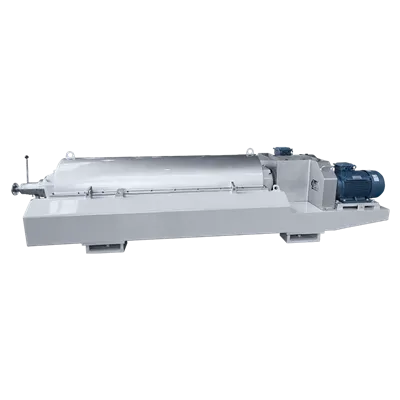
If you’re ready to learn more about how a decanter centrifuge can work for your operation, we’re here to help. We offer on-site testing, custom design support, and ongoing maintenance services to make sure your investment works as hard as you do.
2 Phase Decanter Centrifuge References
- Solid-Liquid Separation with Decanter Centrifuges, International Society of Automation, 2021.
- Decanter Centrifuge Applications in Municipal Wastewater Treatment, Water Environment Federation, 2022.
- Industrial Centrifuge Technology: Design and Operation, CRC Press, 2019.
- Cost-Benefit Analysis of Decanter Centrifuges in Food and Beverage Processing, Journal of Food Engineering, 2020.
- Environmental Regulations and Solid-Liquid Separation Equipment, Environmental Protection Agency, 2023.
Lishui Yuanrong Environmental Protection Equipment Co., Ltd.
As one of the most professional decanter centrifuge manufacturers and suppliers in China, we have world-leading production equipment and strong manufacturing capabilities. Please feel free to buy customized decanter centrifuge from our factory. Also, quotation is available.
Address: Lot 6-1, Block 15, Wanyang Zongchuang City, Lishui, Zhejiang, China
E-mail: 361184920@qq.com
WebSite: https://www.yrhdc.com/
