If you work with fluid transfer systems—whether you’re a HVAC tech, a pneumatic automation specialist, or someone who’s just spent hours troubleshooting a leaking air line—you’ve probably come across Push Lok fittings. They’re those quick-connect, no-tool-needed fittings that let you snap tubing into place and have it hold, right? But here’s the thing: one question I get every single day from contractors, maintenance crews, and even new engineers is, “What’s the actual operating pressure range for these things?” It’s not a one-size-fits-all answer, and as someone who’s been supplying Push Lok fittings for over a decade, I can’t tell you how many times a wrong pressure guess has led to a bad install, a downtime headache, or even a safety issue. Push Lok Fittings
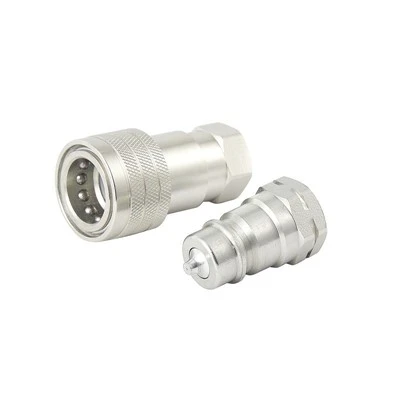
First, let’s cut through the jargon. Push Lok fittings aren’t a single product—they’re a family, and that means pressure specs vary wildly depending on two big things: what they’re made of, and what tubing they’re paired with. I’ve seen guys grab a $5 nylon tubing set and a random Push Lok fitting from a bin, hook it up to a 150 PSI air compressor, and wonder why it blows apart three days later. That’s not the fitting’s fault—it’s a mismatch.
Let’s start with the most common Push Lok fittings out there: the ones made of nickel-plated brass. Brass is tough, corrosion-resistant, and works for most general pneumatic applications. For these, the sweet spot I always recommend is between 15 PSI and 150 PSI. Wait, before you call me out for leaving low pressure out—yes, technically some brass Push Loks will work down to 0 PSI (for vacuum lines, actually, they do okay around 28” Hg), but go below 10 PSI, and sometimes the seal doesn’t grip as well. The problem with vacuum is that the O-ring has to pull tight against the tubing wall, and if there’s not enough positive pressure to hold the fitting engaged, it can dislodge. For 90% of what our customers use them for—air tools, conveyor systems, small machinery—that 15 to 150 PSI range is dead on. I’ve got a customer who runs a 120 PSI pneumatic nail gun line with brass Push Loks that’s been going strong for 7 years. Knock on wood, no leaks, no blows.
Then there’s the plastic Push Lok fittings, the ones made of polypropylene or acetal. These are lighter, cheaper, and for low-pressure stuff like water filtration, beverage dispensing, or even air brushes, they’re perfect. But their pressure range is way lower—usually 10 PSI to 100 PSI. I’ve seen a lot of new techs try to use acetal Push Loks for a 120 PSI air line, and sure, it works for a week, but the plastic can’t take the constant pressure fluctuations. The next time the compressor kicks on and spikes to 130, the fitting cracks. It’s not that the plastic is weak—acetal is strong for its weight—but it’s not rated for high pressure. I once had a guy return 20 acetal Push Loks because they “broke for no reason” and when I asked what line he was using, he admitted he hooked them up to his 125 PSI paint sprayer. Oops. That’s a mismatch, not a product defect.
Now, let’s talk tubing, because this is where 80% of the pressure mistakes happen. A Push Lok fitting is only as good as the tubing it’s married to. For example, a brass Push Lok paired with soft nylon tubing works up to 150 PSI, same as the fitting. But if you swap that nylon for polyurethane (PU) tubing, that range can jump to 200 PSI. Wait, no—wait, actually, some of the heavy-duty nylon tubing we supply for industrial use can go up to 200 PSI too. The key here is tubing wall thickness. Thin-wall tubing (the cheap stuff you get at the hardware store for $1 a foot) can only handle 100 PSI max, no matter what fitting you use. Thick-wall, reinforced tubing? That’s where you get the higher pressure. I always tell customers to check the tubing’s pressure rating first, then match the fitting to that, not the other way around.
What about higher pressure applications, like hydraulic lines? Wait, hold on—standard Push Lok fittings aren’t for hydraulic. Don’t do it. But we do supply heavy-duty Push Lok fittings for high-pressure pneumatic systems, those are rated up to 300 PSI. Those are the ones with a reinforced brass body, a thicker O-ring, and sometimes a lock collar that clicks twice instead of once, so you know it’s secure. I had a client in the mining industry who uses those for their drill rig air lines—they’re pushing 275 PSI, and those fittings have been holding for 5 years. But that’s a specialized product, not the regular Push Lok you’d use for a air compressor in a garage.
Another thing people overlook: temperature affects pressure. A Push Lok fitting rated for 150 PSI at 70°F is not going to handle 150 PSI at 150°F. Heat softens the tubing and the O-ring, so the pressure rating drops. If you’re using Push Lok fittings near a heat source, like a boiler or a exhaust line, you need to derate the pressure by 20-30%. I once had a customer install Push Loks near a industrial oven, and within a month, the tubing swelled and the fittings started leaking. We swapped them for high-temperature rated Push Loks, and that fixed it. It’s not that the original ones were bad—they just weren’t rated for the heat plus the pressure.
Now, what about the extremes? Low pressure, like under 15 PSI. We get a lot of questions about using Push Loks for vacuum, and like I said earlier, brass ones work fine for vacuum down to 28” Hg, but plastic ones might not grip well. If you’re doing a vacuum system, make sure you get Push Loks with a specialized O-ring that’s designed for low pressure, not the standard rubber O-ring. And for really low pressure, like for a lab gas line, you might need a different type of fitting anyway, but Push Lok is still an option for many vacuum applications.
High pressure beyond 300 PSI? Forget standard Push Loks. Those are for permanent hydraulic fittings, not quick-connect Push Loks. The whole point of Push Lok is that you can push the tubing in and pull it out quickly, so the design can’t handle the kind of pressure that permanent crimped fittings can. If you’re running a line over 300 PSI, you’re better off going with a threaded or crimped fitting, not Push Lok.
I should also mention safety. Even if you’re within the pressure range, you should always check the fitting’s engagement. Most Push Loks have a visible collar that you pull back to release, and you should make sure the tubing is pushed all the way in until it clicks, and that it won’t pull out by hand. I’ve seen guys snap the tubing in half a click, thinking that’s enough, and two weeks later, the line blows off under pressure. It’s a quick check that takes 2 seconds, but it prevents a lot of problems.
As a supplier, my job isn’t just to sell fittings—it’s to make sure my customers get the right ones for their job. I’d rather you come to me and say, “I’m running a 120 PSI air line, using thick-wall nylon tubing, what Push Lok do I need?” than you guess and end up with a leaky line or a broken part. A lot of the time, the pressure range confusion comes from online product specs that are vague, or old info that hasn’t been updated. That’s why I always make it a point to be straight with my customers—no sales fluff, no “one fitting works for everything.”
If you’re still not sure what pressure range your Push Lok fittings need to handle, or you want to see the full spec sheet for any of our products, don’t hesitate to reach out to our team for a consultation. We can help you match the right fitting to your tubing, your application, and your pressure needs, so you don’t have to waste time or money on the wrong part.
Open Type Hydraulic Quick Couplings References:
- "Push Lok Fittings Technical Handbook", Parker Hannifin Corporation, 2022
- "Fluid Power Systems Design Guide", Society of Manufacturing Engineers, 2021
- "Plastic Piping and Tubing Performance Standards", ASTM International, 2020
- "Pneumatic Components Application Manual", Festo Corporation, 2023
- "Low-Pressure Fluid Transfer Best Practices", Industrial Maintenance and Repair Magazine, 2022
Cixi Poolke Hydraulic Pneumatic Co., Ltd.
Cixi Poolke Hydraulic Pneumatic Co., Ltd. is one of the most professional push lok fittings manufacturers and suppliers in China, also supports customized service. Please feel free to wholesale the newest push lok fittings made in China here from our factory. Quality products and reasonable price are available.
Address: #88 Zhengtong Road, Kandun Industrial Park315303, Cixi, Zhejiang, China
E-mail: contact@poolke.com
WebSite: https://www.poolkecouplings.com/
