When I first started in the precision components industry over two decades ago, I thought “precision” was just a buzzword companies threw around to sound technical. Back then, I was selling basic machined parts to local factories, and I’d hear clients ask for “tight tolerances” without really understanding what that meant for their products. Over the years, I’ve learned that mechanical precision components aren’t just parts—they’re the quiet backbone of every product that moves, measures, or performs with consistency. If you’ve ever wondered what makes these parts different from regular machined components, and why they matter to so many industries, let’s break it down. Precision Components

First, let’s define what sets mechanical precision components apart. Unlike standard parts, which are made for general use and have looser tolerance limits, precision components are manufactured to extremely tight specifications—often measured in millionths of an inch, or microns. A tolerance of 0.001 inches (25 microns) might sound tiny, but for a component that fits inside a medical device’s surgical robot, that difference between 0.100 inches and 0.101 inches could mean the difference between a successful procedure and a life-threatening error. For aerospace parts, even a 0.0005-inch deviation can lead to catastrophic failure at 30,000 feet. That’s the core of precision: every dimension, surface finish, and material property has to match exact requirements, no exceptions.
I see this every day in my shop. Last quarter, we made custom bearing races for a satellite’s attitude control system. The customer required a surface roughness of 8 microinches (0.2 microns)—smoother than a polished mirror—and the inner ring’s roundness had to stay within 2 microns. If the roundness was off even a little, the satellite’s thrusters wouldn’t align properly, and the $200 million mission would be in jeopardy. That’s why precision isn’t just about cutting metal; it’s about controlling every step of the manufacturing process to eliminate variation.
Let’s talk about the key types of mechanical precision components, because this is where a lot of people get confused. We don’t just make “pins” or “gears”—we make specialized parts for specific applications. Let’s go through the most common categories you’ll encounter:
Bearings are one of the most widely used precision components. Whether it’s a ball bearing in a smartphone’s camera autofocus system or a roller bearing in a wind turbine’s gearbox, these parts reduce friction and support rotating loads. Precision bearings aren’t off-the-shelf; they’re engineered for specific speed, load, and temperature conditions. For example, high-speed precision bearings for machine tools have to run at 20,000 RPM without generating excess heat, so we use specialty steels and polish the raceways to reduce friction to nearly zero.
Gears are another big one, but not the standard gears you’d find in a toy car. Precision gears have tooth profiles machined to within 0.0005 inches, so they mesh smoothly without noise or wear. In industrial robotics, a gear’s backlash (the play between teeth) has to be less than 1 arcminute—imagine trying to turn a doorknob and having a full 60 seconds of delay before the latch moves. For collaborative robots, that backlash can’t exist at all, because a small delay could cause the robot to push too hard on a human coworker.
Then there are linear motion components: shafts, guides, and ball screws. These parts control linear movement, like the Z-axis on a CNC machine or the stage in a semiconductor wafer stepper. A ball screw’s lead accuracy—how far the nut moves per revolution—has to be within 0.001 inches per foot. If a wafer stepper’s ball screw was off by just 0.002 inches, the $10,000 silicon wafer would be misaligned and useless. I’ve had semiconductor clients fly in to our shop to inspect ball screws; they know that even the smallest deviation costs them thousands of dollars in lost product.
Finally, there are custom machined and molded components for medical devices. These are the strictest of all, because they’re often in contact with the human body. For example, orthopedic implant screws have to have a thread pitch accurate to 0.0002 inches to fit perfectly into bone, and the surface has to be smooth enough to prevent infection. We make many of these parts from titanium, a material that’s strong, biocompatible, but also hard to machine—so every cut has to be precise, or the part is scrap.
Now, you might be thinking: why can’t a regular machine shop make these parts? The answer is two-fold: equipment and expertise. A standard shop might have a mill that can cut to 0.01 inch tolerance, but a precision component manufacturer needs 5-axis CNC machines with sub-micron accuracy, coordinate measuring machines (CMMs) that can inspect every dimension automatically, and quality control processes that are ISO 9001 or AS9100 certified. That’s not cheap—our shop has over $2 million in inspection equipment alone, because we can’t afford to send a bad part to a client in aerospace or medical.
But equipment is only half the battle. You need people who know how to use that equipment. I’ve machined parts for 25 years, and I still learn something new every time we take on a challenging job. Last year, we had a job for a defense client: a precision bushing that had to fit inside a tank’s fire control system. The client’s drawing called for a tolerance of 0.0003 inches, and every time we ran the part, we got a 0.0001-inch variation. Our machinist, Tom, spent three nights running tests on the lathe—changing the speed, the tool angle, even the type of cutting oil—until he found the right combination. That’s the expertise you can’t buy: the ability to adjust processes when the numbers aren’t perfect, because a single out-of-spec part can’t be reworked; it has to be scrapped.
Another point that’s often overlooked: material science. Precision components aren’t just made from steel or aluminum. For high-temperature applications, we use Inconel, a nickel-based alloy that’s strong at 1,800 degrees Fahrenheit. For lightweight aerospace parts, we use aluminum 7075-T6, which is strong but hard to machine without distorting. And for medical parts, we use 316L stainless steel or medical-grade titanium, which have to meet strict purity standards. Choosing the right material isn’t just about strength; it’s about how it behaves when machined. Some materials expand when cut, so we have to account for thermal expansion during machining to get the final dimension right. For example, when we machine a shaft from aluminum, we have to cut it slightly undersized when it’s cool, because when it warms up during use, it will expand to the exact required size. That’s a level of detail that regular shops don’t deal with.
Let’s talk about the industries that rely on these parts, because if you don’t work in engineering, you might not realize how widespread precision components are. Aerospace is one: every commercial airplane has thousands of precision parts, from the turbine blades in the engine to the brackets that hold the wings on. If a turbine blade is off by even a few thousandths of an inch, it can cause the engine to vibrate violently, which can lead to engine failure. Semiconductor manufacturing is another: each wafer for a smartphone has hundreds of layers, each aligned with precision parts. If those parts are off, the wafer has dead chips, which means millions of lost devices. Medical devices: pacemakers, insulin pumps, surgical robots—all use tiny precision parts that have to work every time. Even consumer products: the camera in your iPhone has a linear actuator with precision components that moves the lens to focus, and if that part wasn’t made accurately, your photos would be blurry.
I want to make one thing clear: precision components aren’t just for big companies. Small startups in robotics or medical devices also need these parts, but they often struggle to find a supplier that can handle small orders with the same precision as a big aerospace client. That’s where we come in. We work with startups to make prototype parts, so they can test their designs before going to full production. A few years ago, we worked with a startup that was making a portable insulin pump. Their first prototype didn’t work because the pump’s gear was too loose—backlash was too high. We made a custom gear with 0.5 arcminutes backlash, and within a few months, their product was on the market. That’s the impact precision parts have: they turn ideas into products that save lives or make people’s lives easier.
Now, let’s address a common misconception: higher precision isn’t always better. It depends on the application. If you’re making a shelf bracket, a 0.01-inch tolerance is fine—no one will notice. But if you’re making a part for a microscope’s focusing mechanism, you need 0.0001-inch tolerance. The key is matching the precision to the requirement. A good precision component supplier will work with you to understand your application, not just follow a drawing. Last year, a client came to us with a drawing for a gear that called for 0.0005-inch tolerance. When we talked to their engineers, we learned the gear was going to be used in a small drone’s camera gimbal. We realized that 0.001-inch tolerance would be more than enough, and we could make the part for 30% less cost. That’s the value we provide: not just precision, but practical precision that meets your needs without overpaying.
So, what should you look for when choosing a precision components supplier? First, certifications: ISO 9001, AS9100 for aerospace, ISO 13485 for medical—these are non-negotiable. They mean the supplier has a quality management system in place to ensure consistent parts. Second, inspection capabilities: make sure they use CMMs, surface roughness testers, and other equipment to verify every part, not just sample a few. Third, experience: ask what industries they work in, and if they have experience with your specific application. A supplier that’s only done automotive parts might not understand the requirements for aerospace. And fourth, communication: you should be able to talk to a machinist or engineer, not just a salesperson, to discuss your part.
At our shop, we’ve built our business on that communication. When a client comes to us with a sketch, not a detailed drawing, we work with them to turn that sketch into a part that works. We’ve had engineers come to us with a part that didn’t work, and we’ve redesigned it using our material and machining expertise to fix the problem. That’s what sets us apart: we’re not just a shop that cuts metal—we’re a partner in your product development.
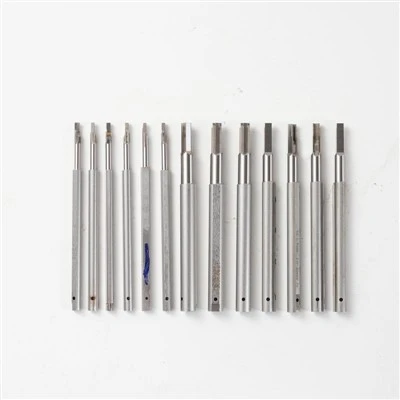
If you’re a design engineer, a procurement manager, or a startup founder who needs mechanical precision components, I invite you to reach out to us for a consultation. Whether you need a prototype for a new product, replacement parts for existing equipment, or full production runs, we have the expertise and equipment to deliver parts that meet your exact requirements. Don’t let a bad component delay your project or compromise your product’s performance. Let’s work together to turn your design into a high-precision part that works, every time.
Precision Components References:
- AS9100 Rev D: Quality Management Systems – Requirements for Aviation, Space, and Defense Organizations, International Aerospace Quality Group, 2016.
- Groover, M. P., Fundamentals of Modern Manufacturing: Materials, Processes, and Systems, 7th Edition, John Wiley & Sons, 2020.
- Aerospace Industries Association, “Precision Machining for Space Systems,” 2021.
- Medical Device and Diagnostic Industry (MD+DI), “Biocompatibility Requirements for Precision Components,” 2022.
- Linear Motion Systems Association, “Tolerance Standards for Ball Screws and Linear Guides,” 2020.
Dongguan Hezong Precision Technology Co., Ltd.
With abundant experience, we are one of the most professional precision components manufacturers and suppliers in China. Please feel free to buy durable precision components made in China here from our factory. All customized products are with high quality and competitive price.
Address: No.973, Dalang Section of Wozhang Road, Dalang Town, Dongguan City, Guangdong Province
E-mail: postmaster@hezongjingmi.com
WebSite: https://www.hzpre.com/
