If you’ve ever dived into the world of industrial heating, RF welding, or high-power radio frequency (RF) systems, you’ve probably come across two terms thrown around interchangeably: “RF heating capacitors” and “high-voltage capacitors.” At first glance, it makes sense to lump them together—both store electrical energy, both handle high voltages, both feel like they belong in the same “heavy-duty capacitor” bucket. But after 12 years as someone who designs, manufactures, and supplies RF heating capacitors for applications from automotive interior welding to medical device thermoforming, I can tell you: the differences aren’t just minor. They’re foundational, and choosing the wrong type can turn a smooth production line into a costly, dangerous headache in a matter of minutes. RF Heating Capacitor
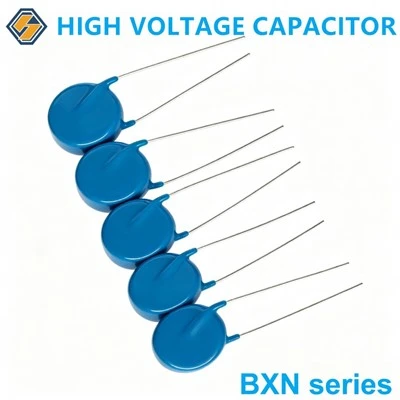
I first learned this lesson early in my career, when a small sign shop came to me panicking about a failed capacitor in their 27.12 MHz RF welding machine. They’d bought a generic high-voltage capacitor from a local electronics distributor, replaced it, and 48 hours later it burned out—taking out their matching diode and costing them $1,800 in downtime and parts. “They said it was ‘high-voltage,’ so it should work, right?” the owner asked. Wrong. That generic capacitor was built for 60 Hz audio equipment, not the high-frequency, high-current switching that’s core to RF heating. That day, I realized how many people miss this distinction, and how much misinformation is floating around.
Let’s start with the basics: what do both types of capacitors do, and where do they overlap? High-voltage (HV) capacitors are a broad category, designed to store energy for circuits that run on mains power, low-frequency transformers, or even small DC power supplies. They’re built to handle steady, low-frequency voltage spikes—think the 50/60 Hz AC in your home’s wall outlet. Their key job is to block DC while passing AC, or filter out voltage ripple. RF heating capacitors, on the other hand, are purpose-built for RF circuits, which run in the 3 MHz to 100 MHz range (most industrial RF heating uses 13.56 MHz, 27.12 MHz, or 40.68 MHz, regulated by the FCC to avoid interfering with broadcast signals). Their job isn’t just to store energy—it’s to tune the RF circuit, deliver consistent, low-loss power to the load (like plastic or fabric being welded), and handle the rapid, repetitive current swings that come with high-frequency operation.
The first big difference is construction, and it starts with the dielectric material. High-voltage capacitors often use film dielectrics like polypropylene or polyester, or even ceramic for low-current, high-voltage applications. But those materials aren’t optimized for RF. Polyester, for example, has a high dielectric loss (called tan delta, or dissipation factor) at RF frequencies—meaning it converts more electrical energy into heat instead of delivering it to the load. In a high-power RF system (which can run from hundreds to tens of thousands of watts), that excess heat builds up quickly, leading to premature failure or even catastrophic breakdown.
RF heating capacitors almost exclusively use a special grade of polypropylene called “MKP-RF,” or sometimes polystyrene, depending on the frequency. These materials have extremely low dissipation factor (often less than 0.0005 at 27 MHz) and stable capacitance across a wide frequency range. That’s non-negotiable. If a high-voltage capacitor’s capacitance drifts 5% at 60 Hz, you might not notice. But an RF circuit relies on precise capacitance to stay in resonance—if the value shifts even 1%, the power output drops, the weld quality becomes inconsistent, and you can damage the RF generator’s power amplifier. I’ve seen systems that were perfectly tuned when installed go out of spec because a wrong dielectric material caused capacitance drift over time.
Then there’s the electrode design. High-voltage capacitors often use foil electrodes (thin metal sheets layered with dielectric) because they’re cheap to manufacture. But foil has a problem at high frequencies: skin effect. At frequencies above 1 MHz, electrical current doesn’t flow evenly through the entire cross-section of a conductor—it travels mostly near the surface (the “skin” of the conductor). Foil’s surface area is limited, so it creates more inductance at RF frequencies, which disrupts circuit resonance and increases energy loss.
RF heating capacitors use metalized electrodes—ultra-thin metal layers (usually aluminum or zinc) deposited directly onto the dielectric film, instead of separate foil sheets. The metalization is only a few nanometers thick, but it’s tailored to match the skin effect at RF frequencies, so the current flows efficiently along the surface without unnecessary inductance. Many of our RF capacitors also have a self-healing feature, where tiny pinholes in the dielectric cause a small arc that vaporizes the surrounding metalization, isolating the defect before it grows. Generic high-voltage foil capacitors don’t have this self-healing capability, so a single micro-defect can turn into a full short circuit in an RF application.
Next, power handling and thermal management. Industrial RF heating systems run at continuous high power, often 24/7. A typical high-voltage capacitor is rated for peak power, not continuous power, and its thermal resistance is designed for low-frequency operation, where heat dissipates slowly. RF heating capacitors are built for low dissipation factor, which means they generate far less internal heat. But even so, their packaging is optimized for heat transfer—they’re often molded with high-temperature epoxy or encased in metal cans with built-in cooling fins, or designed to mount directly to a heatsink on the RF generator. I’ve had customers come to me with RF systems overheating because they tried to use standard HV capacitors and couldn’t cool them fast enough; in some cases, those capacitors were running 40°C hotter than their rated maximum, cutting their lifespan from 10,000 hours to less than 1,000.
Voltage rating is another point people mix up, but it’s not just about the maximum voltage. A high-voltage capacitor might be rated for 10 kV DC or 10 kV AC at 60 Hz, but its AC voltage rating drops sharply at RF frequencies. At 27 MHz, that same 10 kV HV capacitor might only handle 2 kV AC, because the rapid voltage changes at high frequency cause more electric field stress across the dielectric, leading to breakdown. RF heating capacitors are rated specifically for their AC voltage at the operating RF frequency, so you don’t have to derate them drastically for high-frequency use. For example, a 0.01 µF, 5 kV RF capacitor rated for 27 MHz can safely handle 5 kV AC at that frequency, while a standard HV capacitor of the same DC rating would fail almost immediately when exposed to that voltage at 27 MHz.
Let’s talk about applications to make this concrete. A high-voltage capacitor works great in a low-frequency transformer for a 60 Hz power supply, or in a DC filter for a battery charger. But it’s the wrong choice for: welding PVC rainwear, bonding automotive door panels, curing wood with RF, sealing food packaging, or any industrial process that uses RF power over 1 MHz. Those applications rely on tight frequency control, consistent power delivery, and low loss—all things a dedicated RF capacitor is built to provide.
I also want to address a common misconception: that you can “test” a high-voltage capacitor and it will work the same as an RF one. A simple capacitance meter measures value, but not dissipation factor or series inductance—two critical metrics for RF circuits. A capacitor might read the same value on a multimeter, but have a much higher tan delta or inductance at 27 MHz, which ruins the circuit. That’s why so many customers end up having to replace capacitors again and again with generic parts—they’re not testing the right parameters for RF operation.
Now, it’s not just a “better” vs. “worse” situation; it’s a “different purpose” situation. If you’re building a low-voltage audio amp, a generic HV capacitor is perfectly fine. If you’re designing a 40 MHz RF generator for medical device sterilization, you need an RF heating capacitor. Choosing the right part reduces downtime, improves product quality, lowers energy costs, and keeps your team safe. I’ve seen clients switch from generic HV parts to our RF capacitors and cut their capacitor replacement costs by 70% in the first year—all because they stopped fighting the physical laws of high-frequency electricity.
Safety is another angle I can’t ignore. RF heating systems operate with high power and high voltage, and a capacitor failure can lead to electric arcs, fire, or even shock. Standard HV capacitors often have lower dielectric strength at high frequencies, so when they fail, they release more energy suddenly. RF capacitors’ dielectric materials and construction are designed to fail gradually, reducing the risk of catastrophic events. We even build our RF capacitors with fail-safe designs, like pressure relief vents, that vent excess energy safely before the case ruptures—something rarely found in generic high-voltage parts.
So, what should you look for when sourcing RF heating capacitors vs. high-voltage capacitors? If your application runs above 1 MHz, requires precise frequency matching, or needs low energy loss, ask for a capacitor with a published dissipation factor, series inductance, and RF frequency rating. Don’t just go by “high voltage” on the label. And if you’re unsure, reach out to a supplier that specializes in RF heating capacitors—we know the ins and outs of matching the right part to your specific frequency, power level, and application.
I’ve been in this industry long enough to know that every customer’s needs are unique: a small sign shop might need a 0.005 µF capacitor for a 27 MHz welder, while a large automotive parts manufacturer needs a 0.1 µF, 10 kV capacitor for a 13.56 MHz system for door panel bonding. The right part isn’t one-size-fits-all, but the core principles of RF capacitor design are consistent. Generic high-voltage parts can’t deliver the performance, reliability, or safety that dedicated RF heating capacitors provide for high-frequency industrial processes.
If you’re tired of premature capacitor failures in your RF heating system, or if you’re designing a new line and want to get it right the first time, don’t hesitate to reach out. We work with clients across industries to source and customize RF heating capacitors that fit their exact needs, no guesswork required.
High-Voltage Chip-Type Glass-Glaze Resistor Dividers References
- Arcot, S. (2018). High-Frequency Capacitors: Design, Materials, and Applications. Wiley.
- IEEE Standard for Radio Frequency Inductive and Capacitive Heating Systems (IEEE C95.1-2019).
- "Dielectric Materials for RF Capacitors." Journal of Electronic Materials, vol. 47, no. 10, 2018, pp. 5789-5797.
- Skin Effect in High-Frequency Conductors, National Institute of Standards and Technology (NIST) Technical Note 1512, 2020.
Anshan HVRTION Electronic Technology Co., Ltd.
As one of the most professional rf heating capacitor manufacturers and suppliers in China, we’re featured by quality products and good price. Please rest assured to buy discount rf heating capacitor for sale here and get quotation from our factory. We also accept customized orders.
Address: 17 East Jiefang RD., Tiedong District, Anshan, Liaoning, China.
E-mail: hvrtion@hotmail.com
WebSite: https://www.hvrtion.com/
