If you’ve ever stood in a Walmart parking lot next to someone hitching a small utility trailer to their pickup, or watched a neighbor load a lawn mower and some mulch into a box trailer for a weekend yard project, chances are you’ve seen that small, four-pin plastic plug being clicked into place. For years, I’ve been selling these little plugs out of my trailer parts warehouse, and one question still comes up at least twice a week from first-time trailer owners, new delivery drivers, and even occasional RV renters: “What is the four pin trailer connector plug actually used for?” Trailer Connector Plug
Let me set the scene to answer that. Ten years ago, I started this business in a small garage, fixing broken trailer lights for local guys who couldn’t find parts fast enough. Back then, I thought the four pin connector was just a cheap afterthought, something that held two wires together so lights worked. After seeing thousands of these plugs go out the door, and troubleshooting hundreds of trailer electrical systems, I know it’s way more than that. It’s the central communication point for every light that makes a towed trailer safe to drive on public roads, period. No four pin plug, no working lights, no legal trip.
Let’s break it down simply, because that’s how I explain it to the guy who just bought a 5×8 utility trailer and has never towed anything before. The four pin trailer connector plug is a standardized electrical interface. That means every manufacturer—whether you’re talking about a small, single-axle utility trailer made in Iowa, a camper trailer built in Oregon, or even a small boat trailer for fishing trips—uses the same pin layout for this specific plug. That standard is set by the Society of Automotive Engineers (SAE), a group that sets rules for all kinds of vehicle parts. That’s why if you buy a new trailer, the four pin plug on it will fit right into the slot on your pickup, SUV, or even some older cars. No custom parts, no adapters needed (not for basic lights, anyway).
Now, what do those four pins actually do? I’ve written these little pinouts on napkins and business cards so many times, I can recite it in my sleep. Each pin carries power to a different light function, all of which are required by law in every U.S. state and most countries with major road systems. Let’s list them out: first, the left turn signal. That’s the pin that powers the blinking light on the left side of the trailer, so other drivers know when you’re about to turn left. Second, the right turn signal, same job but for the right side. Third, the taillight and running light circuit—this is the light that stays on when your car’s headlights are on, so people behind you can see how big your trailer is, day or night. Fourth, the brake light circuit, which is the bright, steady light that turns on when you press your tow vehicle’s brake pedal. That’s the one that lets drivers behind you know you’re stopping, even if your left and right signals aren’t activated.
Wait a second—you might be wondering, what about reverse lights? What about brake controllers for heavier trailers? That’s where a lot of people get confused, and where I see a lot of people trying to use a four pin plug for something it’s not designed for. For those extra functions, you use a different connector, like a six or seven pin. But for the basics that every road-legal small trailer needs, the four pin is non-negotiable. I had a customer last spring who tried to add reverse lights to his small cargo trailer by tapping into the four pin plug. That didn’t work, because reverse power isn’t sent through that circuit. He ended up having to add a separate wire, but I was glad I was there to tell him before he burned out his tow vehicle’s electrical system. That’s the kind of thing I warn everyone about: don’t overload the four pin connector. It’s built to carry low-amperage power—enough for small incandescent bulbs, or even the modern LED lights most trailers use now, which draw way less power. But run something extra, like high-power reverse lights or a brake controller, and you’ll blow a fuse or even melt the plug. That’s why we always recommend matching the connector to your trailer’s needs.
Another common question I get: when is a four pin plug the right choice, and when do you need something else? Let’s go over that. A four pin is perfect for all small trailers: utility trailers under 2,000 pounds, small box trailers, standard boat trailers, camper trailers that are under 15 feet long, and even the little enclosed trailers people use for moving small loads like furniture. If your trailer has electric brakes? That’s when you’ll need a six or seven pin, because you need an extra circuit for the brake controller. If you have a larger trailer with reverse lights or auxiliary power for things like a winch, that’s when you step up. But for 70% of the trailers we sell parts for, the four pin is exactly what they need. I look at our sales numbers every month, and that tracks: four pin connectors make up about 65% of all trailer electrical parts we ship. That’s because most people don’t need heavy-duty features, they just need to haul their stuff safely.
Let me tell you about a real example that stuck with me a few years ago. A guy named Mike came into my warehouse one Saturday, panicking. He was supposed to drive 3 hours to pick up his daughter from college, and he was towing a small U-Haul trailer loaded with her dorm furniture. When he stopped at a gas station, his trailer left and right lights weren’t working. He’d stopped for a soda, and when he pulled back on the road, a cop pulled him over and said his trailer was unsafe. He’d been using the trailer for months, and he never checked the plug. When he showed me the four pin plug on his U-Haul, one of the pins was corroded. Salt from the roads in the winter, dirt, and water had gotten into the plastic casing, and it was blocking the power from getting through. We swapped out the plug in 5 minutes, tested the lights, and he was on his way. That day, I realized how much a small four pin plug matters. It’s not just a part—it’s what keeps you from getting a ticket, keeps other drivers safe, and keeps you on the road.
Maintenance is something I try to drill into every customer who buys a four pin connector from me. It’s not a set-it-and-forget-it part. Because it’s exposed to the elements—rain, snow, mud, road salt, dust—it can get dirty or corroded over time, which causes lights to flicker or not work at all. The best part about these plugs is how easy they are to maintain. Once a month, or before a big trip, I tell people to pull the plug out of their tow vehicle, and take a look at the four pins. If they look dark or have green or white buildup (that’s corrosion), grab a little sandpaper or a wire brush, gently clean the pins, and maybe put a little dielectric grease on them to keep water out. I keep little packets of dielectric grease at the counter for exactly this, and I give them out for free to anyone who buys a connector. It’s a $2 fix that saves you from a $100 tow bill, or a dangerous accident.
A lot of people ask me if four pin connectors are universal. The short answer is yes for North America and most of Europe, but there are some small regional differences. A few years back, I shipped a batch of four pin plugs to a customer in Germany, and he emailed me a picture a week later saying they fit perfectly. That’s because the SAE standard is widely adopted, even internationally. The only time you run into issues is if you’re dealing with older equipment, or specialty trailers, but for 99% of the time, a standard four pin connector will work for your basic towing needs.
As a supplier, I’ve seen a lot of changes to trailer connectors over the years. Ten years ago, almost every trailer used incandescent bulbs, which draw more power, and the four pin plugs were usually made of basic plastic. Now, most people use LED trailer lights, which use less power, so we make smaller, lighter four pin plugs that work better with LEDs. We also sell heavy-duty four pin plugs for people who tow a little more, like landscaping companies that haul 1,000 pounds of mulch a week. The core function never changes, though: that four pin plug is still the heart of the trailer’s electrical system.
If you’re someone who’s new to towing, or just need to replace a worn out connector, don’t overcomplicate it. Ask yourself: what am I towing? If it’s a small utility, boat, or cargo trailer under 2,000 pounds, a four pin trailer connector is exactly what you need. You don’t need a six or seven pin unless you have electric brakes or extra features. And remember: a good connector is worth the small investment. A quality four pin plug costs a few dollars, but it will last for years, while a cheap one might corrode or break after a few trips.
I’ve built this business on being honest with people, not trying to sell them something they don’t need. I hate when I see other parts shops upsell a customer a more expensive connector when all they actually need is a simple four pin. That’s why I take the time to explain exactly what each connector is used for, so people make the right choice.
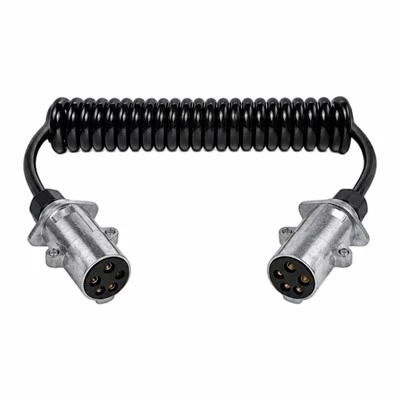
If you’re in the market for a trailer connector plug, whether you’re replacing an old one, outfitting a new trailer, or just need parts for a weekend project, I’m here to help. We carry a full range of four pin plugs, from basic to heavy-duty, plus all the maintenance supplies you need to keep them working for years. If you have questions about which plug is right for your trailer, or need help troubleshooting your trailer’s electrical system, reach out to talk through your needs. No sales pressure, no confusing jargon—just straight answers for your towing needs.
Trailer Spare Parts References:
- Society of Automotive Engineers (SAE) Standard J1128, Towing Vehicle to Trailer Electrical Connections, 2021
- National Highway Traffic Safety Administration (NHTSA), Requirements for Trailer Lighting and Reflective Devices, 2022
- Trailer Towing Safety Council, Small Trailer Electrical Maintenance Guidelines, 2023
Yuyao Mideal Electric Co., Ltd.
Yuyao Mideal Electric Co., Ltd. is one of the most professional trailer connector plug manufacturers and suppliers in China, also supports customized service. With abundant experience, we warmly welcome you to wholesale cheap trailer connector plug in stock here from our factory. For price consultation, contact us.
Address: No.28, Lujiafan Road, Langxia Street, Yuyao City, Zhejiang Province, China
E-mail: manager@nbmideal.com
WebSite: https://www.midealcord.com/
