Hey there, let’s cut through the jargon real quick—if you’ve ever stared up at a power line strung between two tall utility poles and wondered how those lines don’t short out when it rains, or how they hold back thousands of volts without touching the wood or metal below, you’re looking at a disc porcelain insulator. As someone who’s been supplying these bad boys to power grids, solar farms, and substation teams for over a decade (yes, I’ve seen every mistake a first-time buyer can make with these things), I’m here to break this down like we’re chatting over a coffee—not a textbook. No stuffy terms, no overcomplicated math, just the real deal on what these do, why they matter, and why getting the right one matters way more than most people think. Porcelain Insulator
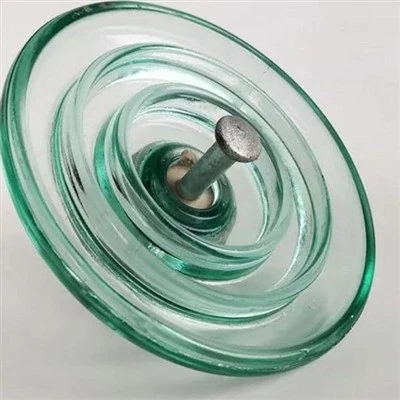
First off, let’s get the basics: a disc porcelain insulator is that round, usually cone-shaped (or sometimes bell-shaped) chunk of high-grade ceramic that sits between a live power line and the grounded structure it’s mounted to—think utility poles, cross-arms, or substation bus bars. Their whole job is one super critical, simple thing: electrically insulate. So instead of the electricity flowing straight off the line into the pole (and then into the ground, which would blow fuses, take out power grids, and generally cause chaos), it stays exactly where it’s supposed to be. No shortcuts, no mess, just controlled flow.
Wait, but why disc-shaped? Couldn’t they just be a solid block of ceramic? Yeah, they could—but that’s basically the old way, and not nearly as effective. Let’s talk about why discs are the MVP here. First up, the surface area. Electricity is sneaky, especially when it’s wet or dirty. If you’ve ever noticed those little ridges on a disc insulator (we call them skirts, but you can think of ’em as rain gutters for the electricity), those aren’t just for looks. When it rains, the skirts force water to run down the sides instead of pooling on the flat top or bottom where it could create a short path. Dirty, dusty, salty environments (like coastal areas or farm fields where fertilizer dust is thick) work the same way—small gaps between the skirts catch debris so it doesn’t form a conductive layer that would let electricity leak. A solid block would have way less surface area to fight that, and you’d have to replace it way more often.
Also, disc porcelain insulators are usually strung together in what we call a string (like a necklace of discs) for extra high-voltage lines. A single disc might handle, say, 15,000 volts (depending on the size and quality), so if you’ve got a line carrying 100,000 volts, you string 7 or 8 discs together to spread the load. That’s way easier than making one big, honking insulator that could handle 100k volts—those would be way heavier, more expensive, and way harder to mount. The disc string also gives a little flex in high winds, so it doesn’t crack or snap from the tension of a tight line. Win-win.
Now, let’s talk about the “porcelain” part, because not all ceramic is the same. These aren’t the chipped mugs you have in your cupboard. The porcelain we use is a super high-purity alumina ceramic (usually 90% alumina or higher) mixed with clay, feldspar, and other stuff to make it strong, non-porous, and resistant to temperature changes. Here’s why that matters: porcelain insulators have to survive everything Mother Nature throws at ’em. Extreme cold, brutal heat, wildfire smoke, salt spray from the ocean, even bird poop (yes, that’s a real thing that can cause issues if it sits too long). Porcelain doesn’t absorb water, so it doesn’t expand and crack when temperatures drop. It’s way stronger than plastic insulators for heavy-duty lines too—plastics can fade, get brittle in the sun, or break if a tree falls on ’em. We only use porcelain that’s tested to meet industry standards, but I’ll be real: some cheaper suppliers cut corners here, using lower-grade porcelain that cracks after a few years and causes outages. Don’t do that.
Wait, let’s bust a common myth right here: people often mix up disc porcelain insulators with other types, like composite insulators (those plastic-looking ones with fiberglass cores). Yeah, composites are getting more popular for some uses, but disc porcelain is still the workhorse of the grid for a reason. They’ve been around for over 150 years—Thomas Edison’s early lines used similar porcelain discs, for Pete’s sake. They’re reliable, way more forgiving of damage (a little chip on the edge of a skirt? No big deal, most of the time), and have a way longer lifespan—we’re talking 50+ years with minimal maintenance, vs composites which might need replacement in 20-30. That’s why most utility companies stick with porcelain for transmission lines and substations; downtime from an insulator failure costs way more than the initial investment.
Now, let’s get into what makes a good disc porcelain insulator, because not all are created equal. I’ve had customers come to me complaining they bought cheap ones online that cracked in a year, so let’s list the non-negotiables:
First, electrical performance. The porcelain has to be free of flaws—even a tiny air bubble hidden inside can cause a short when voltage spikes. We test every single disc for electrical breakdown before it leaves our warehouse (no cutting corners here). Then, mechanical strength. These things hold up hundreds of pounds of tension from the power line, plus wind, ice, snow. A good disc should handle at least 10,000 lbs of tensile load, depending on the size. We do a burst test too—squeeze it until it breaks, and it has to hold way more than it ever would in real use.
Then, environmental resistance. As I mentioned earlier, salt spray, dust, pollution. We make different types for different places: standard for rural areas, anti-pollution (with deeper skirts) for industrial or coastal zones, and even ones treated to resist wildfire smoke and ash. I had a customer out in Arizona last year who told me their old cheap discs got covered in dust and started leaking current after a dust storm, so we hooked them up with our anti-pollution discs, and they haven’t had an outage since. Win.
Wait, also the shape and size. Discs come in different diameters—most are 10 inches or 12 inches across, but sometimes 14 for extra heavy-duty lines. The skirt design changes too: some have sheds that angle more to keep water and debris off, others are flatter for areas with less rain. If you pick the wrong size, you’re asking for trouble. I once worked with a solar farm installer who bought too-small discs for their 34.5kV substation lines—they kept arcing in the rain, and we had to replace all of them 6 months later. Don’t be that guy.
Let’s talk about real-world use cases, because that’s where it matters most. Transmission lines that carry power from a power plant to a substation: those are high-voltage (69kV up to 765kV), so they use long strings of disc insulators—like 30 or more discs for 765kV. Distribution lines that carry power from the substation to your neighborhood: lower voltage (12kV to 35kV), so 3 to 8 discs, usually. Substations themselves have disc insulators too—they mount transformers, circuit breakers, and bus bars, so they need to handle high voltage and heavy mechanical load. Even wind turbines use them for the lines going from the turbine to the grid.
Now, let’s get to the part that’s important for you, if you’re someone who needs these (utility companies, electrical contractors, solar farm developers, whatever). If you’re in the market for disc porcelain insulators, don’t just go for the cheapest option. Here’s my advice from 10+ years in the game: first, figure out your exact specs. What voltage are you working with? What’s the environment like? Coastal? Desert? Industrial? Do you need them to resist pollution or wildfire debris? Then, buy from a supplier that actually tests their product, not just slaps a “grade A” sticker on cheap Chinese imports (no shade, but you get what you pay for). We do all our own testing right here, so I can stand behind every disc we sell.
And hey, if you’re not sure what you need? Hit us up. We don’t pressure people to buy stuff they don’t need—we’ll ask you about your project, your location, the voltage, and tell you exactly what works, no hidden fees, no fine print. We’ve worked with small local contractors and big national utilities, so we know how to tailor to what you need.
Wait, let’s wrap this up with why disc porcelain insulators matter, beyond just tech stuff. They’re the unsung heroes of the power grid. Every time you flip a light switch, charge your phone, or turn on your AC, there’s a string of these discs keeping that electricity flowing safely. Without ’em, power lines would short out left and right, blackouts would be way more common, and repairing them would cost a fortune. They’re not flashy, they’re not talked about in the news, but they’re the backbone of reliable power.

So if you’re out there needing disc porcelain insulators for your next project, don’t waste time hunting around. We’ve got a wide range of standard and custom discs, all tested to meet industry standards, ready to ship when you need ’em. Whether you need a handful for a small substation repair or a truckload for a new transmission line, we’ve got you covered. Just reach out, tell us what you’re working on, and we’ll get you sorted with the right discs at a fair price. No B.S., no overcharging, just solid product and solid support.
Porcelain Surge Arrestor References
- Electrical Transmission and Distribution Reference Book, Westinghouse Electric Corporation, 1964
- IEEE Standard for Insulator Testing Methods, IEEE Std 450-2010, 2010
- Porcelain Insulator Design and Application, American Ceramic Society Bulletin, Vol. 82, No. 3, 2003
- Environmental Performance of Disc Porcelain Insulators, International Council on Large Electric Systems (CIGRÉ) Report 2013
EC Insulator Jiangxi Co., Ltd.
EC Insulator Jiangxi Co., Ltd. is one of the most experienced porcelain insulator manufacturers and suppliers in China, also supports custom service. Please feel free to wholesale advanced porcelain insulator made in China here from our factory. Contact us for more details.
Address: Yuanyang Road, Wuyuan County, Shangrao City, Jiangxi Province China
E-mail: info@ec-insulators.com
WebSite: https://www.eci-elecglobal.com/
