If you’re running a machine shop—whether it’s a small family-owned operation with a few CNC lathes or a mid-sized facility churning out high-volume automotive components—chips are one of those unavoidable, often overlooked byproducts that can grind your entire workflow to a halt if you don’t manage them right. I’ve spent the last 12 years as a chip conveyor supplier, talking to hundreds of shop owners, operators, and maintenance managers, and one question comes up more than almost any other: Can a chip conveyor actually be used with CNC lathes? Chip Conveyor
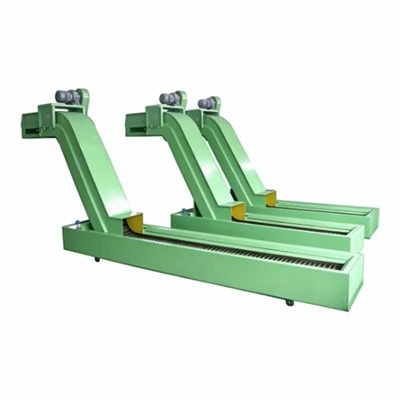
I get it. When you’re already juggling tool changes, cycle times, quality checks, and keeping your CNC lathes running at peak performance, adding another piece of equipment might feel like an unnecessary expense. I’ve had shop foremen look me dead in the eye and say, “I’ve been running lathes for 15 years without a conveyor—why would I need one now?” But what I’ve learned is that most of those guys end up coming back a year later, frustrated with clogged sumps, rusted tool holders, or operators spending 30 minutes a shift raking chips out of the machine’s work envelope. Let’s break this down honestly: yes, chip conveyors are not just compatible with CNC lathes—they’re often the difference between a profitable, smooth-running shop and one that’s dealing with costly downtime and safety hazards.
First, let’s talk about why CNC lathes produce such unique chip challenges. Unlike milling machines, which often throw chips outward in a spray, lathes spin a cylindrical workpiece at high speed, so chips curl, twist, and tend to wrap around the spindle, chuck jaws, or tool holders. For aluminum, that’s long, stringy swarf that can get tangled in hard-to-reach crevices; for steel or stainless steel, it’s often dense, granular, or short, sharp shavings that pack tightly into the sump (the reservoir that holds cutting fluid and coolant). I recently worked with a job shop in Ohio that ran only 304 stainless steel parts on 8 Haas SL-20 lathes. They were using a manual system where an operator would stop each machine twice a day, pry chips out with a hook, and dump them into a barrel. After three months, they noticed that the coolant in each sump was getting contaminated with tiny metal fines, which was leading to 12% more tool breakage per month and a 4-hour total downtime a week. Once they installed our hinged belt chip conveyors on each lathe, that dropped to less than 30 minutes of weekly downtime, and tool breakage fell to 3%. That’s not a hypothetical—that’s real results from a real shop.
Now, let’s get into the practical compatibility part, because that’s what most people actually want to know. Not all conveyors work with all lathes, right? Let’s go over the most common types and how they pair with CNC lathes, so you can see why this isn’t a one-size-fits-all, but it’s definitely a fit.
First, hinged belt conveyors. These are the workhorses of our industry, and they’re the most common pair with CNC lathes. The belt is made of interlocking steel or plastic segments that can handle dense, sharp chips—perfect for steel, stainless, brass, or even cast iron lathe chips. For lathes, you mount the conveyor directly to the back or side of the machine’s sump, with the inlet positioned right under the spindle area, where chips fall off the rotating workpiece. The belt moves at a slow, steady pace, lifting the chips out of the sump and dumping them into a collection bin, away from the machine. One thing I love about hinged belt conveyors for lathes is that they can handle both large, heavy chips and small, fine metal fines—no clogging, because the gaps between the belt segments let excess coolant drain back into the sump, so you’re not wasting fluid or making a mess on the shop floor. I also installed a set of these for a aerospace parts shop that runs titanium lathe parts—super dense, stringy chips that would wrap around anything. The conveyor’s flat belt pulls the chips loose as they fall, so nothing gets tangled and stays stuck in the machine.
Next, magnetic conveyors. These are ideal for ferrous (steel, iron) chips, which makes them a great fit if all your lathes are running metal that sticks to a magnet. Magnetic conveyors use a moving stainless steel belt with embedded rare-earth magnets that attract the chips, pull them out of the sump, and carry them up to the discharge point. They’re cheaper than hinged belt conveyors, easier to maintain (no cleaning interlocking belt segments), and work really well for small, granular chips like cast iron or mild steel turnings. The only catch? They don’t work for non-ferrous chips like aluminum, brass, or copper—those will just slide right past the magnets. I recommended magnetic conveyors for a small job shop in Texas that ran mostly gray iron parts on 4 older lathes. They loved it because it fit under the limited space they had next to each machine, and the magnetic design meant they didn’t have to deal with stringy iron chips getting tangled in moving parts.
Then there’s screw conveyors (also called auger conveyors). These are less common for individual CNC lathes, but they’re perfect if you have a row of lathes set up in a cell, and you want a central system to collect all chips. The screw is a rotating tube inside a trough that moves chips along the length of the trough to a central bin. A lot of larger production shops use this because it’s easy to connect multiple lathes to one conveyor, so you only have one collection point instead of a bin next to each machine. The downside is that they’re not great for stringy chips—those can wrap around the screw and cause jams. I usually pair screw conveyors with production lathes running granular chips, like those making engine blocks from cast iron, where chips are small and uniform.
Now, let’s address the concerns I hear most from shop owners who are on the fence. First: will a conveyor fit my existing CNC lathe? I’ve been in shops where they had 10-year-old lathes that they thought were too small for a conveyor, but we just customize the mounting brackets to fit. Most conveyor suppliers (like mine) make models that fit all major brands: Haas, Okuma, DMG Mori, Mazak, etc. We take measurements of the machine’s sump and the space around it, so we can design a conveyor that mounts without modifying the machine itself—no drilling into the machine’s frame, no permanent changes that void the warranty. That’s a big one for shops that care about resale value of their equipment.
Another concern: will a conveyor interfere with the lathe’s operation? I’ve had operators tell me they were worried the conveyor would block access to the chuck or the tool changer, or get in the way during a part change. The key here is mounting location. For most CNC lathes, the best place to mount the conveyor is at the rear of the machine, so it’s out of the way of the front work area, where operators load and unload parts. The discharge bin is usually at the end of the conveyor, on the side, so chips are collected away from the machine, not spilling onto the floor. Also, modern conveyors have safety interlocks that shut off the conveyor if there’s a jam or if someone opens the access panel, so there’s no risk of it causing an accident or damaging the lathe. I once worked with a shop that had a Mazak lathe where the operator thought the conveyor would block the parts chute, so we installed a compact conveyor that tucks under the rear of the sump—no interference at all, and it runs 24/7 without issues.
Cost is another big one. I know, adding a conveyor is an upfront expense, but let’s do the math. The shop in Ohio I mentioned earlier was paying one operator $22 an hour to spend 2 hours a day raking chips out of 8 lathes. That’s $44 a day, $1,144 a month, $13,728 a year, just for manual chip removal. They spent $8,000 total for 8 conveyors (one per lathe) and the installation. They paid that off in less than 8 months, and then started saving on tool breakage and coolant replacement. Coolant is another hidden cost: when chips are left in the sump, they contaminate the coolant with metal fines, so you have to change it every 3-6 months. With a conveyor, most shops only need to change coolant once a year, because the sump stays clean. That’s another $500-$1,000 per lathe per year in fluid costs, plus disposal fees for used coolant. Add that up, and a conveyor pays for itself fast.
Wait, but what about shops that run short runs or custom parts, so chip volume is low? I still recommend conveyors. Even if you only run a few parts a day, the stringy aluminum chips from turning aircraft-grade aluminum will still wrap around the chuck, and the small steel shavings will pack into the sump. I had a custom machine shop in Michigan with 2 small CNC lathes, running 1-2 parts a day for medical devices. They were using a small rake to pull chips out, and once they dropped a rake into the sump, which got sucked into the coolant pump, causing $3,000 in damage. They installed a compact hinged belt conveyor for $1,800, and avoided any more incidents. That’s the thing: downtime from chip-related issues isn’t just about lost time—it’s about expensive repairs, scrap parts, and missed deadlines. A conveyor eliminates most of that risk.
I also want to talk about the safety aspect, which a lot of shops overlook. OSHA has specific guidelines about metalworking fluids and chip handling: loose chips on the floor are a slipping hazard, sharp metal shavings can cut operators, and contaminated coolant can cause skin irritation or respiratory issues. When you use a chip conveyor, all chips are collected in a closed bin, so they don’t spill onto the floor. The excess coolant drains back into the sump, so no pooling on the shop floor. No more operators reaching into the spinning lathe to pull chips out— that’s one of the most common causes of machine shop injuries, and a good conveyor completely removes that risk. I’ve seen too many operators get their gloves caught in a chuck while trying to rake chips, or get cut by a sharp chip. Conveyors are an investment in your team’s safety, not just your bottom line.
Now, let’s get real about the limits, because no piece of equipment is perfect. If you’re running very fine, powder-like chips from a grinding lathe, some conveyors might not handle that as well—you’d need a different type of filtration, maybe a combination conveyor and magnetic separator. If your lathes have very small sumps with no space to mount a conveyor, we can make compact under-sump conveyors that fit in tight spaces. And if you’re running a mix of ferrous and non-ferrous chips, a hinged belt conveyor is the only type that will handle both. The key is working with a supplier that knows CNC lathes, not just generic conveyors—someone who can assess your specific chip type, your machine models, your shop layout, and recommend the right solution, not just sell you the cheapest one.

At the end of the day, I’ve been in this industry long enough to know that the shops that thrive are the ones that plan for the small, messy parts of machining, not just the big, expensive lathes. A CNC lathe is a precision tool worth tens of thousands of dollars—you wouldn’t leave it unguarded from chips and coolant contamination, right? A chip conveyor is the same kind of investment: it protects your lathe, your tools, your coolant, your team, and your schedule.
Conveyor Belt If you’re tired of spending time and money on manual chip removal, dealing with sump clogs, or stressing about chip-related downtime, I’d be happy to walk through your specific setup and recommend the right conveyor for your CNC lathes. We can work with your machine models, your chip types, and your budget to find a solution that fits your shop, no modifications required, no hidden fees. Feel free to reach out to our team to discuss your needs and get a customized consultation.
References
- Machinery’s Handbook, 31st Edition, Industrial Press, 2020, pp. 1422-1435
- OSHA General Industry Safety and Health Guidelines, 29 CFR Part 1910, Metalworking Fluid Hazards, 2022
- Manufacturing Engineering and Technology, Kalpakjian, S., Schmid, S.R., Pearson Education, 2019, pp. 567-572
- CNC Machine Tool Coolant and Chip Management Best Practices, Society of Manufacturing Engineers, 2021
- “Cost-Benefit Analysis of Chip Conveyor Systems for Small Machine Shops,” Journal of Small Manufacturing Businesses, Vol. 18, No. 2, 2023, pp. 45-52
Yantai Amho Machinery Co., Ltd.
Yantai Amho Machinery Co., Ltd. is one of the most experienced chip conveyor manufacturers and suppliers in China. We have world-leading production equipment and strong manufacturing capabilities. Please rest assured to buy advanced chip conveyor at competitive price from our factory.
Address: 201 SOUTH BUILDING, NO.3 SHIXUE ROAD, ZHIFU DISTRICT, YANTAI, CHINA.
E-mail: richard@amho.com.cn
WebSite: https://www.amhomachinery.com/
