If you’ve ever stepped onto a metal fabrication shop floor, you’ve likely heard two terms tossed around by the team huddled over a cutting table: metal CNC router and plasma router. As someone who’s spent 12 years selling and supporting metal CNC routers—starting in a cramped garage space building custom machines for local welders and fabricators, now working with clients across 18 countries—I’ve heard more than my share of mix-ups. Last month, for example, a customer from a structural steel firm emailed confused because he’d used a plasma router for 10mm carbon steel parts, but needed cleaner edges for his new cabinetry line. He’d assumed the two tools were interchangeable, and while both cut metal, the differences go far deeper than just the word “router” in their names. Let’s break this down, straight from the perspective of someone who fixes, sells, and troubleshoots these machines daily, no textbook jargon that doesn’t match what actually happens on the shop floor. Metal CNC Router
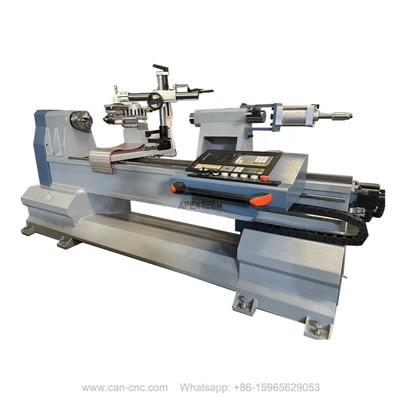
First, let’s start with the core mechanism—because that’s where every other difference stems from. A plasma router uses a high-velocity jet of ionized gas (plasma) superheated to temperatures up to 30,000°C, about five times hotter than the surface of the sun. That plasma is forced through a tiny nozzle, melted through metal, and blown away by the same gas stream. It’s fast, and it works on almost any conductive metal. A metal CNC router, by contrast, uses physical cutting bits—carbide, diamond-tipped, or solid carbide end mills—mounted in a rotating spindle. The bit spins at speeds up to 20,000 RPM, shearing away metal in thin chips like how a carpenter cuts wood, just designed for far harder materials. That physical difference is the root of everything else you’ll notice on a shop floor.
Take material compatibility, for instance. I’ve seen plasma routers struggle with anything non-conductive—obviously, since they rely on electrical conductivity to create that plasma jet. So if a shop needs to cut aluminum, brass, copper, or steel, plasma works fine, but it will never touch plastic, wood, or ceramic. A metal CNC router? That’s a different story. Our machines are built specifically for ferrous and non-ferrous metals, but they can also cut thinner non-metal materials if the right bit is swapped in—though for most of our metal-focused clients, that’s a bonus, not the primary use. Wait, but even within metals, there are gaps. I recently had a client who needed to cut 6mm thick titanium aerospace parts. Plasma can cut titanium, but it leaves a hard oxide layer on the cut edge that requires hours of grinding to remove, which adds massive labor costs. Our metal CNC routers, when fitted with the right solid carbide bit, cut titanium with a clean edge that barely needs post-processing. That’s the kind of real-world tradeoff most blogs skip over—they just list materials, not the hidden work after the cut.
Next, cut quality and precision, which is where I see most clients make their wrong choice. Plasma routers are fast, but their cuts have a few consistent quirks. The heat from the plasma jet causes a heat-affected zone (HAZ) on the metal, that thin layer where the material’s microstructure changes, hardening or becoming brittle. For structural steel parts that don’t need tight tolerances, that’s fine—but if you’re making custom metal signs, precision aircraft brackets, or parts that will be welded together with tight gap requirements, that HAZ is a problem. Also, plasma cut lines have a slight taper: the top of the cut is a tiny bit wider than the bottom, just from how the plasma jet spreads as it exits the nozzle. That taper means you have to account for extra material if you’re nesting parts, which can add up to wasted sheet metal over a big production run.
Our metal CNC routers, on the other hand, cut with physical bits, so the HAZ is almost non-existent. The shear action of the end mill doesn’t superheat the surrounding metal, so the edge stays exactly the material it was before cutting—no brittleness, no need for grinding for most precision applications. Precision-wise, a properly calibrated metal CNC router can hold tolerances of ±0.025mm (about the thickness of a human hair) consistently, even on small, complex parts. A plasma router? Typical tolerance is around ±0.5mm, maybe ±0.2mm with a very skilled operator, but it’s not reliable for small or complex shapes. Last quarter, a customer making custom metal hardware for luxury yachts told me he switched from plasma to our metal CNC router because his parts kept not fitting when he welded them to the yacht’s railings. The plasma cut edges had slight taper, so the fit was off by half a millimeter, and the HAZ meant he had to grind each part for 10 minutes. With our router, he cuts 12 parts a day, each fitting perfectly with no grinding. That’s the kind of on-the-job benefit you don’t get from a spec sheet.
Then there’s speed and production volume. I get it—plasma is marketed as fast, and for very thick metal (25mm or more) where a metal CNC router would take hours, plasma is indeed quicker. But for anything under 15mm thick, our metal CNC router is often faster when you account for post-processing time. Let’s do the math: cutting a 10mm steel sheet part with plasma takes 2 minutes, but then you spend 10 minutes grinding the HAZ and adjusting for taper. With our metal CNC router, cutting the same part takes 5 minutes, and post-processing is 30 seconds to deburr the edge. For a 100-part production run, that’s 1,200 minutes of plasma time vs. 530 minutes of router time—plus the cost of grinding discs, labor, and wasted material from the taper. That math works out almost every time for small to medium production runs. For very thick metal (over 20mm), plasma is still cheaper and faster, but that’s a narrow use case. I’d never recommend a metal CNC router for someone who only cuts 50mm thick steel beams all day long.
Cost is another big one, and it’s not just the machine price. A basic plasma router can cost half as much as an entry-level metal CNC router—like, $10,000 vs. $20,000 for a 4×4 foot table. But don’t forget the ongoing costs. Plasma uses consumables: nozzles, electrodes, gas filters, those get replaced every 2-8 hours of use, and a set costs $50-$100. A metal CNC router uses bits—carbide end mills— which cost more upfront, but last 8-20 hours of cutting, depending on the material, and don’t require frequent replacement of small parts. Electricity usage: plasma uses a lot more power to generate that 30,000°C plasma jet, so monthly utility bills are higher. Also, safety: plasma routers generate a lot of fumes and noise, so you need proper ventilation and hearing protection. Our metal CNC routers produce much less fume, and the noise level is comparable to a vacuum cleaner, so less need for heavy safety gear.
But wait, I won’t bash plasma routers—they have their place. For small fabricators who just need to cut occasional steel plates for fencing or simple structural parts, a plasma router makes total sense. It’s cheap upfront, fast for thick metal, and easy to learn for someone with basic shop experience. The problem comes when a shop buys a plasma router assuming it can do everything, then gets frustrated when it can’t make custom parts, or has to spend extra time fixing the cuts. That’s where our metal CNC routers shine.
I should also mention what a metal CNC router can do that plasma can’t, because that’s what many clients don’t realize they need. Our machines can cut 3D shapes—like curved brackets, custom enclosures, or even decorative metal art—where plasma is almost limited to 2D cuts. The rotating spindle can use different bits to create grooves, countersinks, and even engrave text or logos directly into the metal. Last year, I worked with a client who makes custom metal award plaques; he used to outsource the engraving, but with our metal CNC router, he does it in-house, cutting and engraving each plaque in one operation. Plasma can’t engrave, or at least not cleanly—any text from plasma has that HAZ and taper, so it’s not suitable for precision work.
Now, let’s talk about common mistakes I see new buyers make. Last year, a new customer bought a plasma router because a friend told him it was “all he needs for metal cutting.” He runs a small shop making custom fire pits and metal signs. After a month, he emailed me saying he was losing money: his sign edges looked burnt, he had to grind every part, and he couldn’t make the detailed curves he wanted for his fire pits. We walked him through his needs, ended up selling him a compact metal CNC router with a 6×8 foot table, and a set of specialty bits for aluminum and steel. Six months later, he sent us photos of his shop floor, showing a stack of finished signs with clean edges, and a note that his production time had cut by 70%. That’s the kind of success story that makes the job worth it—helping someone pick the right tool, not just sell the most expensive machine.
So, when should you pick which tool? Let’s break it down simply, from what I’ve seen on the shop floor:
Pick a plasma router if: You only cut conductive metal, mostly 15mm thick or thicker, need very fast speed for simple shapes, and don’t need tight tolerances or precision finishes. It’s the budget workhorse for basic structural cutting.

Pick a metal CNC router if: You need tight tolerances, clean edges, can cut thin to medium metal (under 20mm), need 2D or 3D complex shapes, do production runs where post-processing adds up, or work with metals like titanium or aluminum for precision parts. It’s the investment that pays off over time with less labor, less waste, and higher-quality parts.
CO2 Laser Cutting Machine At the end of the day, the right tool depends on your specific needs—not just the sales pitch or the price tag. I’ve seen fabricators thrive with either, but too often people buy the wrong one because they don’t fully understand the differences. If you’re in the market for a metal cutting tool and want to talk through which makes sense for your shop—whether you’re a small startup or a large fabrication facility—we’re here to help. We can walk you through production numbers, part requirements, and even let you test a sample cut on our machines to see the difference for yourself. Don’t waste money on a tool that won’t fit your work; get something that helps you make better parts and save time.
References
- Metal Cutting: Fundamental Principles and Applications, Society of Manufacturing Engineers, 2018.
- Plasma Cutting Technology Handbook, American Welding Society, 2020.
- Precision Machining for Aerospace Components, National Institute of Standards and Technology, 2021.
- Shop Floor Safety Guidelines for Metal Fabrication, Occupational Safety and Health Administration, 2019.
Jinan APEX CNC Technology Co., Ltd.
Jinan APEX CNC Technology Co., Ltd. is one of the most professional metal cnc router manufacturers and suppliers in China, specialized in providing high quality products and service. Please feel free to buy high-grade metal cnc router for sale here from our factory. For more information, contact us now.
Address: YuanZhuang Industrial Park, Shizhong District, Jinan City, China
E-mail: info@apex-cnctech.com
WebSite: https://www.can-cnc.com/
