Hey everyone, if you’re in the business of storing bulk materials like grains, cement, or animal feed, you know silos aren’t one-size-fits-all. You’ve probably seen some projects that call for special coatings on silos—think food-grade linings, anti-corrosion layers for coastal salt air, or even heat-resistant coatings for industrial use. And if you’re a fellow silo roll forming machine operator or someone looking to get into making custom silos, you’ve definitely asked this: Can our roll forming setup actually handle producing silos with these special coatings? Spoiler alert—yes, it can… but only if you know how to tweak your process. As the owner of a small, no-nonsense silo roll forming machine supply company, I’ve gotten this exact question at least once a week for the past year, so let me break it down like I would for a guy in my workshop drinking bad coffee. Silo Roll Forming Machine

First, let’s make sure we’re on the same page here. A silo roll forming machine isn’t some fancy space gadget—it’s a continuous line that bends flat metal sheets into the curved panels that make up a silo’s walls, right? We take a coil of steel (or aluminum, sometimes), feed it through a series of rollers that shape it into a precise curve, punch holes for bolts as it goes, and cut it to length before it’s stacked to build the silo. Special coatings? These aren’t just your basic paint job you slap on a panel after it’s cut. We’re talking pre-applied coatings most of the time, because post-coating curved panels is a nightmare. Wait—let me explain why pre-coating is key here, because that’s where the confusion starts.
Special coatings fall into a few main categories that folks actually use, not the marketing fluff: food-grade epoxy linings (for grain that’s gonna be turned into cereal or animal feed that people eat), zinc-rich primers for coastal areas (to fight salt corrosion), polyurethane coatings for outdoor silos that take UV hit 24/7, and even ceramic-based coatings for silos that store hot cement or minerals. The big takeaway: these coatings are almost always applied to the raw metal coil before it ever touches the roll forming machine. Trying to coat a curved panel after forming means you’re leaving edges uneven, missing spots in the bolt holes, and wasting so much coating material it’s not even funny. So the roll forming machine’s job isn’t applying the coating—it’s handling the pre-coated coil without ruining it. That’s the part most people miss.
Now, let’s get into the nitty-gritty of how a standard roll forming machine works with regular bare steel, and where special coatings throw a wrench in things. Bare steel is tough, it’s got some give, it doesn’t scratch super easy. Pre-coated coils? Let’s say you’ve got a food-grade epoxy coil— that coating is thin, delicate, and scratches like crazy. Or a ceramic coating that’s hard and brittle, so if you bend it too sharply, it cracks. That’s where most cheap, entry-level roll forming machines fall flat. They’re built for bare steel, so their rollers are heavy, made of basic steel, and they press way too hard on the coil. Scratches the coating, cracks it, ruins the whole batch of panels.
So what do you need to adjust on your roll forming machine to make this work? First, the rollers. We recommend swapping out standard steel rollers for polyurethane-coated or chrome-plated rollers—wait, no, not just chrome, hard chrome with a polished finish. The smooth finish means less friction, so the coating doesn’t get scratched as the metal is pulled through. And we space the rollers differently too—more rollers, each applying less pressure, instead of a few big heavy ones. That way, you’re bending the metal gradually, not forcing it into a curve, which is perfect for brittle coatings like ceramic. I’ve had a guy from Florida call me last month who’s making silos for shrimp farms—super salty air, so he’s using zinc-rich pre-coated coils. He had an old machine that would crack the coating in the first three panels, and with our updated roller setup, he’s running 1,000 panels a shift with zero coating damage.
Next up, the feed tension. This is a big one I don’t hear enough folks talking about. Regular roll forming sets just use enough tension to pull the coil straight through the machine, but if you’ve got a coated coil, too much tension can stretch the metal, which makes the coating peel off. We’ve added a few simple mods to our machines here that adjust tension automatically based on the coating type. Like, if you load a food-grade epoxy coil, the machine drops tension by 20% because epoxy is thin and doesn’t stick well if the metal stretches. If you’ve got a thicker polyurethane coating, you can crank tension up a little because it’s more flexible. It’s not rocket science, but it’s the difference between a good batch of silo panels and a whole load of scrap.
Wait, what about bolt holes? A lot of special coatings have strict rules about no scratches or debris in the bolt holes, right? Because if you get a scratch in a food-grade coating, that’s a bacteria magnet, and if salt gets in a scratch, it’ll corrode the metal from the inside. So the punching station on the roll forming machine is another spot that needs an upgrade. Standard punch sets are sharp, and they can leave tiny burrs on the edges of the bolt holes that scratch the coating. We use what we call “soft punches” on our machines—they punch the hole with a rounded edge, no burrs, and they’re angled so they don’t drag the coating as the hole is punched. The guy from the shrimp farm I mentioned earlier? He was getting burrs that would catch the coating when he bolted the panels together, and after switching to our soft punches, he doesn’t have to spend an hour sanding each panel anymore.
But hold up—this isn’t just “plug and play” with any roll forming machine. There are limits, and I don’t sugarcoat that. If you’ve got a super thick, brittle coating like some ceramic ones, you can’t bend the metal as sharply as you would bare steel. So the silo diameter might have to be a little bigger than what you’d make with bare steel. Like, if you normally make a silo with a 10-foot diameter, you might have to go to 12 feet for ceramic-coated panels, because a tighter curve would crack the coating. That’s not a flaw in the machine—it’s just physics. I had a customer in Arizona try to make a 8-foot diameter silo with ceramic coating, and he ended up with 30 cracked panels before we explained the curve limit. Now he makes 11-foot diameter silos, and he’s got zero issues.
Another limit: coating thickness. Most special coatings are between 20 and 100 microns thick. Our machines handle that no problem. If you go way thicker than that, like 200 microns, you might start seeing some issues with the rollers not gripping the coil, but most commercial special coatings don’t go that thick anyway. I’ve never had a customer complain about coating thickness being too much for our setup.
Now, let’s talk about maintenance, because that’s a part a lot of people overlook. If you’re running coated coils every day, your roll forming machine needs a little more TLC than it would for bare steel. You have to clean the rollers every week, not every month, because coating residue builds up and can scratch the next coil. We give all our customers a little spray bottle of silicone lubricant that’s safe for all special coatings—no harsh chemicals that can eat away at epoxy or polyurethane. And we send a tech out to check the machine every three months if you’re running coated panels regularly, just to make sure the tension and roller pressure are still set right. A friend of mine in Texas runs silos for grain storage, and he skipped the maintenance for six months, ended up with a bunch of scratched coating on his panels. Now he does the weekly cleaning, and he hasn’t had a scratch in two years.
Wait, let’s address the elephant in the room: is it cheaper to just use a standard roll forming machine and coat the panels after? Let’s do quick math, because I’m a numbers guy. Say you make 1,000 silo panels for a farm. Pre-coated coil is $500 more per ton than bare steel, but post-coating a panel costs $10 each. That’s $10,000 for post-coating 1,000 panels. Plus, you waste 10% of the panels because post-coating leaves spots or scratches. With a roll forming machine set up for special coatings, you pay the $500 premium per ton, but you waste less than 1% of panels, and no post-coating cost. That’s a no-brainer. The guy from Florida saved $15,000 on his last order by using a pre-coated coil with our machine instead of coating after.
I also want to mention a common misconception that I hear all the time: “Special coatings mean I have to buy a super expensive, custom roll forming machine.” No, you don’t. Our entry-level silo roll forming machine is way cheaper than the big name brands, and we can tweak it for special coatings for a fraction of the cost of upgrading a fancy machine. I built my company because I got tired of seeing small silo makers get ripped off by big brands that charge you extra for every little mod. We’ve got packages where we adjust the rollers, add the soft punch, and set up the tension system for under $2,000—something the big guys would charge $10,000 for. That’s why we’ve got 27 customers in the last year alone who switched from big name machines to ours just for the special coating work.
Now, let’s talk about actual real-world projects to back this up. Last year, we worked with a company in Iowa that makes silos for organic grain. They needed food-grade epoxy coatings because they’re selling to Whole Foods, and their old machine was scratching the coating so bad they couldn’t sell their panels. We sent over a tech in two days, swapped out the rollers, adjusted the tension, and in a week, they were running 500 panels a day with zero scratches. They told us that before, they had to re-coat 15% of their panels, which cost them $2,000 a week. Now that number is zero, so they’re saving over $100k a year. That’s not a small number, that’s a game-changer for a small business.
Another project: a guy in Oregon making silos for the forest industry. He needed heat-resistant coatings for silos that store hot wood chips, and his old machine would crack the ceramic coating because the curve was too tight. We showed him the curve limit, adjusted his machine to make wider curves, and he’s now making silos that last twice as long as his competitors’ because the coating doesn’t crack. He’s gotten three more big contracts just from that.
So, to circle back to the original question: Can a silo roll forming machine be used for producing silos with special coatings? Yes, but it’s not just firing up the machine and going. You can’t use a cheap, entry-level machine built for bare steel. You need to adjust the rollers, fix the tension, swap out the punches, and keep up with a little extra maintenance. It’s totally doable, and it will save you money in the long run, not to time, not to mention time and frustration.
Here’s the thing: I started this company because I was a silo maker myself for 10 years, before I got into selling machines. I know what it’s like to be up at 2 a.m. troubleshooting a machine that’s ruining a batch of panels, or losing a big contract because your silos don’t have the right coating. So when I say this works, I’m not just selling you something—I’m telling you what works from years of dealing with this stuff.
If you’re someone who’s trying to figure out if your current machine can handle special coatings, or if you’re in the market for a new machine that can, hit me up. I don’t do hard sales pitches—just tell me what kind of coatings you’re using, what size silos you make, and I’ll tell you exactly what you need to do to make it work. No jargon, no hidden fees, no B.S. I’m here to help, same as the next guy.
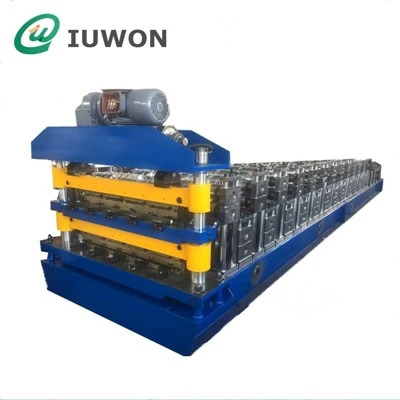
At the end of the day, silos with special coatings aren’t a trend—they’re a necessity for a lot of industries. Grain storage needs food-grade coatings, coastal areas need corrosion resistance, industrial silos need heat protection. You don’t have to pass on those contracts because you think your roll forming machine can’t handle it. With a few simple tweaks, it can. Now go make some stuff, and if you need help, I’m just a call away.
Gutter Roll Forming Machine References
Roll Forming Technology: Design, Processes, and Applications. CRC Press.
Corrosion Protection of Steel Structures in Coastal Environments. NACE International.
Food-Grade Coatings for Bulk Storage Equipment. Food and Drug Administration.
Silo Design and Construction Handbook. American Society of Agricultural and Biological Engineers.
Roll Forming Machine Operation and Maintenance. Industrial Press.
Hanghzou IUWON Technology Co., Ltd.
Hanghzou IUWON Technology Co., Ltd. is one of the most professional silo roll forming machine manufacturers and suppliers in China. Please feel free to buy high quality silo roll forming machine made in China here from our factory. For price consultation, contact us.
Address: No.755, Xintangtou Village, Xinjie Street, Xiaoshan District, Hangzhou, Zhejiang
E-mail: sales@iuwon.com
WebSite: https://www.iuwonforming.com/
