If you’re in the market for a concrete shaft elevator, chances are you’ve stumbled on this question at least once: Do these things even need a machine room? For years, every elevator you saw had that clunky, loud box stuck on the top floor or tucked in a penthouse—right? I’m the owner of a concrete shaft elevator supplier, and I get asked this all the time by builders, architects, and even random homeowners who are retrofitting an old barn with a lift. Let me break this down like we’re chatting over a coffee (no stuffy engineering jargon, promise), because it’s way less confusing than it sounds. Concrete Shaft Elevator
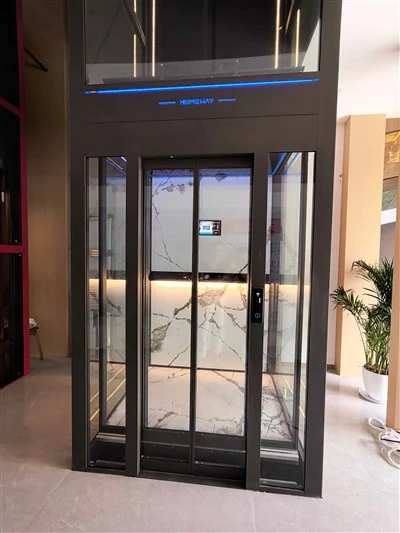
First, let’s get clear on what a concrete shaft elevator is, for anyone who’s new here. Unlike the boxy steel-framed elevators you see in old office buildings, concrete shaft lifts are built right into a pre-poured concrete shaft—think of it as a solid, structural tunnel that the elevator car glides up and down in. They’re super popular for residential builds, multi-unit apartment complexes, small commercial spaces, and even accessibility upgrades for older homes, because that concrete shaft is already part of the building’s structure; you don’t have to add extra steel framing later. Makes sense, right?
Now, the machine room. For decades, that machine room was non-negotiable. The idea was that all the heavy lifting parts—electric motors, cable pulleys, control systems, the whole shebang—needed a dedicated space separate from the elevator car so they didn’t take up room in the cab or make noise for people inside. But here’s the thing: those old machine rooms were a huge pain for everyone. If you were building a 3-story apartment, that extra 10×10 foot machine room on the top floor meant you lost that space for a storage closet, a small terrace, even an extra bedroom. For retrofits? Forget it—most old homes or small commercial buildings don’t have the extra space to carve out a whole room just for elevator parts. Plus, machine rooms are noisy. If your elevator is sitting right above your bedroom, that motor running 10 times a day is going to keep you up at night, no matter how “well-insulated” the builder swears it is.
So, do concrete shaft elevators still need ’em? The short answer is: No, not anymore. Wait, let me back that up—because “no machine room” doesn’t mean “no machinery.” That’s a common mix-up. Modern concrete shaft lifts use what’s called machine-roomless (MRL) technology, and it’s been around for about 20 years now, but a lot of people still haven’t caught up. Let’s talk about why this works specifically for concrete shafts, because that’s the key here. Concrete shafts are sturdier than the steel frames of older elevators, right? They hold their shape way better, so there’s no risk of the shaft shifting and throwing off the placement of the machinery. That stability is what makes MRL possible.
Instead of shoving all the big parts in a separate room, we tuck them into the shaft itself, usually at the very top or very bottom of the tunnel (we call those “headroom” or “pit” spaces, for the engineers reading this, but don’t worry, you don’t need to memorize that). For concrete shafts, we can recess the machinery into the concrete at the top of the shaft, so it’s not sticking out into the building’s space. Or if the pit at the bottom is big enough, we can set it down there, out of sight. No more losing usable square footage for a machine room. That’s a game-changer for small builds.
But let’s get real—why would anyone still opt for a machine room, even for a concrete shaft? It’s not that there are zero cases where it makes sense. For example, if you’re building a super tall commercial concrete shaft elevator (like a 10-story office building) with heavy loads, sometimes a machine room is still the go-to. The motors for those big lifts are way more powerful, and tucking them in a separate room makes maintenance easier—you don’t have to climb into the shaft every time you need to fix a part. Also, some older building codes (though these are getting phased out fast) still require a dedicated machine room for certain lift types. But for 90% of the concrete shaft elevators we install—residential, small multi-unit, boutique commercial—machine rooms are totally unnecessary.
Wait, let’s bust a myth I hear all the time: “If there’s no machine room, the elevator is less safe.” That’s not true at all. MRL concrete shaft elevators have been tested to the same safety standards as traditional ones—we’re talking ANSI A17.1 and ISO 22556 here, not some random off-brand stuff. The machinery is just more compact, and we use advanced, quieter motors (many are permanent magnet motors, which use way less energy too) instead of the old clunky ones. We also add redundant safety features—like automatic brakes, emergency power backups, and overspeed governors—same as the traditional lifts, just hidden in the shaft instead of a separate room. I’ve been installing these for over 12 years, and we’ve had zero safety issues related to removing the machine room. That’s not a fluke; it’s because the tech has gotten that good.
Another big win for no-machine-room concrete shafts: cost. Let’s do a quick breakdown for a residential 3-story concrete shaft lift. If you go with a traditional machine room setup, you’re looking at an extra $5,000 to $10,000 just for the machine room itself—concrete for the floor, insulation, access doors, etc. For MRL, that’s gone. You save that money, and you also save on space, which in areas with high real estate costs (like places where a square foot of land is $500+) is thousands more in value. Plus, MRL elevators use 30-50% less energy than their machine room counterparts, so your utility bills are lower every month. That’s a win for your wallet and the planet, which we all care about these days.
But here’s the catch: MRL works best with concrete shafts. If you had a steel-frame elevator, it’s a different story—steel frames tend to flex a little over time, and tucking heavy machinery into a tight space in the shaft can cause alignment issues. But concrete is solid, rigid, and doesn’t flex. That’s why our concrete shaft elevators are perfect for MRL; we engineered the shaft to handle the weight of the machinery from day one, so there’s no shifting, no misalignment, no problems down the line. That’s why we only work with concrete shafts, by the way—we tested steel frames for years, but they just don’t hold up as well for MRL setups.
I get it, change is hard. A lot of builders and architects I talk to grew up with that old “machine room required” rule, so it takes a minute to wrap your head around ditching it. Last year, I had a client who was building a 4-unit apartment complex in a dense city—they were set on a machine room until I showed them mockups of the MRL setup. They ended up using that extra space for a shared rooftop lounge, and they told us later that it was the thing that made their building stand out from the other ones on the block. They also saved enough on the elevator to put a better kitchen in each unit, which made their pre-sales go through the roof.
So, when is a machine room actually a good idea? Let’s be clear: if you’re installing a super heavy-duty concrete shaft elevator—like one that carries pallets for a small warehouse, or a passenger lift taller than 10 stories—you’ll probably need one. The motors for those are too big to tuck neatly into the shaft, and maintenance is way easier when you have a dedicated space. Also, if you’re in an area with really strict old building codes that haven’t updated to allow MRL lifts, you might have to stick with a machine room for now. But for most residential and small commercial builds? It’s totally unnecessary.
Let me also address a common concern about noise, since that’s the big one for homeowners. When we install an MRL concrete shaft elevator, we line the machinery area with sound-dampening concrete and rubber mounts, so you barely hear it. I’ve had clients tell me they can’t even tell the elevator is running when they’re in the room right next to the shaft. Compare that to a traditional machine room, where the motor is on the top floor—if your bedroom is above that, you’ll hear a low hum every time the elevator moves. It’s not unbearable, but it’s noticeable, and over time, it can get annoying. MRL lifts eliminate that problem entirely.
If you’re still on the fence, here’s a quick checklist to figure out if your concrete shaft elevator needs a machine room: 1) Is it for a residential or small commercial build (under 5 stories, passenger only)? If yes, MRL is almost always the way to go. 2) Is it a heavy-duty lift for freight or very tall commercial use? If yes, you’ll likely need a machine room. 3) Do local building codes still require a dedicated machine room for your project? Double-check with your local building department, because codes have been updating fast on this.
At the end of the day, the whole point of a concrete shaft elevator is to make your life easier—no extra structural work, sturdy, reliable. Adding a machine room just defeats that purpose, taking up space, costing more, and adding unnecessary noise. MRL tech has come so far that it’s not a “budget alternative” anymore; it’s a better, more efficient option for most projects.

If you’re planning a build, a retrofit, or just want to chat about what works for your space, I’m here to help. We work with builders, architects, homeowners, and contractors to design custom concrete shaft elevators that fit their exact needs—no one-size-fits-all stuff. We can send over case studies of recent installs, break down costs, or answer any random questions you have, no pressure. Shoot me a message to talk through your project.
Large Shaft Gantry Frame Panoramic Elevator REFERENCES
- Elevator Industry, Inc. (2022). Machine-Room-Less (MRL) Elevator Technology: Safety and Performance Standards.
- American Society of Mechanical Engineers (ASME). (2021). A17.1 Safety Code for Elevators and Escalators.
- International Code Council (ICC). (2023). International Building Code (IBC) Chapter 30: Elevators and Conveying Systems.
- European Committee for Standardization (CEN). (2020). EN 81-70: Safety Rules for the Construction and Installation of Passenger and Goods Passenger Elevators – Part 70: Accessibility to Elevators for Persons, Including Disabled Persons.
- Concrete Construction Magazine. (2021). The Benefits of Pre-Cast Concrete Shafts for Modern Elevator Systems.
Zhejiang Homeway Elevator Co., Ltd.
Zhejiang Homeway Elevator Co., Ltd. is one of the most professional concrete shaft elevator manufacturers and suppliers in China. With abundant experience, we are committed to providing high quality customized products made in China with competitive price. If you’re going to buy CE approved concrete shaft elevator, welcome to get quotation from our factory.
Address: No.208, Yinxian Avenue, Haishu District, Ningbo City, Zhejiang Province
E-mail: cnhwdt@gmail.com
WebSite: https://www.homewayelevator.com/
