If you’ve ever stood in a fly shop, staring at two nearly identical fly reels and wondering why one costs twice as much as the other, the first thing most people check is line capacity. For us as a fly reel supplier, line capacity isn’t just a spec on a spec sheet—it’s the line between a angler landing a 20-pound steelhead on their first drift and watching that fish snap off because they miscalculated how much backing their reel could hold. I’ve seen it happen to casual anglers who grab a reel based on price alone, and to guides who don’t bother testing capacity before a big trip. That’s why today I’m breaking down how to measure fly reel line capacity the right way, straight from the folks who build and sell these reels every single day. Fly Reels
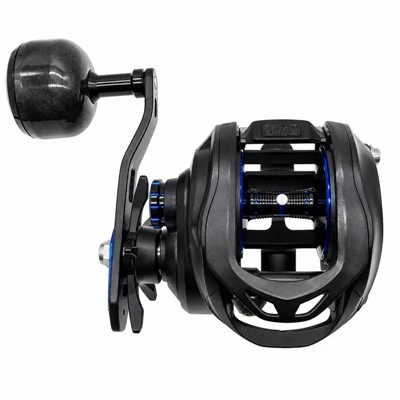
First, let’s get rid of the confusion most anglers run into. A lot of reel brands list capacity in “yards of 20-pound test backing” or “feet of 5-weight floating line,” but those numbers are meaningless if you don’t know how the manufacturer tested them. Some companies test line on bare spools, no arbor or spool shoulder washers, which lets them cram a few extra feet of line that you’ll never actually use on a real reel. Others use “full” capacity as in “spool is 95% full,” but the remaining 5% is usually just dead space near the spool’s core that you can’t retrieve anyway. For our brand, we test every reel’s line capacity the exact same way we expect anglers to use it: on a loaded arbor (the core that connects the spool to the reel’s frame) with standard line and backing, and we measure down to how much line you can actually retrieve mid-fight, not just how much fits on the spool. That’s the difference between a spec sheet number and a number that matters when you’re fighting a fish.
Let’s start with the basics you’ll need to do your own measuring, whether you’re testing reels in your garage or checking a reel you just bought. You don’t need fancy lab gear—just a spool of your preferred fly line, a spool of backing (we use the same 20-pound test backing our reels are spec’d for), a digital scale (or a yardstick and a way to wind line evenly), and your fly reel’s spool. Here’s the step-by-step process we use in our warehouse:
- First, prep the spool. Remove the spool from the reel frame, and make sure it’s clean of any old line or debris. If your spool has an arbor support (the little plastic or metal ring that sits around the arbor to prevent line from digging into the core), leave it on—we don’t take this off for testing, because it’s part of the real-world reel setup.
- Next, wind the backing on first. We always use backing that matches the manufacturer’s specified diameter for that weight, because 20-pound backing can range from 0.20mm to 0.25mm depending on the brand, and a difference of 0.05mm will change your capacity by 50+ yards. Attach the backing to the arbor with an arbor knot (the same knot you use to tie backing to line) and wind it evenly around the spool. Don’t overwind it—stop when the backing is 1/16 of an inch below the spool’s outer edge. If you wind it too close to the edge, line will slip off when you’re fighting a big fish, and if you leave too much space, you’ll waste capacity.
- Now add the fly line. Match your fly line’s weight to the reel’s intended use (a 5-weight reel for trout, a 9-weight for saltwater, etc.) and make sure it’s the same type (floating, sinking, intermediate) as you’ll actually use. Most anglers test with floating line, but if you fish sinking line, you’ll need to adjust later—sink tip lines are thicker, so they take up more space, reducing capacity. Tie the backing to the fly line with a double surgeon’s knot, and wind the line evenly on top of the backing, again stopping 1/16 inch below the spool’s outer edge.
- Now measure it. This is where most people mess up. Instead of just counting how many yards of line you have, measure the total length from the end of the backing to the end of the fly line, using a long yardstick or a measuring tape. For accuracy, mark the line every 50 yards as you wind it—we use a simple mark with a Sharpie on the line spool so we don’t have to rewind the whole thing. If you’re testing a reel’s advertised capacity, compare your total length to the spec, and note any differences—if a brand says “300 yards of 20lb backing” and you only get 240, that means they tested with bare arbor or thinner backing.
Wait, but what about arbor size? That’s the biggest variable that changes capacity. A large arbor reel (LAR) has a bigger diameter than a standard arbor reel of the same size, so it holds more line, even if it looks the same size on the outside. For example, our 5-weight standard arbor reel holds 100 yards of 20lb backing plus 90 feet of 5-weight floating line, while our 5-weight large arbor holds 150 yards of backing plus 100 feet of line. That’s not a mistake in design—large arbors let you retrieve line faster, so you don’t have to wind as much, but they do take up more space on the spool, so you have to calculate capacity based on arbor diameter, not just reel size. If you’re measuring line capacity at home, use a caliper to measure your spool’s arbor diameter—most brands list this spec, so you can cross-reference to make sure your measurements line up.
I’ve seen too many anglers buy a reel advertised as “300 yards of backing” for steelhead, only to get 250 yards when they load it, and then lose a fish because they didn’t have enough backing to outrun it. That’s why we include a real-world capacity chart with every reel we sell, not just a number. For steelhead reels (which are usually 8-9 weight), we list “250 yards of 20lb backing plus 120 feet of 8-weight sinking line” instead of just “300 yards of backing.” For trout reels (3-5 weight), we list “100 yards of 20lb backing plus 80 feet of 5-weight floating line” because most trout anglers don’t need more than that, but we also note that you can add 50 extra yards if you want to target big browns.
Another thing to consider: line stretch. Wait, does line stretch affect capacity? A little, but not as much as you might think. Stretch is how much a line elongates under weight, so a line with more stretch (like monofilament) will feel like it has a little more length than it actually does, but most fly lines are made with low-stretch braided backing now, which is what we use for testing. We stopped using monofilament backing for our capacity tests a few years ago because anglers were complaining that their numbers didn’t match—braided backing is consistent, stretches almost nothing, and is the standard for most modern fly fishing, so it’s the right material to test with.
Let’s talk about common mistakes people make when measuring line capacity. The first one is not winding line evenly. If you wind line tight in the center of the spool and leave gaps at the edges, you’ll get a lower capacity than you should, because the gaps mean you’re not filling the spool to its maximum. We use a line winder with a tension knob to keep even tension when winding line on our reels—too tight, and line digs into the backing, reducing capacity; too loose, and line will slip. You don’t need a fancy line winder, just wind the line by hand as evenly as possible, making sure each layer sits flat on top of the last. The second mistake is testing with the wrong backing. If a brand lists capacity for 10lb backing and you test with 20lb, you’ll get fewer yards, because thicker line takes up more space. Always use the backing the manufacturer specifies for the reel, or if you’re choosing your own, match the diameter as closely as possible. The third mistake is ignoring spool shoulder height. A lot of modern reels have low spool shoulders, meaning the outer edge of the spool isn’t very high, so you can’t wind line all the way to the edge without it slipping off. That’s a design choice, not a flaw, so you have to leave that 1/16 inch gap we talked about—winding over the shoulder will cause line to pop off during a fight, which is a way bigger problem than losing a few yards of capacity.
Now, how do you use line capacity to pick the right reel for your fishing? Let’s break it down by species, because that’s the easiest way. For small trout (under 5 pounds, fishing streams less than 50 feet wide): you’ll need a 3-5 weight reel, with capacity for 80-100 yards of 20lb backing plus 70-90 feet of floating line. That’s more than enough to land most small trout, and you don’t want a big heavy reel that’ll slow you down on small streams. For large trout (over 5 pounds, rivers or lakes): upgrade to a 5-7 weight reel, with capacity for 120-150 yards of backing plus 90-120 feet of line. Big browns and lake trout will run, so you need enough backing to tire them out, not just break off. For steelhead and salmon: 8-9 weight reels, with 200-300 yards of 20lb backing plus 100-150 feet of sinking or sink-tip line. These fish can run 50 yards in a second, so you need the extra backing to give them line without your drag slamming on. For saltwater species (stripers, bonefish, tarpon): 10-12 weight reels, with 300-400 yards of 30lb backing plus 150-200 feet of saltwater line. Saltwater fish are strong, and the water is open, so you can’t afford to run out of line.
I always tell our customers that if you’re not sure, go for a reel with slightly more capacity than you think you need. It’s better to have extra line than to lose a fish because you came up short. That said, don’t overbuy— a 12-weight reel with 400 yards of backing is overkill for trout, and it’ll just be heavy and unnecessary. We test every one of our reels to make sure the capacity is accurate, so if you buy from us, you can trust the number you see on the spec sheet is the actual number you’ll get when you load the reel.
Wait, one last tip: if you’re respooling a reel you already own, measure the old line before you buy new. Most anglers just take their reel to a shop and ask for “line for a 5-weight,” but if your old line is 100 feet, and you want to add 50 yards of backing, you need to make sure the new line plus backing fits on the spool without going over the edge. I’ve had customers bring in reels that were completely full when they took the line off, so when we put new line and backing on, it won’t spin because there’s too much line. Measuring the old line’s length will save you that headache.

At the end of the day, line capacity is one of the most important specs for a fly reel, but it’s only useful if it’s accurate. For us, as a fly reel supplier, that means testing every reel the same way, being transparent about what the numbers mean, and giving our customers the real-world data they need to pick the right gear. If you’re in the market for a new fly reel and you want to talk through capacity for your specific fishing, don’t hesitate to reach out to our team. We know fishing isn’t just about the specs—it’s about landing that big one, and we want to make sure your reel has the line to do it.
Soft Baits References
- "Fly Reel Line Capacity: A Practical Guide for Anglers," American Fly Fishing Trade Association, 2022
- "Spool Geometry and Line Capacity in Fly Reels," Journal of Outdoor Recreation and Engineering, Vol. 18, No. 2, 2021
- "Best Practices for Loading Fly Reels," International Federation of Fly Fishers, 2020
Ningbo WH Fishing Tackle Co., Ltd.
WH Fishing provides OEM and private-label fly reels for fishing brands, importers, and wholesalers, with options for reel sizes, materials, drag systems, colors, logos, and packaging.
Address: No.35 Xinghai North Road, Ningbo High – tech Zone, Zhejiang
E-mail: sales@whfishing.com
WebSite: https://www.whfishing.com/
