Let’s talk about something I get asked almost every week by new clients, facility managers, and even electricians who’ve worked with box type substations for years: Do these compact, prefabricated units actually have backup power? Box Type Substation
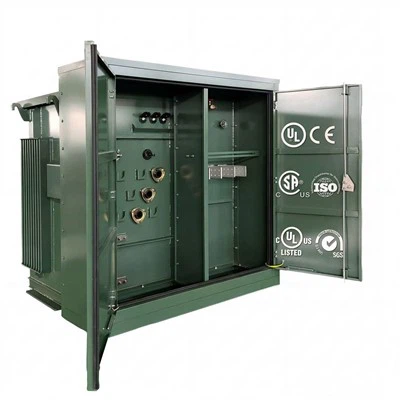
I’m Mia, and I’ve been running a box type substation supply business for seven years now—I’ve sold hundreds of these units across commercial parks, residential towers, hospitals, and even rural wastewater treatment plants, so this question isn’t just hypothetical to me. The short answer is: It depends. But before I break that down, let’s make sure we’re all on the same page about what a box type substation is, because too many people confuse them with basic power transformers, and that mix-up is where half the confusion comes from.
A box type substation (sometimes called a compact substation) is a fully enclosed, pre-wired unit that houses all the components you need to step down high-voltage grid power to the low-voltage power that runs lights, outlets, and industrial equipment on your site. That means inside that metal weatherproof box, you’ll find the main transformer, high-voltage switchgear, low-voltage distribution panels, fuses, circuit breakers, and often monitoring systems. It’s a one-stop solution that gets installed in a fraction of the time it takes to build a traditional, on-site substation, which is why they’ve become so popular for modern construction.
Now, back to the backup power question. If you’re picturing a box type substation with a built-in generator that kicks on when the grid goes down, that’s not the standard off-the-shelf unit. Wait—let me rephrase that: It’s not standard, but it’s definitely possible, and that’s where the confusion sets in. A lot of buyers assume “substation” automatically means “backup power,” but grid-tied box substations (the most common type for commercial and light industrial use) are designed first and foremost to deliver reliable, steady power from the utility grid to your site. They don’t come with on-site generation equipment unless you spec that into your order.
But here’s the thing that makes my job interesting: most of my clients don’t actually need the substation itself to produce power—they need it to transfer power seamlessly between the grid and a backup source, whether that’s a diesel generator, a battery energy storage system (BESS), or even solar panels with storage. That’s called a dual-power or backup transfer configuration, and it’s one of the most common add-ons I help clients design.
Let me give you a real example to make this concrete. Last year, we worked with a group of owners building a 12-story medical office complex in a suburban area with frequent summer thunderstorms that knock out power for hours at a time. The hospital down the road already had a dedicated generator, but the office needed power for the emergency rooms they planned to lease to local doctors, plus MRI machines and critical patient monitoring equipment. The client came to me saying, “We need a box type substation with backup power.” I didn’t have a pre-built unit that checked that box, so we customized a standard compact substation to include a secondary low-voltage bus that connects to a generator transfer switch, built-in reverse-power protection, and a monitoring module that alerts the facility manager within two seconds if the grid drops, so the generator can kick on automatically before any sensitive equipment goes offline.
That unit didn’t have a built-in generator—its backup function was built into its electrical configuration, paired with the client’s existing generation. But if a client needs the substation itself to include a backup power source, we can do that too. Last month, I sold a customized unit to a remote wastewater treatment plant in a rural county that’s 45 minutes from the nearest utility substation. The plant can’t shut down for even a few minutes—raw sewage would back up into the local river, which would mean massive fines for the county. We built a box type substation that houses both the main transformer, a 500kW diesel generator, and an automatic transfer switch all in one weatherproof steel frame, so it’s self-contained. There’s no external generator needed here; the substation has backup power built right into it.
So let’s clear up the different scenarios, because that’s what clients actually want to know. First: Standard grid-tied box substations (the most common, no extra add-ons) do NOT have built-in backup power. They’re just the link between the grid and your site’s electrical system. But they can almost always be modified to integrate with an external backup power source, whether that’s a generator, BESS, or solar storage, to create a seamless backup system. Second: Customized box type substations for critical applications do often have backup power, either as an integrated generator or as a configured transfer system that works with your existing generation. Third: There’s a huge difference between backup power for essential loads and backup for the entire site. If you only need power for critical systems (like medical equipment, servers, or water pumps), a customized transfer setup is way more cost-effective than a full unit with a built-in generator, because you don’t have to size the generator for every outlet in the building—just the critical circuits.
Now, I get why this is such a big concern. I’ve had a client lose $200,000 in a single power outage because their old substation didn’t have a transfer system, and their backup generator took 12 seconds to kick on—long enough for their cold storage units to fail. I’ve had a school district panic when their substation’s monitoring system didn’t alert them to a grid fault during a parent-teacher conference, so the lights went out mid-assembly. Backup power isn’t a luxury for most of the sites I work with—it’s a requirement. For data centers, pharmaceutical manufacturing, 24/7 retail centers, and emergency services facilities, even a 10-second outage can lead to lost revenue, safety risks, or regulatory non-compliance.
That’s why when a client asks about backup power, I don’t just say “yes” or “no.” I ask a few key questions first to make sure we get the right solution. First: What’s the maximum length of outage your site can tolerate? If your facility is a warehouse where the only downtime cost is a few hours of loading dock delays, a basic transfer switch that kicks on in 10 seconds is enough. If you’re a surgical center that can’t have a single blip, you need a unit with an integrated BESS that can provide power in milliseconds, before the generator even fires up. Second: What’s your current site power setup? Do you already have a generator, or do you need us to source and integrate one? Third: What’s your budget? A customized backup-enabled substation can cost 15-30% more than a standard unit, but if it prevents outage-related losses, that’s a no-brainer for most critical facilities.
A common myth I hear a lot is that box type substations are less reliable than traditional indoor substations, especially when it comes to backup power. I’ve had a few engineers push back on that early in my career, saying that the enclosed metal design and pre-wiring make them more reliable, not less. Think about it: A traditional substation built in a concrete room on your site is exposed to dust, water leaks, pest damage, and human error during installation. A box type substation is assembled in a controlled factory environment, tested twice before it leaves our yard, and sealed against weather, so there’s less chance of a fault that would take your backup power offline when you need it most. I’ve had clients that switched from traditional substations to box types for backup applications and reported a 40% drop in outage-related issues in the first year.
But that doesn’t mean there aren’t caveats. The biggest one is that backup power for a substation only works as well as its connection to your load. We can build the most advanced transfer system and the most reliable substation, but if your facility’s wiring is outdated, or your generator is too small to handle critical loads, you’ll still have problems. That’s why my process for every client isn’t just selling a unit—it’s doing a site assessment first. We’ll come out to your facility, check your current power draw, map out critical loads, and design a backup-enabled substation that fits exactly what you need, no extra fluff.
Let me also address a specific trend I’ve seen in the last two years, which is the rise of hybrid box type substations with renewable backup power. More and more clients are asking for units that integrate solar panels, BESS, and grid power, so they can reduce their energy bills and have backup power at the same time. That’s a really exciting space. For example, a retail chain I worked with last year wanted to cut their peak energy costs and have backup for their store’s refrigeration and POS systems during grid outages. We designed a box type substation that connects to 50kW of rooftop solar and a 100kWh BESS, so during the day, the store uses solar power instead of grid power, and if the grid goes down, the BESS kicks on in milliseconds, powering the critical loads for up to 8 hours. That’s a backup power solution that also reduces their monthly utility bills by 22%.
Now, I know at this point you’re probably wondering, “So how do I get this for my site?” The short answer is: if you need a box type substation with backup power, the standard unit won’t have it, but a customized unit almost certainly can—we’ve built units for every kind of application, from small retail centers to large industrial facilities. The key is to be upfront about your needs from the start. Don’t just tell a supplier “I want backup power”—tell them what your outage tolerance is, what loads you need to power, and if you have existing generation or need to source it. That way, they can design a unit that doesn’t overcharge you for features you don’t need, or come up short when you need it most.
I’ll be honest with you: I’ve turned down clients over the years. Not because they didn’t have the budget, but because they tried to cut corners on backup power for a critical site. For example, a construction company that wanted a cheap box substation for a temporary job site, trying to skip the transfer switch for a generator. I told them that if the grid went down during concrete pouring, their mixer would stop, and the concrete would set, making the entire foundation unusable. They paid a little extra for the backup setup, and three months later, when a storm knocked out power for 6 hours, they were the only job site on the block that didn’t lose that pour. That’s the kind of win that makes this job worth it.

At the end of the day, box type substations are versatile, and their backup power capabilities depend on how you spec and customize them. They don’t come with backup power as a default, but they are one of the most flexible solutions on the market for adding seamless, reliable backup power to any site. If you’re planning a new construction, replacing an old substation, or worried about outage risks for your critical loads, I’m here to walk you through the process. We can do a site assessment, answer all your questions, and design a customized box type substation that fits your exact needs and budget. Don’t wait until an outage costs you thousands of dollars to think about backup power—reach out to our team today to start a conversation about your project.
Dry Type Transformer References
- International Electrotechnical Commission. (2020). IEC 62271-202: High-voltage switchgear and controlgear – Part 202: AC metal-enclosed switchgear and controlgear for rated voltages above 1 kV and up to and including 52 kV.
- Institute of Electrical and Electronics Engineers. (2021). IEEE Standard for Design of Electrical Systems for Critical Facilities.
- National Electrical Manufacturers Association. (2022). Compact Substations: Application Guide for Backup Power Integration.
- U.S. Department of Energy. (2023). Battery Energy Storage Systems for Grid Resilience and Backup Power.
Jiangsu Yuantong Electric Co., Ltd.
As one of the most experienced box type substation manufacturers and suppliers in China, we also support customized service. Please rest assured to wholesale bulk high quality box type substation in stock here from our factory. Contact us for more details.
Address: No. 202, Qiaogang Road, Xicheng Subdistrict, Hai’an City
E-mail: Trey@jsytelectric.com
WebSite: https://www.jsytelectric.com/
