If you’ve ever stood in a home improvement store, scrolling through wallcoverings and wondering why a roll of vinyl costs twice as much as a basic paper option, you’re not alone. As a vinyl wallcovering supplier who’s spent the last 12 years talking to homeowners, interior designers, small business owners, and renovators, I can tell you this: the cost of vinyl wallcovering isn’t a one-size-fits-all number. It’s shaped by dozens of small, often overlooked details—from the material grade used to the production process, even where you’re installing it. Let’s break this down so you can budget accurately, no guesswork required. Vinyl Wallcovering
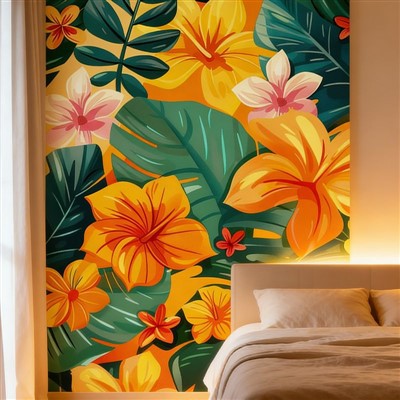
First, let’s start with the basics: what is vinyl wallcovering, and why does it matter for cost? Unlike plain paper wallcoverings, which tear easily and fade within a few years, vinyl is a synthetic material made from polyvinyl chloride (PVC) resin, often with a fabric or paper backing. That durability is its biggest selling point—you can wipe it clean, scrub it, and it won’t scratch or peel (most of the time). But that durability comes at a price, and not all vinyl is created equal. When I’m talking to a first-time customer, the first question I ask is “Where is this going to go?” A kid’s playroom in a home will have different needs than a 24-hour laundromat or a luxury hotel lobby, and those needs directly impact cost.
Let’s break down the cost tiers, starting with the most common residential options, which make up about 60% of the orders I process each year. Budget vinyl wallcovering for typical living rooms, bedrooms, or a small rental property runs between $15 and $35 per square yard. Wait, square yard? I know most customers think in square feet, so let’s do a quick conversion: one square yard is 9 square feet, so that’s about $1.67 to $3.89 per square foot. This is the entry-level vinyl, sometimes called “standard grade” by manufacturers. It’s lightweight, uses a thinner PVC layer, and usually has a paper backing. It works great for spaces that don’t get a lot of heavy use—like a guest bedroom or a formal dining room that’s only used on holidays. But here’s the catch: it’s not scrub-proof. If a toddler smears peanut butter on the wall, you’re going to have a hard time getting it off without leaving a mark. It also tends to fade faster if you put it in a room with lots of direct sunlight, like a south-facing living room. Last year, I had a client who installed $18-per-square-yard budget vinyl in their playroom, and within a year, the walls had scuff marks all over and the color was uneven from sunlight. They ended up redoing it, so in the long run, that $15-per-square-yard savings cost them twice as much in redo work. That’s why I always push residential customers to at least step up to mid-grade if they have kids or pets.
Mid-grade vinyl wallcovering is where most of my repeat residential orders come in, and it runs between $35 and $60 per square yard, or $3.89 to $6.67 per square foot. This grade has a thicker PVC layer, often called “embossed vinyl” or “enhanced vinyl,” and usually a woven fabric backing instead of paper. The fabric backing makes it easier to hang because it’s more flexible, so installers charge less to put it up (more on installation costs in a minute). Most importantly, it’s scrub-proof—you can use a mild cleanser and a sponge to clean scuffs, food stains, even crayon marks without damaging the vinyl. It also has better UV resistance, so it won’t fade as quickly in sunlit rooms. Last year, a client of mine installed mid-grade vinyl in their kids’ playroom three years ago, and when they recently listed their house, a home inspector noted the walls were in “like-new condition,” which actually boosted their home’s value. That’s the kind of value mid-grade vinyl brings. For home offices or master bedrooms, mid-grade is also a great choice because it comes in way more designs than budget vinyl—from subtle textured patterns to custom prints that match your furniture.
Now, if you’re a business owner or renovating a high-traffic commercial space, you’re looking at premium-grade vinyl wallcovering, which is my most popular commercial product. This runs from $60 to $150+ per square yard, or $6.67 to $16.67+ per square foot. What makes it so much more expensive? First, it’s heavy-duty: the PVC layer is 20 to 30 mils thick (for reference, budget vinyl is 6 to 10 mils, mid-grade is 10 to 20 mils), so it can stand up to constant foot traffic, moisture, and regular cleaning. Think restaurants, retail stores, gyms, hotels, even healthcare facilities. For hospitals, we also carry antimicrobial premium vinyl, which is treated to prevent mold and bacteria growth—essential for patient rooms and waiting areas. Another big factor for premium pricing is customizability. If you want a wallcovering printed with your company logo, a large-scale mural for a retail store, or a unique texture that mimics stone or wood, that’s all premium. Last year, I worked with a coffee chain that wanted a wallcovering with a custom pattern of coffee beans and local artwork; the total cost for 1,200 square yards was about $90,000, but they told me it drove a 20% increase in foot traffic because the space felt unique and branded. That’s an investment, not just a expense.
Now, I know what you’re thinking: that’s just the cost of the wallcovering itself. What about installation? A lot of customers forget to budget for installation, which can add another $2 to $8 per square foot, depending on the space. If you’re installing it in a small, straightforward room like a bedroom, installation is on the lower end—around $2 to $4 per square foot. But if it’s a high-ceilinged commercial space, a curved wall, or a space that requires removing old wallpaper, that can jump to $6 to $8 per square foot. I always tell customers to set aside 15 to 20% of the total wallcovering budget for installation, plus any extra fees for repairs or unique features. For example, if you have old, peeling drywall that needs patching before hanging wallcovering, that’s an extra cost that doesn’t show up in the vinyl price.
Another often-overlooked factor that changes the cost is pattern match. Vinyl wallcoverings come in two main types: straight match and drop match. Straight match is when the pattern lines up exactly every time, so you can just butt the edges of the rolls together. That’s cheaper, because installers can work faster. Drop match is when you have to shift the pattern of the next roll up or down to align it—like a floral or geometric pattern that repeats every few inches. That takes more time, so pattern match can add 10 to 15% to the total cost. Last year, a client ordered a drop-match pattern for their living room, and I warned them the installation would cost 12% more. They thought that was a waste until they saw how the pattern looked when it was hung—uniform, seamless, and way more polished. It’s a small cost that makes a big visual difference.
Wait, what about other factors that affect price? Let’s talk about quantity, for one. If you’re buying 50 square yards, that’s a retail price, but if you’re buying 500 or 5,000 square yards, you get a wholesale discount. That’s why most small business owners or large home renovators come to me directly instead of buying from a big box store—they can save 15 to 25% just by ordering in bulk. We also do custom orders, which are a bit pricier, but I always work with customers to get them the best price possible. For example, if a customer wants a custom print, we can adjust the size of the pattern or the material grade to keep costs down without sacrificing quality.
I should also address some common misconceptions. A lot of people think vinyl wallcovering is bad for the environment, so they avoid it. But modern vinyl wallcovering is way more eco-friendly than it used to be. Many of the standard and mid-grade products we carry are made with recycled PVC, and some are even Green Seal certified, which means they meet strict environmental standards. Also, vinyl is more durable than paper or fabric wallcoverings, so it lasts longer, which means you don’t have to replace it as often. That reduces waste in the long run, which is a big win for sustainability. Last year, we launched a line of 100% recyclable vinyl wallcoverings, and 30% of our orders for the last six months have been for that line, so demand is growing fast.
So, let’s put this all together to give you a realistic total. For a 10×12 bedroom (that’s 120 square feet, or 13.33 square yards), if you’re going with mid-grade residential vinyl, the wallcovering itself would be between $51.90 and $88.89. Installation would be another $240 to $480, so total cost is around $291.90 to $568.89. For a 1,000 square foot retail space using premium commercial vinyl, wallcovering is between $6,667 and $16,667, plus installation of $2,000 to $8,000, so total is between $8,667 and $24,667. That’s a huge range, but it’s based on your specific needs.
I’ve been supplying vinyl wallcoverings for over a decade, and the number one mistake I see customers make is choosing the cheapest option without thinking about how they’ll use the space. A $15 roll in a kid’s playroom might seem like a great deal, but it’ll need to be replaced in two or three years, which ends up costing more than buying a slightly more expensive grade that lasts 10 to 15 years. That’s why I always take the time to listen to what a customer needs, not just sell them the most expensive product. If you’re a renter who only needs wallcovering for a year, budget vinyl is perfect. If you’re a homeowner planning to stay for 10 years, mid-grade is worth the extra cost. If you’re a business owner who needs the space to last 5 years or more, premium grade is an investment that will pay off.

Now, if you’re planning a project, big or small, and you want a custom quote that fits your budget, I’d love to talk. Whether you’re a homeowner doing a bedroom refresh, a small business owner opening a new shop, or a renovator working on a large commercial build, I can help you choose the right vinyl wallcovering, explain all the costs upfront, and even connect you with trusted installers in your area. Don’t waste time guessing about prices or settling for a product that doesn’t meet your needs. Reach out today to discuss your project, and we’ll walk through every detail together.
Printable Wall Vinyl References
- National Association of Home Builders. (2022). Wallcovering Material Cost Trends.
- Vinyl Institute. (2023). Sustainable Applications of Vinyl Wallcoverings.
- International Union of Architects. (2021). Cost Considerations for Commercial Interior Finishes.
- Home Improvement Research Institute. (2022). Residential Wallcovering Consumer Survey.
- Wallcovering Manufacturers Association. (2023). Product Grade and Durability Standards.
Anhui Mukang New Materials Co., Ltd.
As one of the most professional vinyl wallcovering manufacturers and suppliers in China, we offer a wide range of products with superior quality. Please feel free to wholesale advanced vinyl wallcovering made in China here from our factory. Customized orders are welcome.
Address: No. 10-11 Gates, Workshop 2, East Gate of Chunhui Entrepreneurship Park, Gongye Road, Chengnan Town, Yu’an District, Lu’an City, Anhui Province
E-mail: mukang2026@outlook.com
WebSite: https://www.mukonwallcovering.com/
