Compensating cables play a crucial role in various industrial and scientific applications, especially when it comes to temperature measurement. As a supplier of compensating cables, I’ve witnessed firsthand the importance of understanding how these cables interact with grounding systems. In this blog post, I’ll delve into the technical aspects of this interaction, share real – world experiences, and highlight the significance for end – users. Compensating Cables
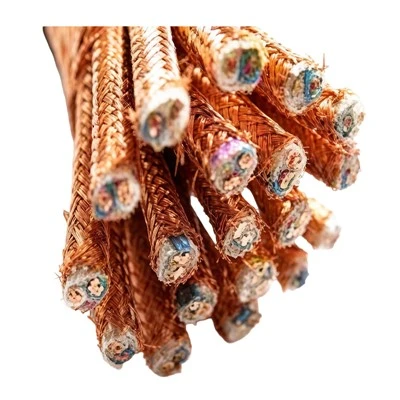
The Basics of Compensating Cables
Compensating cables are designed to extend the thermocouple circuit from the measuring point to the instrument. They are made of materials with similar thermoelectric properties to the thermocouple they are paired with. This ensures that the temperature difference between the measuring junction (at the process) and the reference junction (usually at the instrument) is accurately transmitted without significant loss or interference.
The main function of compensating cables is temperature compensation. They are used in industries such as power generation, chemical processing, and food production, where accurate temperature measurement is essential for process control and safety. For example, in a power plant, precise temperature monitoring of turbines and boilers can prevent overheating and potential equipment failures.
Grounding Systems: An Overview
Grounding systems serve multiple purposes in electrical installations. Firstly, they protect personnel from electrical shock by providing a low – resistance path for fault currents to flow into the ground. Secondly, grounding helps to stabilize electrical potential, reducing the risk of electrical noise and interference.
In industrial settings, a proper grounding system consists of grounding electrodes (such as ground rods), grounding conductors, and bonding connections. The grounding electrode is buried in the earth, and the grounding conductor connects electrical equipment to the electrode. Bonding ensures that all metallic parts are at the same electrical potential, eliminating the possibility of voltage differences that can cause sparks or damage to equipment.
Interaction between Compensating Cables and Grounding Systems
Electrical Noise Reduction
One of the most significant interactions between compensating cables and grounding systems is in the reduction of electrical noise. Electrical noise can be caused by various sources, such as electromagnetic interference (EMI) from motors, transformers, or radio frequency radiation. When this noise is present in the compensating cable circuit, it can distort the thermoelectric signal, leading to inaccurate temperature measurements.
A well – grounded system can act as a shield against electrical noise. The grounding conductor provides a path for the noise currents to flow to the ground, rather than through the compensating cable. For instance, in a manufacturing plant with numerous electrical machines, a properly grounded compensating cable installation can significantly reduce the impact of EMI on temperature measurement.
Avoiding Ground Loops
Ground loops are a common problem in electrical circuits and can occur when there are multiple grounding points with different electrical potentials. In the context of compensating cables, a ground loop can introduce additional currents into the thermocouple circuit, resulting in measurement errors.
To avoid ground loops, it’s important to ensure that the compensating cable is grounded at only one point. This can be achieved by using isolating transformers or optical isolators in the circuit. In a large industrial complex, where there may be multiple pieces of equipment and grounding connections, careful planning and installation of the compensating cable system are necessary to prevent ground loops.
Safety Considerations
The interaction between compensating cables and grounding systems is also crucial for safety. In case of a fault in the electrical system, such as a short – circuit, the grounding system provides a safe path for the fault current to flow. If the compensating cable is not properly grounded, there is a risk of electrical shock to personnel working on or around the equipment.
For example, in a chemical processing plant, where there are often flammable substances present, a faulty electrical connection in the compensating cable could lead to a spark, potentially causing an explosion. A proper grounding system ensures that any electrical faults are quickly detected and the fault current is safely diverted to the ground.
Real – World Experiences
Over the years, I’ve encountered several cases where the interaction between compensating cables and grounding systems has had a significant impact on the performance of temperature measurement systems.
In one instance, a customer in the food processing industry was experiencing inaccurate temperature readings in their ovens. After a thorough investigation, we found that the compensating cables were not properly grounded, and there was a ground loop in the system. The electrical noise introduced by the ground loop was causing fluctuations in the temperature measurements. We recommended re – grounding the cables at a single point and installing an isolating transformer. After implementing these changes, the temperature measurements became much more stable and accurate.
In another case, a power generation company was facing issues with their turbine temperature monitoring system. The compensating cables were installed in a high – EMI environment, and the grounding system was inadequate. As a result, the temperature readings were constantly fluctuating, making it difficult to accurately monitor the turbine’s performance. We provided a solution that included using shielded compensating cables and improving the grounding system. This significantly reduced the electrical noise and improved the reliability of the temperature measurement system.
Importance for End – Users
For end – users, understanding the interaction between compensating cables and grounding systems is essential for ensuring accurate temperature measurement and the safety of their equipment and personnel.
Accurate temperature measurement is crucial for process control. In industries such as pharmaceuticals and semiconductor manufacturing, even a small error in temperature measurement can lead to product quality issues or production failures. By properly grounding the compensating cables, end – users can minimize measurement errors and improve the overall efficiency of their processes.
Safety is another major concern. A well – grounded compensating cable system reduces the risk of electrical shock and fire hazards. In industrial settings, where there are often high – voltage electrical systems and flammable materials, safety should always be a top priority.
Conclusion and Call to Action
In conclusion, the interaction between compensating cables and grounding systems is a complex but critical aspect of temperature measurement in various industries. Proper grounding can reduce electrical noise, avoid ground loops, and ensure the safety of personnel and equipment.
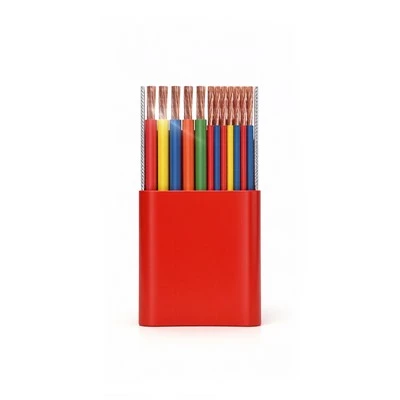
As a supplier of compensating cables, we have the expertise and experience to help you design and install a reliable temperature measurement system. Our high – quality compensating cables are designed to work seamlessly with grounding systems, providing accurate and stable temperature measurements.
Flat Cables If you’re interested in learning more about our compensating cables or need assistance with your grounding system design, we’d love to hear from you. Contact us to start a discussion about your specific requirements and how we can help you achieve optimal performance in your temperature measurement applications.
References
- "Electrical Engineering Handbook", Third Edition, edited by Richard C. Dorf.
- "Thermocouples: Theory and Practice", by F. P. Incropera and D. P. DeWitt.
- "Industrial Electrical Installation Handbook", published by Siemens.
Anhui Yuantong Cable Co., Ltd.
As one of the most professional compensating cables manufacturers and suppliers in China, we offer a wide range of cables with superior quality. Please feel free to wholesale bulk customized compensating cables from our factory. Also, pricelist is available.
Address: Yongfeng Industrial Park, Tianchang City, Anhui Province
E-mail: ahytcable@126.com
WebSite: https://www.yuantongcable.net/
