If you’ve ever needed a backup power source for a construction site, a rural farm, or even a concert that’s relying on generators to keep the lights (and the show) running, you’ve probably crossed paths with an open-type generator set. But let’s be real—most people don’t stop to think about what makes that big, noisy, metal box actually work. As someone who’s been supplying these units for years, I get it: when you’re in a pinch for power, you just need it to start when you hit the button, right? But if you’ve ever wondered what’s under that weatherproof canopy (wait, no—open-type doesn’t have a canopy, duh), that’s what we’re breaking down today. Let’s skip the overly technical jargon and keep this real, because I’ve had too many customers ask me “so what’s the engine part actually do?” at 2 a.m. when their construction site’s generator died mid-pour. Open-type Generator Set

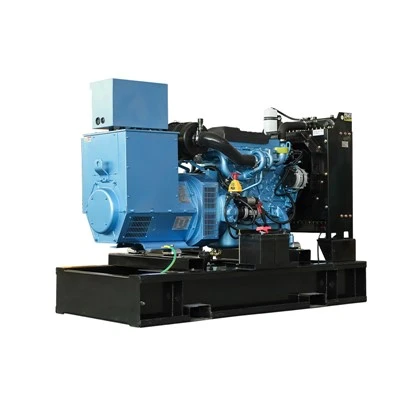
First off, let’s get one thing straight: an open-type generator set isn’t some magical power machine. It’s two main parts bolted together, and the engine is the star of the show. That’s the part most people picture when they hear “generator”—the big, piston-filled, fuel-guzzling (well, not always guzzling, but powered by fuel) core that does all the heavy lifting. Unlike enclosed generators, which are wrapped in a sound-dampening box to keep noise down for residential areas, open-type units are just that: open. No fancy casing, just the engine, a generator head (we’ll talk about that later, don’t panic), a fuel tank, and a frame holding it all steady. That openness is why they’re so popular for things like construction sites, mining operations, agricultural facilities, or large event venues where noise isn’t a huge concern and you need to run big loads without breaking the bank. But back to the engine—this is the reason your generator turns fuel into usable power, and it’s not just a one-size-fits-all part.
Let’s start with the basics of how an internal combustion engine works, but keep it casual, not like a high school science lecture. Your car has an engine, right? It burns gasoline (or diesel, or even natural gas in some cases) to create small explosions that push pistons up and down. Those pistons turn a crankshaft, which makes your car move. A generator’s engine does the same first part—burns fuel to move those pistons—but instead of turning wheels, it turns a big metal rod that’s hooked up to the generator head. That’s the key difference, but the engine’s job is still the same: convert fuel’s chemical energy into mechanical energy. No engine, no mechanical energy, no power. Simple as that.
But here’s what I wish more people knew: not all open-type generator engines are created equal. When I was just starting out supplying these units, I learned the hard way that buying the cheapest engine you can find leads to a lot of late-night service calls. You’ve got three main types of engines used in open-type gensets, and each is built for a different job. Let’s break them down by what customers actually use them for, not just specs.
First, diesel engines. These are the workhorses of the open-type generator world, and 90% of the units I supply run on diesel. Why? Because diesel fuel is more energy-dense than gas—meaning you get more power per gallon—and diesel engines are way tougher. They can run for thousands of hours without major issues, which is perfect for construction sites that run 24/7 during peak season or farms that need backup power for harvest season. I had a customer last year with a corn farm in Iowa—their big open-type genset has been running nonstop during harvest for 12 years, and the only maintenance it’s needed is oil changes and air filters. That’s the diesel engine for you. They come in different sizes too: a 100kW unit for a small shop has a 4-cylinder diesel engine, while a 1,000kW unit for a data center backup (wait, data centers sometimes use open-type too, if they’re in a remote area) has a 12-cylinder monster. No fancy emissions stuff for most industrial uses, just raw power.
Next, natural gas or propane engines. These are the newer kids on the block, and I’m seeing more customers ask for them lately, especially for places where fuel storage is a pain. Like, if you have a hospital backup power setup, storing 500 gallons of diesel is a hassle, but natural gas is piped right to the site. Propane is great for rural areas too, where you can get a bulk propane tank delivered and never run out unexpectedly. The downside? Natural gas engines tend to be a bit more expensive upfront, and they can’t handle as big of a load as a diesel engine of the same size. So if you’re running a whole construction site’s tools, diesel is still your bet, but if you need a reliable backup for a small industrial building, gas is solid.
Then there’s the smaller gasoline engine. Wait, you probably see these on portable open-type gensets at hardware stores, right? The ones you can wheel around for tailgates or small power outages. I don’t supply a ton of these because they’re not built for heavy, continuous use—they get loud, they burn through gas fast, and they’ll die if you run them too long nonstop. But for occasional, light-duty stuff, they work. Just don’t use one for a 24/7 construction job, trust me.
Now, let’s get into the actual parts of the engine that make it work, because I know you’re curious, and this isn’t rocket science. First, the fuel system. That’s where diesel or gas or gas gets stored, filtered, and injected into the combustion chamber. For diesel engines, it’s a high-pressure fuel injector that squirts the fuel right into the cylinder at just the right time—no spark plug needed, which is why diesel engines don’t have those (that’s a common misconception!). Gas engines need spark plugs to ignite the fuel-air mix, diesel uses compression—squeezing the fuel-air mix so much it ignites on its own. Cool, right?
Then there’s the cooling system. Open-type generators run hot—like, way hotter than your car when you’re stuck in traffic. If they get too hot, the engine seizes up, and you’re out of power. Since these units are open, they don’t need a fancy liquid cooling system like some enclosed gensets do? Wait, no, actually most big open-type units do have liquid cooling, but they use a big radiator up front that’s exposed to the air, so it can dump heat easily. The smaller gas ones use air cooling—just fins on the engine that let wind blow over them. I once had a customer on a construction site in Arizona get so mad because his 50kW gas open-type genset kept overheating in 110-degree heat. Turns out, air cooling only works for mild temperatures, so we swapped him to a liquid-cooled diesel engine, and no more issues. That’s the kind of on-the-job experience I bring to supplying these units, not just reading specs off a page.
Lubrication is another big one. The engine has moving parts—pistons, crankshafts, valves—that rub together super fast. If they don’t have oil, they’ll wear out in hours. The oil pump circulates oil all through the engine, coating those parts, reducing friction, and catching tiny metal shavings so they don’t scratch the cylinders. I always tell my customers: change the oil every 200-250 hours for diesel engines, don’t skip this. I had a customer skip an oil change once, and his engine seized up mid-birthday party for a guy’s 80th birthday—talk about a bad time. He ended up buying a new engine from me, lesson learned.
And let’s not forget the air intake and exhaust. The engine needs air to mix with fuel to burn it, right? If it doesn’t get enough clean air, it’ll run rough, use more fuel, and wear out faster. Open-type engines have big air filters—some with pre-filters for dusty construction sites—that keep dirt, dust, and bugs out. Dirt is the enemy of any engine, trust me. The exhaust system lets the burnt fumes out—diesel exhaust has that distinct smell, and modern engines have mufflers to muffle it a bit, but since they’re open, they’re still louder than enclosed units. That’s the trade-off, like I said earlier.
Wait, but hold on—am I leaving out something? Oh right, the generator head! Because this whole thing is a generator set, not just an engine. The engine is what turns the mechanical energy, and the generator head (also called an alternator) is what turns that mechanical energy into electricity. They’re connected by a coupler—just a metal piece that bolts the engine’s crankshaft to the alternator’s rotor. When the engine spins the rotor, it creates a magnetic field, and that magnetic field induces electrical current in the alternator’s windings. That’s the power your tools, your lights, whatever uses. So without the engine doing the spinning, you’ve got no electricity, full stop. But here’s a tip I always share with customers: if the engine is old or worn out, replacing the engine is way cheaper than replacing the whole genset. I know because I’ve done it dozens of times. Last year, a mining company had a 5-year-old open-type genset where the engine died, but the alternator was still good. We just swapped in a new Caterpillar diesel engine, and they were back up and running for half the cost of a new unit. That’s why a lot of my business is not just selling new gensets, but replacing engines for existing ones.
Now, let’s talk about why open-type generators use these specific engines instead of other types. Remember, open-type units are built for harsh, industrial environments. They don’t have the luxury of being in a quiet, temperature-controlled space. So their engines have to be tough. No delicate electronics that can get fried by dust or water. Open frames mean you can get to the engine easily for maintenance—if you have a problem, you can pop the hood (well, since it’s open, just lean over) and check the oil or replace a part in minutes, no needing to take off a sound-dampening canopy or open a locked box. That’s a huge plus for people working on sites where downtime costs money. Construction sites, for example, every hour a generator is down is thousands of dollars in lost revenue. Open-type engines are built to be serviceable fast.
But that toughness comes with a trade-off: noise. Open-type gensets can be 10-15 decibels louder than enclosed ones, which is like the difference between normal conversation and shouting. So if you’re using one near a residential area, you have to deal with noise complaints. But for most industrial uses, that’s not a big deal. I once supplied a set of open-type gensets to a construction job in downtown Chicago, and the only noise complaint came from a coffee shop two blocks over—we had to add a cheap muffler to the exhaust, and that fixed it. Small hassle for big power.
Let me also address a common myth I hear all the time: “Open-type engines are less efficient.” No, not really. A well-maintained diesel engine in an open-type genset is around 40% efficient, meaning it turns 40% of the fuel’s energy into mechanical energy. That’s about the same as enclosed generator engines. The inefficiency comes from the fact that open-type units don’t have fancy heat recovery systems, but for the cost savings you get from an open frame, that’s a trade most people are happy to make. Plus, if you’re running an engine at its optimal load (not underloaded or overloaded), efficiency goes way up. I always tell customers to size their genset right—if you need a 100kW unit, don’t buy a 50kW one and run it at half load, that wastes fuel and wears out the engine fast. That’s another thing the engine’s design is built for: running at a steady load, which is what most industrial applications do.
Wait, what about maintenance? Let’s be real, no one wants to deal with a generator that’s a hassle to keep up. Open-type generator engines are designed for easy maintenance. You can change the oil without having to move the whole unit, you can replace the air filter in 10 minutes, you can check the spark plugs (if it’s a gas engine) without taking anything apart. Enclosed gensets have you crawling into a small box to do maintenance, which is a pain, especially in the middle of winter or when it’s 100 degrees out. Open-type is just out in the open, so maintenance is quick. That’s why even some larger operations prefer them over enclosed ones for daily use.
Let’s circle back to why I’m telling you all this. As a supplier, I don’t just sell you a box with an engine inside. I tell you the truth: if you need a genset for a construction job that runs 24/7, get a diesel open-type engine. If you need backup power for a small rural shop, a gas engine works. If you’re willing to pay a bit more for less noise, enclosed is better, but only if noise is a problem. I’ve seen too many customers get sold a genset that’s wrong for their job because the sales rep didn’t explain the engine part—just that it “makes power.” That’s why I’m writing this blog: to cut through the crap and tell you what actually matters.
Now, if you’re in the market for an open-type generator set, or you have an existing unit that needs a new engine, don’t guess. Talk to someone who knows the ins and outs, not just the specs. I’ve been doing this for over 15 years, I’ve fixed engines in the middle of the desert, replaced ones on flooded farms, and helped construction teams get back up and running before their deadline. I don’t do pushy sales pitches—if a small portable gas engine is all you need, I’ll tell you that, even if it means a smaller sale. But if you need a workhorse that’ll run nonstop for years, I’ll hook you up with the right engine and unit for your job.
At the end of the day, the engine is the heart of any open-type generator set. It’s not just a part—it’s the reason your power doesn’t cut out when you need it most. Whether you’re powering a construction site, a farm, an event, or a backup power setup, taking the time to understand what engine you need saves you time, money, and headaches down the line. Skip the cheap, knockoff engines—they’ll cost you more in repairs. Invest in a reliable, industrial-grade engine built for open-type use, and you won’t regret it.
If you’re ready to talk through your needs, or just have questions about engines, gensets, or maintenance, reach out. No pressure, no sales pitch, just honest advice. We can figure out what’s right for your project.
Marine Generator Set References
- Internal Combustion Engine Fundamentals, 2nd Edition, John B. Heywood
- Generator Set Application and Selection Guide, National Electrical Manufacturers Association (NEMA)
- Industrial Diesel Engine Maintenance Handbook, Caterpillar Inc.
- Alternative Fuel Generator Systems for Industrial Use, Department of Energy (DOE)
China Modo Investment Co., Ltd.
As one of the most professional open-type generator set manufacturers and suppliers in China, our products have good reputation in the market. We warmly welcome you to wholesale advanced open-type generator set in stock here from our factory. If you have any enquiry about cooperation, please feel free to email us.
Address: Boye Industrial Park,Baoding city,Hebei Province,China.
E-mail: sales@mstengine.com
WebSite: https://www.mst-engine.com/
