If you’ve ever spent time building out a data center, upgrading a campus network, or troubleshooting a connectivity glitch, you’ve probably stared at a shelf full of optical modules and wondered: Can I just swap one brand for another? As a sales and application engineer who’s spent the last eight years working with optical modules, I’ve fielded this question hundreds of times—from small business owners expanding their server rooms to senior network architects managing 10,000+ fiber ports across global cloud infrastructure. The short answer? It’s not a simple yes or no, and skipping the fine print can lead to hours of downtime, lost revenue, and costly rework. Let’s break this down with the kind of real-world context you don’t get from generic datasheets, and draw on what I see every day working as an optical module supplier, from our engineers testing cross-brand swaps to our support teams fielding urgent crisis calls. Optical Module
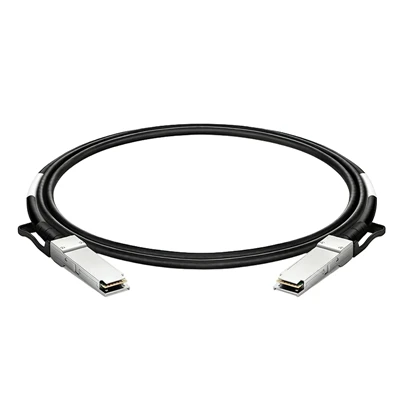
First, let’s get one thing straight: most optical modules look identical on the surface. A 100GBase-LR4 QSFP28 from Brand A has the same form factor, the same pin count, and even the same part number format as a module from Brand B. That’s no accident—industry bodies like the Institute of Electrical and Electronics Engineers (IEEE), the International Organization for Standardization (ISO), and the Multi-Source Agreement (MSA) consortium set strict standards for form factors, electrical interfaces, and basic performance benchmarks. For example, an MSA for QSFP-DD modules dictates the exact size, shape, and power draw limits, so a module that fits into a Cisco switch will also fit into an Arista switch, right? Well, almost. The MSA also sets core performance specs: for a 100GBase-LR4 module, that means supporting 100Gbps over 10km of single-mode fiber, with a minimum transmit power and maximum receive sensitivity that are non-negotiable. So, in theory, two modules that meet the same MSA and IEEE standard should work interchangeably, right?
In practice, though, that’s where the catch comes in. Standards are minimums, not maximums. Let me give you a concrete example from a client I worked with last year: a mid-sized e-commerce company that was expanding its primary data center. They had been using Brand X 100GBase-LR4 modules exclusively for their north-south links to their internet backbone, and when they needed to replace 20 failed modules, they ordered the cheapest equivalent from Brand Y, which claimed to meet the same MSA and IEEE 802.3ae standards. Within 24 hours, their network started throwing constant link errors, throughput dropped by 40%, and their team spent three days troubleshooting before realizing the Brand Y modules were falling below the MSA’s receive sensitivity spec. Their engineer had assumed that “meeting the standard” meant all modules were the same, but what he didn’t know is that many manufacturers optimize their modules for cost first, so they hit the minimum required performance thresholds instead of building in headroom for real-world network conditions.
Another common pitfall is what we call “vendor locking” that goes beyond just the module itself. Many network equipment manufacturers (NEMs) program their switch ASICs to communicate with proprietary features of their own modules. For example, some NEMs use digital diagnostics monitoring (DDM) that’s not just a standard readout of temperature and power, but a proprietary protocol that only works with their modules. I’ve had clients reach out panicking because they swapped a Brand A module for Brand B, and their switch’s management platform stopped logging real-time performance data—even though both modules have DDM that meets the SFF-8472 standard. The switch ASIC is set to look for a specific vendor’s DDM register mapping, so it ignores the data from the competing brand. That’s not a flaw in the module; it’s a deliberate design choice by the NEM to keep customers from switching modules mid-contract.
There are also compatibility issues that come down to more subtle, untested variables. Let’s talk about crosstalk, for example. When you have multiple fiber strands packed into a single cable, or multiple modules mounted in close quarters in a switch chassis, a module’s signal quality can be affected by the modules next to it. A Brand A module might have better shielding that reduces crosstalk, so it works fine even when stacked with a dozen other high-speed modules in a dense switch, but a Brand B module with thinner shielding might have excessive signal loss when placed in the same slot. I saw this first-hand during a deployment for a global bank a couple of years ago. Their switch chassis had slots that were designed to work with Brand Z modules, and when they mixed in our modules (which meet the same MSA), a handful of links started dropping at peak traffic hours. Our application engineers spent a day testing slot-by-slot and found that our modules had slightly different heat dissipation profiles—wait, no, actually it was a tiny difference in the module’s outer casing that caused a 0.5mm misalignment in the fiber cage, which created a tiny gap that increased crosstalk. We adjusted our module’s shell design by 0.3mm, and the problem was solved. That’s the kind of detail you won’t find in a datasheet, and it’s why just picking any module that meets the standard can cause hidden issues.
Now, before you think “so cross-brand swaps are impossible,” let’s balance this with the cases where they do work, and how to make them work reliably. The key is to not just look at “same standard” or “same form factor”—you need to verify three things, and as an optical module supplier, we build our products with these in mind to avoid compatibility headaches for our clients. First, confirm that both modules meet or exceed the relevant MSA and IEEE standards. We go a step further than just hitting the minimum: when we test our 100GBase-LR4 modules, we test them at 12km, 15km, and even 20km, not just the required 10km, so they have headroom for longer distances or fiber that’s slightly less pristine than the lab-test reference. Second, check for NEM-specific compatibility. If you’re using a Cisco Nexus switch, or an Arista 7280R, our application engineers can share a pre-tested compatibility list for our modules with that specific switch model, because we’ve worked with those NEMs to ensure our modules are recognized and work with all DDM and feature sets without proprietary lock-in. Third, test in your environment first. That’s the advice I give every client, no matter which brand they’re working with: don’t swap all your modules at once. Buy 2-3 modules from the brand you want to test, plug them into a few non-critical slots, run a throughput test for 72 hours, check for link errors, temperature, and power draw, and if everything works, then you can scale up.
I’ve also seen situations where cross-brand swaps are not just possible, but better for a client’s bottom line. A regional ISP client I worked with last year had been dealing with recurring supply chain issues from their primary module brand—they were backordered 40% of the time, which was causing outages for their residential customers. They decided to test our modules as an alternative, and we worked with their network team to run a 30-day trial in their access routers. The trial showed that our modules actually had a 0.2dB better link budget than the brand they were using, so they had fewer dropouts during harsh weather (critical for a rural ISP). They switched 100% of their replacement orders to us, saved 25% on module costs, and eliminated their supply chain backlog. That’s the kind of win that happens when you don’t write off cross-brand swaps entirely, but do your due diligence.
One thing I want to address, though, is the risk of counterfeit optical modules. The market is flooded with fake modules that claim to meet MSA standards but are actually made with cheap components that fail within months, or cause network damage. As a legitimate optical module supplier, we see this every week: clients bring in a counterfeit module that says it’s our 100GBase-SR4, but when we test it, its transmit power is 3x lower than it should be, so it can’t work over short multimode fiber, or it uses a laser that’s not rated for high-temperature operation, so it fails in data centers with poor cooling. If you’re swapping modules, only buy from reputable suppliers that can provide full test reports, serial number tracking, and warranty—if a brand is selling modules for half the price of everyone else, that’s a red flag.
Let’s also talk about edge cases where cross-brand swaps are almost never a good idea. For very high-speed modules, like 400GBase-DR4 or 800GBase-FR4, the standards are much stricter, but even then, there are nuances. For example, 800GBase modules use small form factors and extremely high data rates, so a tiny difference in the signal processing between brands can cause link instability. I’ve had a client try to swap a 800GBase module from Brand A for Brand B in their spine switches, and during a failover test, half their links dropped because the modules couldn’t sync quickly enough. That’s not a failure of the module’s standard compliance—it’s a difference in how each brand implements the signal equalization and retiming, which is proprietary and not covered by the MSA. For these high-speed deployments, I always recommend using modules that are pre-qualified with your specific switch model, and if you’re switching brands, work with a supplier that offers customized testing for your network environment.
Another common question I get: what about older modules, like 10GBase-LR or 40GBase-SR? Can I swap a 10-year-old module from Brand A for a new one from Brand B? The answer here is that the core standards for those modules haven’t changed much, but the component technology has improved. Older modules might have lower power draw, or different connector types, but as long as the new module fits, meets the same IEEE standard, and is rated for the same distance, it should work. That said, I once had a client who tried to replace a 10GBase-LR module from a 2012 switch with a new module from a different brand, and the switch’s old firmware didn’t recognize the new module’s DDM data, even though it was standard. That’s another NEM firmware quirk—sometimes older switches can’t read newer DDM implementations, so you might need to update your switch firmware, or choose a module that uses the older SFF-8436 DDM standard instead of the newer SFF-8636.
At the end of the day, the question “Can different brands of optical modules be used interchangeably?” boils down to this: it’s not a yes or no, it’s a “it depends on how you do it right.” If you just grab any module with the same part number and plop it in, you’re risking downtime, lost revenue, and unnecessary costs. But if you verify the standards, check for NEM compatibility, test in your specific environment, and work with a reputable supplier that stands behind their products, cross-brand swaps can not only work—they can save you money, improve network performance, and reduce supply chain risk.

As someone who’s spent years working with optical modules and supporting clients through every kind of deployment, I’ll say this: the biggest mistake I see people make is assuming all modules are created equal. When you’re building a network that’s the backbone of your business, every component matters. That’s why we design our modules to meet and exceed industry standards, offer pre-qualification testing for all major switch brands, and provide 24/7 support to help you test, deploy, and troubleshoot. If you’re currently dealing with module compatibility issues, supply chain delays, or just want to explore alternative module options for your next upgrade, our team is here to help you work through the details, run tests in your environment, and find the right solution for your network.
Optical Transceivers References
Multi-Source Agreement (MSA) Consortium. (2023). QSFP-DD Electrical Interface Specification. Retrieved from internal technical documentation
Institute of Electrical and Electronics Engineers (IEEE). (2022). IEEE 802.3cu Standard for Ethernet—Amendment 2: 100 Gb/s and 400 Gb/s over Single-Mode Fiber. Retrieved from IEEE Xplore
SFF Committee. (2021). SFF-8472: Digital Diagnostic Monitoring Interface for Optical Transceivers. Retrieved from Small Form Factor Technical Committee Records
Telecommunications Industry Association (TIA). (2020). TIA-568-C.3 Standard for Optical Fiber Cabling and Components. Retrieved from TIA Standards Database
Zhejiang Chengmei Technology Co., Ltd.
As one of the most professional optical module manufacturers and suppliers in China, we’re featured by quality products and good price. Please rest assured to wholesale bulk premium optical module made in China here from our factory. Also, quotation is available.
Address: No. 383, Jinhe Road, Qinshan Street Industrial Park, Haiyan County, Jiaxing City, Zhejiang Province
E-mail: shiwei@cm-semi.com
WebSite: https://www.cmfiber.com/
