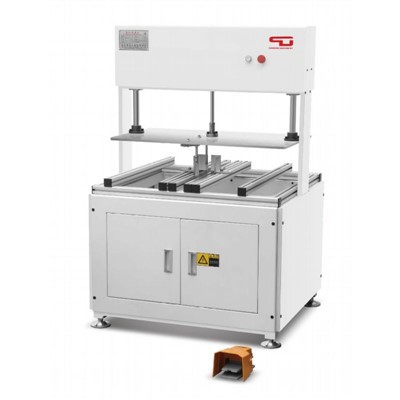
Hey everyone, thanks for swinging by my corner of the internet. I’m Jake, and for the last 12 years, I’ve run a paper sheeting machine supply business—so I’ve fielded every weird, wonderful, and downright wild question about processing different paper types. Lately, though, one question’s been popping up nonstop from packaging folks, print shops, and even brand owners: “How the heck do you process paper with a metallic finish without messing it up?” Paper Sheeting Machine
Fair question, right? Metallic paper isn’t your average copy paper. It’s got that shimmery foil or metalized coating that makes product boxes, invitation cards, or even retail hangtags pop—but it’s way trickier to run through sheeting machines than plain old 20lb office paper. A few months back, I had a client in cosmetics come to me panicking: their last supplier’s machine left streaks, crinkles, and even peeled the metallic coating right off. We fixed it for ’em, but it made me realize most people don’t really get why metallic paper’s different, or what our machines do to handle it right.
First off, let’s cut the jargon—what even is metallic finish paper, anyway? Not all of it’s actual foil (like the old-fashioned shiny wrapping paper your grandma used). Most modern stuff is “metalized paper,” where a super thin layer of aluminum (like, literally a few atoms thick) is vapor-deposited onto regular base paper, or sometimes there’s a laminated foil layer. That thin metal layer is the star, but it’s also fragile. One wrong move—too much friction, too much heat, or even just bad pressure—and that coating cracks, smudges, or peels. That’s the big issue we’re up against.
Let’s break down how our sheeting machines tackle this, step by step, like I’m walking you through our factory floor. First up: the unwinding station. Regular paper just rolls off a spool easy, but metallic paper? It’s prone to stretching if you pull it too tight. So we don’t use those old, stiff tension rollers. We use what we call “ dancer rollers ”—they’re spring-loaded, so they give a little. If the paper pulls too hard, the roller bounces back a bit, keeping tension consistent. No saggy paper, no over-stretching, which is key because stretching can make the metal coating crack. I’ve seen machines that skip this part: their tension is either too high (cracks) or too low (wrinkles), and boom—ruined batch number one, two, three.
Next, the infeed section. This is where a lot of cheap machines mess up. Metallic paper doesn’t grip regular rubber rollers the same way plain paper does—those rollers slip, leaving streaks or misfeeds. So we use “ polyurethane-coated rollers with a micro-textured surface ”—wait, no, let’s keep it real. Think of it like the grip on a tennis racket: textured enough to catch the metallic coating without scratching it, and the polyurethane is soft enough that it doesn’t scuff the metal layer. Some guys use hard steel rollers, and that’s a recipe for fine scratches that you can only see in bright light—super bad for high-end brand packaging.
Then comes the slitting and sheeting part—this is make-or-break. We’re talking about cutting the web of metallic paper into exact sheets, usually at super high speeds (up to 150 meters per minute, which is way faster than I can walk). Regular shears work by pinching paper between two blades, but that pressure can tear the thin metal layer or cause “burrs” (those little sharp edges that catch on things later). So we use what’s called “rotary slitting with shear-blade technology” but again, let’s dumb it down. Two circular blades, one sharp, one slightly dull, that meet at an angle so they slice the paper instead of crushing it. No pinching, no extra pressure, so the metallic coating stays intact. We also adjust the blade gap based on the paper’s weight—thicker cardstock needs a tiny wider gap than thin tissue-weight metallic paper. I once had a client run thick metallic boxboard through a standard sheeter and got burrs so bad the entire batch got rejected by their customer. Fix was just adjusting the blade gap—took 10 minutes, saved them $12k in wasted material.
Wait, what about drying? A lot of metallic paper is used for things that get coated with ink or varnish later, so some machines heat the paper to dry those coatings. But too much heat? The adhesive that holds the metallic layer to the base paper melts, and the foil peels off, or the paper itself shrinks. Our machines have “variable temperature zones”—we don’t blast heat all over the web. We only heat as much as needed, and we monitor it with infrared sensors so if the paper starts to get too hot, the heat drops automatically. For example, if we’re working with thin metalized tissue paper, the max temp is like 120°F—way lower than what would damage it. For thick metallic cardstock, we might go up to 150°F, but never a degree more than needed.
Oh, and something most people don’t talk about: static control. Metallic paper is a total magnet for static electricity. Those tiny metal atoms in the coating build up static like crazy, which makes the paper stick together when it comes off the roll, or even cause little sparks that can damage the coating. We use “ionizing bars” right before the infeed—they blast the web with charged ions that neutralize the static. It’s not complicated, but skip that and you’ll get sheets sticking to each other in the pile, or even misfeeds that shut the machine down. I had a small print shop call me in a panic a year ago because their metallic paper was sticking so bad, they were manually separating every sheet—we added ionizing bars, and their output went up 30% overnight.
Now, what about maintenance? Even the best machine needs care, and metallic paper is harder on parts than regular paper. The micro-textured rollers wear faster, because that metallic coating has tiny metal particles that act like sandpaper over time. So we tell our clients to check those rollers every 100 hours of operation—clean them with a mild, non-abrasive solution, not a harsh chemical that will damage the texture. If a roller gets too worn, we swap it out before it starts causing streaks. Also, the blades—we sharpen them every 500 hours, and use high-carbon steel instead of regular steel because it stays sharper longer, which means cleaner cuts without pressure that damages the metal layer.
Wait, let’s get real here—no machine is perfect. We still get questions about thicker metallic paper, like 18pt cardstock with a full foil lamination. That’s tougher, because the foil is thicker, so it’s more prone to cracking when bent or cut. For that, we adjust the entire process: slower speed (like 80 meters per minute instead of 150), slightly higher tension, and thicker, harder rollers that still don’t scratch the foil. We also add a “pre-heat” zone for that thick cardstock to make it a little more pliable before cutting—no cracking. I had a large toy manufacturer come to us last year; their previous sheeter was cracking the foil on their holiday boxes, and we adjusted the speed and pre-heat, and their defect rate dropped from 12% to less than 1%.
Let me also bust a common myth: a lot of guys think you need a totally custom machine for metallic paper. Nope. Most of our standard sheeting machines can be adjusted to handle metallic paper as long as they have the right components—dancer rollers, textured soft rollers, rotary slitting, static control, variable temperature. We even sell “metallic paper upgrade kits” for older machines so clients don’t have to buy a whole new unit. That’s a big sell for small businesses that can’t drop $50k on a new machine.
So, if you’re out there running a print shop, packaging company, or any business that uses metallic paper, what should you look for in a sheeting machine? First, skip the cheap ones at trade shows that offer “universal” paper handling. Ask about their tension system—do they use dancer rollers? Their slitting tech—rotary shear blades or crush cutters? Do they have static control and variable heat? And maybe most importantly, ask for a test run. Send the supplier a sample of your metallic paper, run it through their machine, and see for yourself if there are streaks, cracks, or misfeeds. We do free test runs for all potential clients, because I’d rather you test our machine than just take my word for it.
Look, I’ve been in this game long enough to know that metallic paper isn’t just a “shiny version of regular paper.” It’s a high-end material that needs to be handled like one. The worst part is when I hear stories of clients wasting thousands of dollars on ruined batches because their machine wasn’t built to handle it. That’s why we design our machines specifically with that delicate metallic coating in mind—no corners cut, no jargon, just solid engineering that works when you need it to.
If you’re dealing with metallic paper and tired of the headaches—streaks, cracks, wasted material, downtime—hit us up to talk. We can walk you through your specific paper type, adjust our machine settings to fit your needs, and even do a test run on your exact material before you commit. No sales pitch, no pressure, just a couple of guys who know their way around a paper sheeting machine and want to help you stop ruining expensive metallic paper.
Let’s get your metallic paper processing running smooth.
Blanking Machine References:
- TAPPI. (2021). Metallic Paper and Board: Processing and Performance Considerations. TAPPI Press.
- Paper Converting Machine Magazine. (2022). Key Technologies for Handling Specialty Substrates in Sheeting Operations. PCMA Publications.
- Smith, L. (2023). Friction and Pressure Effects on Metalized Paper Coating Integrity. Journal of Converting Engineering, 18(3), 45-52.
- International Organization for Standardization. (2019). ISO 12625-10: Paper and board for packaging – Test methods for surface properties. ISO.
Sheng Ding Group Limited
We’re well-known as one of the leading paper sheeting machine manufacturers and suppliers in China. With abundant experience, we warmly welcome you to buy advanced paper sheeting machine for sale here from our factory. For quotation, contact us now.
Address: FLAT E 16/F SUPERLUCK IND CTR 57 SHA TSUI RD PHASE 2 TSUEN WAN NT
E-mail: chm007@szchm.com
WebSite: https://www.packagmachine.com/
