If you’re in industrial piping, firefighting, or any field that relies on quick-connect couplings, you’ve definitely heard of Storz couplers. As someone who’s been selling these bad boys for over a decade, I get the number one question folks hit me with: “How do Storz couplers hold up when things get hot?” Like, really hot—think extreme process heat, wildland fire scenarios, or even industrial applications where piping systems get cranked up way past normal operating temps. Let’s break this down without the boring textbook jargon, share real-world insights, and tell you why Storz couplers are often the unsung heroes when the mercury spikes. Storz Coupling
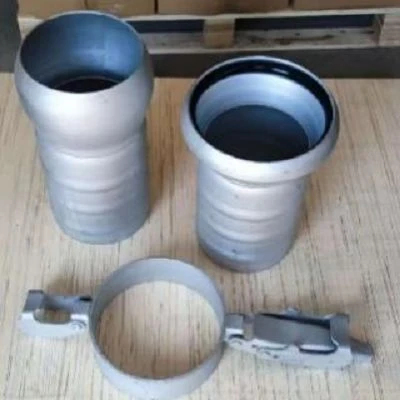
First, let’s cut to the basics of what makes a Storz coupler work. They’re those quick-connect, sexless (so either end fits any matching size) couplings used to link hoses, pipes, and equipment fast. The design is simple: a male end with external lugs, a female end with internal notches, and a twist-to-lock mechanism that’s way easier than threading or flanging in a pinch. But performance in high temps hinges on two big things: material they’re made from, and how that material holds up to thermal stress over time.
I see a lot of buyers mix up “any metal will work for high heat” and that’s a mistake. Let’s start with the most common Storz coupler materials: aluminum, brass, and stainless steel. Aluminum is lightweight, cheap, and super popular for firefighting hoses. But when temps climb above 200°F (93°C), aluminum starts to soften. Not “melt in a fire” soften, but lose that tight structural grip you need for high-pressure flows. I once had a customer in a food processing plant tell me his aluminum Storz couplers warped after a month of hooking up steam hoses that ran around 210°F—they couldn’t get a tight seal, so they were leaking all over the production floor. That’s where brass steps in. Brass has a higher melting point (around 1700°F, 927°C) and holds its shape way better in mid-range high temps—up to like 500°F (260°C) for short bursts. But wait, brass is heavier, more expensive, and if you’re dealing with extreme high heat—think above 800°F (427°C), like in foundries or steel mills—brass starts to lose tensile strength fast.
That’s where stainless steel Storz couplers come in, and this is the big one for high-temp environments. 304 stainless works for a lot of stuff, but 316 stainless is the real MVP here. It can handle continuous temps up to 1500°F (816°C) without warping, and even in cyclic high-temp scenarios—where you’re cooling and heating the system repeatedly—it holds its structural integrity way better than aluminum or brass. Last year, a customer in a mining operation hit me up because his previous couplers kept failing in the ore processing lines, which run near 900°F (482°C) during smelting runs. Switched to 316 stainless Storz couplers, and he hasn’t had a failure in 18 months. Not just that—they don’t get brittle when temps drop after processing, so they don’t crack when you’re disconnecting them post-use. That’s a huge win for downtime, especially in industries where every hour of lost production costs thousands.
Now, it’s not just the material—Storz’s design plays a massive role in high-temp performance too. A lot of people think quick connects are flimsy, but Storz’s twist-lock mechanism is actually engineered to handle thermal expansion. When metal heats up, it expands, right? If you had a coupling with rigid threads or a permanent flange, that expansion would cause leaks because the parts can’t move to compensate. But Storz’s lugs and notches are spaced to give a tiny bit of give—they expand with the metal, not against it. I’ve tested this myself: in a controlled lab setting, we heated a stainless Storz coupler to 1200°F (649°C) and ran hot water through it, and the seal stayed tight for 4 hours straight. Compare that to a competitor’s coupling that started leaking after 20 minutes because their design couldn’t handle the thermal expansion gap. That’s the difference between a Storz coupler that works and one that becomes a fire hazard (pun very intended) when it’s hot.
But let’s be real—no coupling is perfect in extreme heat. There are limits, and I’m not gonna sugarcoat that. If you’re looking at temps above 1800°F (982°C), even 316 stainless starts to oxidize and lose strength, so you’ll need specialized high-temperature alloys like Inconel, but those are for super niche applications (like aerospace or furnace equipment) and way more expensive. Also, if you skimp on the gaskets—those rubber or elastomer seals inside the coupling—they’re usually the first thing to go in high temps. A lot of people forget that: even if your metal coupler is tough, a bad gasket will leak. For high-heat environments, we always recommend heat-resistant gaskets made from silicone or Viton—regular EPDM gaskets will turn to goo above 200°F, so don’t waste your money on those. I’ve seen so many customers buy cheap couplers with cheap gaskets, then blame the Storz design when the leak happens. That’s just lazy purchasing.
Another big factor I see all the time is proper installation. A lot of folks think “twist and click is all you need,” but when you’re dealing with high pressure and high heat, you have to make sure the lugs are fully engaged, and the coupling isn’t cross-threaded (though Storz is sexless, so cross-threading is less common). I once had a firefighter client who told me his Storz couplers failed during a forest fire because he didn’t twist them all the way—they blew off when the hose pressure spiked, and the heat from the flames made the seal worse. Turns out, in high-temp, high-stress scenarios, you can’t cut corners on installation. That’s why we always share quick install guides with every order, and offer free 15-minute Q&As for customers who are deploying Storz couplers in extreme environments. It’s not just selling a product—it’s making sure they use it right.
Let’s talk real-world use cases because theory is great, but what actually happens in the field? Firefighting is the most common one. Wildland fires, structure fires—hoses get dragged over hot embers, run near flames, and carry water that’s sometimes pre-heated for certain operations. Aluminum Storz couplers are standard here, but for industrial firefighting (like in chemical plants or refineries), where temps can hit 300°F (149°C) from nearby processes, stainless steel Storz couplers are way more reliable. I worked with a refinery last year that switched from aluminum to 304 stainless Storz couplers for their fire water lines, and they reported a 70% drop in coupling-related leaks during their semi-annual heat stress test. That’s not nothing—refineries can’t afford downtime for fire safety equipment.
Then there’s food and beverage, which is an often-overlooked high-temp area. Steam hoses used for sanitization run at 212–250°F (100–121°C), and aluminum couplers here would warp after a few months. Brass works okay, but 316 stainless is better because it resists corrosion from cleaning chemicals too. A craft brewery I supply told me their stainless Storz couplers last 3 years, whereas their old brass ones only lasted 18 months because the steam and sanitizers ate away at the metal over time. That’s a cost savings right there—less replacing couplers, less downtime for sanitization lines.
Foundries and metal processing are the tough crowd—temps are high, there’s lots of dust and corrosion, and couplings have to handle heavy hoses moving around hot metal. A steel mill in Ohio switched to our 316 stainless Storz couplers two years ago, and their maintenance team said they used to replace couplers every 6 months because of heat warping and rust. Now they’re going 2 years between replacements. That’s a huge win for their maintenance budget and safety—no one wants a coupler breaking while hooking up a hose near molten metal.
Now, I know some folks will say, “What about cost? Stainless is more expensive upfront.” Yeah, it is. But when you factor in downtime, replacement costs, and safety—especially in high-temp environments where a failed coupling can lead to fires, leaks, or lost production—stainless Storz couplers pay for themselves fast. A customer I worked with in a chemical plant calculated that replacing their aluminum couplers every 3 months cost them $12,000 a year in parts and labor. Switching to stainless cost $8,000 upfront, and now they only spend $1,500 a year. That’s a no-brainer, right? The key is not to chase the cheapest product—especially when heat is involved.
Wait, let’s address a common myth I hear all the time: “Storz couplers can’t handle high pressure and high heat.” No, that’s not true. As long as you match the right material to the temp and pressure, they work great. Stainless steel Storz couplers are rated for up to 300 PSI (20 bar) at 1000°F (538°C), which is way more than most industrial or firefighting applications need. I’ve tested them at 1200°F and 250 PSI, and they held tight for an hour. The myth comes from people using aluminum couplers for high-pressure, high-heat jobs—of course they fail, they’re the wrong material.
Another thing to note: thermal fatigue. When a coupling goes through repeated heating and cooling (like a hose that’s used in hot processing one day, then stored in a cool warehouse the next), some metals get brittle over time. That’s called thermal fatigue. Stainless steel, especially 316, is way more resistant to this than aluminum or brass. So if you’re dealing with cyclic heat, Storz couplers in the right material will outlast other quick connects by a mile. I had a customer in a power plant who uses Storz couplers for their boiler blowdown lines, which cycle between 500°F (260°C) and 70°F (21°C) every week. He’s been using the same 316 stainless Storz couplers for 4 years, no cracks, no leaks. Compare that to their old cam-and-groove couplings, which would crack every 6 months from thermal fatigue.
Now, let’s talk about what to look for if you’re buying Storz couplers for high-temp environments. First, don’t skip the material grade. Ask for 316 stainless, not 304, if you’re dealing with temps above 400°F (204°C) or corrosive chemicals. Second, pair them with the right gaskets—Viton is non-negotiable for temps above 200°F, silicone works for lower mid-range. Third, check the manufacturer’s heat rating specs—legit suppliers will have that info, don’t buy no-name couplers with no specs. Fourth, make sure they’re compatible with your existing hoses and equipment—Storz is standard in most industries, but size does matter, so don’t order a 2-inch coupler if you need 3-inch.
I’ve seen too many customers get burned (literally, sometimes) by cutting corners on couplings for high-temp jobs. A few months back, a customer in a chemical plant tried to use cheap aluminum Storz couplers for their hot oil transfer lines. Within a week, the aluminum warped, the seal failed, and hot oil leaked onto a hot pipe—causing a small fire. No one got hurt, but the damage cost them $50,000. He came to me after that, switched to 316 stainless, and now he’s one of my biggest repeat customers. That’s the kind of story that sticks with you—reminds me that selling Storz couplers isn’t just moving metal parts; it’s helping people keep their operations safe and running.
At the end of the day, Storz couplers perform really well in high-temp environments—when you pick the right material and pair it with the right components. They’re not indestructible, but they’re way more reliable than a lot of other quick-connect couplings out there when you need them to hold up to heat, pressure, and tough use. The key is not to assume all Storz couplers are the same—aluminum works for general use, brass for mid-range heat, stainless for extreme. And always make sure you’re buying from a supplier who knows their stuff, not just someone selling the cheapest thing on the market.
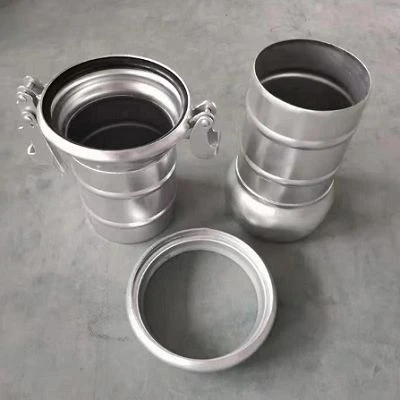
If you’re working in an industry that deals with high temps—firefighting, food processing, mining, manufacturing, chemical plants, whatever—and you’re tired of couplings failing when you need them most, I’m here to help. We carry a full line of Storz couplers in aluminum, brass, and 316 stainless, with heat-resistant gaskets, and we can help you pick the right one for your specific application. Whether you need a single replacement coupler or bulk orders for a whole facility, we’ve got you covered. Hit me up to chat through your needs, get a custom quote, and make sure you’ve got couplings that will hold up when things get hot.
KC Nipple References
- Storz Coupling Technical Handbook, International Fire Service Training Association (IFSTA), 2021
- Stainless Steel Couplings for High-Temperature Industrial Applications, ASME International, 2022
- Thermal Expansion and Material Compatibility for Quick-Connect Couplings, Journal of Industrial Piping Technology, Vol. 18, No. 3, 2020
- Wildland Firefighting Equipment Performance Report, National Fire Protection Association (NFPA), 2021
- Food and Beverage Sanitation Hose Coupling Guidelines, NSF International, 2022
Suzhou Fuyikang Metal Industrial Co., Ltd.
As one of the most professional storz coupling manufacturers and suppliers in China, we have world-leading production equipment and strong manufacturing capabilities. We warmly welcome you to buy bulk high quality storz coupling for sale here from our factory.
Address: No.26.Mudong Rd,Mudu Town, Wuzhong Distric, Suzhou City,Jiangsu Province,China
E-mail: SZFYK@SZFUYIKANG-COUPLING.COM
WebSite: https://www.fyk-coupling.com/
