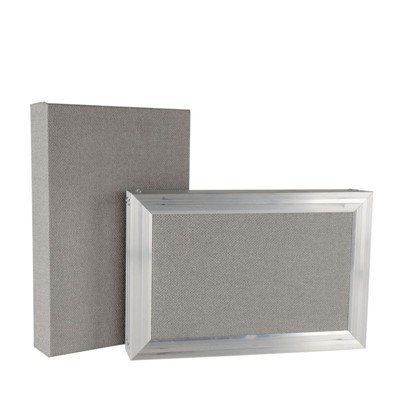
Sound absorption coefficient is a crucial parameter when it comes to acoustic noise barriers. As a supplier of acoustic noise barriers, I’ve had the privilege of delving deep into the science behind these products and understanding how the sound absorption coefficient impacts their performance. Acoustic Noise Barrier
Understanding the Sound Absorption Coefficient
The sound absorption coefficient, often denoted as α (alpha), is a measure of how effectively a material absorbs sound energy. It ranges from 0 to 1, where 0 indicates that the material reflects all the sound energy, and 1 means that the material absorbs all the sound energy. For acoustic noise barriers, a high sound absorption coefficient is desirable as it helps in reducing the amount of sound that is reflected back into the environment.
When sound waves hit a noise barrier, three things can happen: the sound can be absorbed by the barrier, transmitted through it, or reflected off it. The sound absorption coefficient focuses on the absorption aspect. A material with a high absorption coefficient will convert the sound energy into heat energy, thereby reducing the overall noise level.
Factors Affecting the Sound Absorption Coefficient
Several factors can influence the sound absorption coefficient of acoustic noise barriers. One of the most significant factors is the material used in the construction of the barrier. Different materials have different absorption properties. For example, porous materials like fiberglass and mineral wool tend to have high absorption coefficients because the sound waves can penetrate the pores and get trapped, where they are converted into heat.
The thickness of the material also plays a role. Generally, thicker materials have higher absorption coefficients as they provide more space for the sound waves to travel and be absorbed. However, there is a limit to how much the absorption coefficient can increase with thickness, and after a certain point, the increase becomes negligible.
The frequency of the sound is another important factor. Different materials have different absorption characteristics at different frequencies. Some materials may be more effective at absorbing low – frequency sounds, while others are better at high – frequency sounds. For acoustic noise barriers, it is important to consider the frequency range of the noise that needs to be reduced. For example, traffic noise typically contains a wide range of frequencies, from low – frequency engine rumble to high – frequency tire noise.
Measuring the Sound Absorption Coefficient
There are several methods to measure the sound absorption coefficient of acoustic noise barriers. One of the most common methods is the reverberation room method. In this method, the test sample is placed in a reverberation room, which is a room with highly reflective walls. A sound source is used to generate sound in the room, and the decay of the sound is measured with and without the test sample. The difference in the decay times is used to calculate the sound absorption coefficient.
Another method is the impedance tube method. This method is more suitable for small samples and is often used in laboratory settings. The test sample is placed in an impedance tube, and a sound wave is sent through the tube. The reflection and transmission of the sound wave are measured, and the sound absorption coefficient is calculated based on these measurements.
Importance of Sound Absorption Coefficient in Acoustic Noise Barriers
The sound absorption coefficient is of utmost importance in the design and performance of acoustic noise barriers. A high sound absorption coefficient means that the barrier can effectively reduce the noise level by absorbing a large portion of the sound energy. This is particularly important in areas where noise pollution is a significant problem, such as near highways, railways, and industrial areas.
In addition to reducing noise levels, a high sound absorption coefficient can also improve the overall acoustic environment. By absorbing sound, the barrier can reduce the amount of reflected sound, which can lead to a more pleasant and less noisy environment. This is especially important in residential areas, where noise can cause annoyance and sleep disturbances.
Our Acoustic Noise Barriers and Sound Absorption Coefficient
As a supplier of acoustic noise barriers, we take great pride in the quality of our products. Our barriers are designed to have high sound absorption coefficients to effectively reduce noise levels. We use a variety of materials, including high – quality fiberglass and mineral wool, to ensure that our barriers have excellent absorption properties.
We also conduct extensive testing on our products to measure their sound absorption coefficients. Our testing facilities are equipped with state – of – the – art equipment, including reverberation rooms and impedance tubes, to accurately measure the absorption coefficients of our barriers. This allows us to provide our customers with reliable and accurate information about the performance of our products.
Customizing Acoustic Noise Barriers Based on Sound Absorption Requirements
We understand that different customers have different noise reduction requirements. That’s why we offer customized acoustic noise barriers. We work closely with our customers to understand their specific needs, including the frequency range of the noise, the location of the barrier, and the desired noise reduction level. Based on this information, we can select the appropriate materials and design the barrier to achieve the desired sound absorption coefficient.
For example, if a customer is located near a highway and is concerned about traffic noise, we can design a barrier with a high absorption coefficient in the frequency range of traffic noise. This may involve using a combination of materials with different absorption properties to cover the entire frequency range.
Real – World Applications of Our Acoustic Noise Barriers
Our acoustic noise barriers have been used in a wide range of real – world applications. In highway projects, our barriers have been installed along the sides of roads to reduce traffic noise and improve the living environment for nearby residents. In railway projects, our barriers have been used to reduce the noise generated by trains, which is especially important in areas close to railway tracks.
In industrial areas, our barriers have been used to isolate noisy machinery and equipment, reducing the noise impact on workers and the surrounding environment. Our barriers have also been used in commercial and residential buildings to create a more quiet and comfortable indoor environment.
Conclusion
The sound absorption coefficient is a key parameter in the design and performance of acoustic noise barriers. A high sound absorption coefficient can effectively reduce noise levels and improve the acoustic environment. As a supplier of acoustic noise barriers, we are committed to providing high – quality products with excellent sound absorption properties. We offer customized solutions to meet the specific needs of our customers and have a proven track record of successful applications in various industries.
Wooden Acoustic Panels If you are in need of acoustic noise barriers and want to discuss your specific requirements, please feel free to contact us. We look forward to working with you to find the best solution for your noise reduction needs.
References
- Beranek, Leo L. Noise and Vibration Control. McGraw – Hill, 1971.
- Kryter, Karl D. The Handbook of Noise Control. Marcel Dekker, 1995.
- ISO 354:2003, Acoustics – Measurement of sound absorption in a reverberation room.
- ISO 10534 – 2:1998, Acoustics – Determination of sound absorption coefficient and impedance in impedance tubes – Part 2: Transfer – function method.
Guangzhou MQ Acoustic Materials Co., Ltd.
Guangzhou MQ Acoustic Materials Co., Ltd. is one of the most professional acoustic noise barrier manufacturers and suppliers in China, featured by quality products and low price. Welcome to buy CE approved acoustic noise barrier in stock here and get quotation from our factory. We also accept customized orders.
Address: Room D403, KeZhu Business Building, ZhuJi Road, TianHe District, GuangZhou, China
E-mail: Lizzy@mq-acoustics.com
WebSite: https://www.acoustic-projects.com/
