Hey there! So, if you’re reading this, you’ve probably got an 80 Series Battery—whether it’s in your work truck, a generator, that off-grid solar setup you’ve been tinkering with, or even the electric golf cart that’s become your weekend hobby. And let’s be real: when you’re a supplier of these bad boys, one of the most common questions I get from new customers is, “How the hell do I charge this thing without messing it up?” I’ve been on this end of the chat for 6 years now, seen people fry their first 80 Series (and even a second one, ouch) because they skipped a few key steps, so let’s break this down like we’re chatting over a cold beer after a long day of hauling supplies. 80 Series Battery
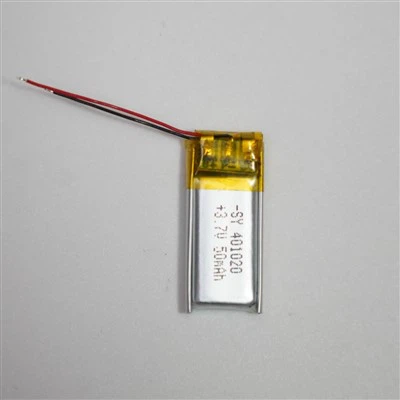
First off, let’s get one thing straight: the 80 Series isn’t your average car battery. Those old lead-acid jobbers you yank out of a sedan? They’re fine for quick starts, but this one’s a different breed—mostly deep-cycle lithium-ion (we do make a few sealed lead-acid variants too, but 90% of what ships out our door is lithium) built to handle slow, steady draws over hours, not just cranking an engine for 10 seconds. Charge it wrong, and you’ll kill the capacity faster than a phone left on 5G in the sun. Do it right, and you’ll get 1,500+ full cycles—hell, some of our customers have had theirs for 4 years and they still hold 90% of their original charge. That’s the math that matters.
Let’s start with the big no-nos first, because people skip these and regret it. Number one: don’t use a regular car battery charger. I’ve watched a guy plug his 80 Series into his pickups old trickle charger, and 2 hours later it was swollen like a water balloon left in a truck bed in July. Why? Car chargers are designed for short, high-current bursts. The 80 Series needs a smart charger that talks to the battery, adjusts voltage and current on the fly, stops when it’s full, and doesn’t overdo it. If you’re using a lead-acid charger for our lithium 80 Series, you’re basically forcing it to charge at a voltage that’s too high, and that cooks the internal cells. It’s like trying to water a cactus with a fire hose—you’re just gonna make a mess.
Second big no-no: don’t drain it all the way. I know, I know—old habit from lead-acid batteries, where you could let it go dead and it’d be fine. Lithium? Not so much. The 80 Series has a built-in BMS (Battery Management System) that’s designed to shut it off when it hits 20% charge to protect the cells. If you push it past that—let it drop to 5% or lower repeatedly—you’re wearing down the electrodes so fast that 100% capacity might be gone in 18 months. I had a customer last year who used his 80 Series for a remote camera setup, forgot to check it for 3 months, and it died completely. By the time he brought it to me, the internal resistance was through the roof—we couldn’t bring it back. Don’t do that.
Now, let’s get to the actual charging steps, because that’s what you’re here for. I’ll split this into two scenarios: when you’re at home (or a shop with a dedicated power source) and when you’re out on the road/off-grid, because that’s where most people run into issues.
First, at home/on-grid charging. This is the easiest, because you’ve got consistent power and access to smart gear. Step one: pick the right charger. For our standard 12V 80 Series (most popular model), you need a lithium-specific smart charger that outputs between 14.2V and 14.6V max. Anything over 14.8V is a red flag—your BMS will trigger overvoltage protection, which is good, but it’s still a waste of power and could shorten the lifespan. For the 24V variants, double that: 28.4V to 29.2V. And skip the super fancy “industrial grade” chargers unless you’ve got a commercial setup—our 80 Series can handle up to 50A charging current, so a 20A to 30A charger is more than enough. Charging at higher current won’t damage it, but it also won’t speed things up that much—you’ll get a full charge in 3-4 hours with a 30A unit, same as a 50A, just a tiny bit faster. Nothing to get worked up over.
Step two: prep the connection. Make sure the terminals are clean—no corrosion, no dirt. If you see white gunk on the posts, wipe it down with a little baking soda and water, dry it completely, then tighten the nuts so they’re snug, not cranked so hard you strip the threads. Loose connections cause voltage drop, which makes the charger work harder than it needs to, and that leads to heat. And heat is the enemy of lithium batteries—don’t charge it in a spot that’s over 104°F (40°C) or under 32°F (0°C). Extreme temps, hot or cold, kill capacity. If it’s freezing outside, let the battery sit in a room temp spot for an hour before charging, same if it’s baking in the sun all day—give it a chance to acclimate.
Step three: plug it in and walk away. Smart chargers do all the work now. They’ll ramp up the current when the battery’s low, taper off as it hits 80%, then switch to a float charge when it’s 100%. Wait, hold up—what’s a float charge? That’s when the charger keeps a tiny, constant current going to top off any small self-discharge (which lithium batteries have, around 2-3% a month, way less than lead-acid). For our 80 Series, you can leave it on float charge for as long as you want—no overcharging, no damage. I’ve had batteries on my test bench on float for 2 years, still holding perfect charge. That’s a relief, right? No need to baby it.
Now, the fun part—charging on the go, when you’re not near a wall outlet. This is where people usually mess up because they’re relying on whatever they have handy. Let’s break this down by power source: alternators, solar panels, and portable generators.
First, alternator charging in a truck or RV. The 80 Series works great with a 12V alternator, but you need to make sure your alternator’s output is set to charge lithium. Most newer trucks (post 2018) have a system that switches between lead-acid and lithium automatically, but older models? You might need an external charger regulator. If you skip that regulator, your alternator will put out 14.7V or higher, which we already talked about—too much voltage, bad for the battery. Pro tip: if you’re towing a trailer with an 80 Series, don’t charge it through the trailer harness. The wire gauge is usually too thin, and you’ll get voltage drop, so charge it through a direct line from the alternator to the battery terminals. I’ve seen so many people burn out alternators because of that.
Next, solar panels. This is super popular for off-grid cabins, tiny homes, that kind of thing. The key here is a MPPT charge controller. Skip the PWM ones—they’re cheaper, but they waste a ton of solar power, and they don’t adjust properly for the 80 Series’ voltage needs. MPPT controllers track the maximum power from your panels, convert it to the exact voltage the battery needs, so you get a full charge faster. For our 80 Series, size the controller to your panel array—if you’ve got two 100W panels, a 20A MPPT is enough; four 200W panels? Go with a 40A. And same as always, make sure your panel isn’t covered in dust or snow—clean panels give 20-30% more charge, easy. I had a customer last winter who thought his solar setup was broken, until I told him to scrape the snow off the panels—he got his 80 Series fully charged in 2 days instead of 5. Oops.
Portable generators: only use a inverter generator, not a standard one. Standard generators put out dirty power—spikes in voltage that can fry your BMS. Inverter generators give clean, consistent power, and they’re way more efficient anyway. If you’re stuck with a standard generator (emergency only, I hope), plug the battery into a smart charger first, then plug the charger into the generator. Don’t hook the battery directly to the generator—same dirty power issue.
Wait, what about when you’re storing the 80 Series for a long time? A lot of people ask that, especially for winter. The golden rule here is: charge it to 50% before storing, and keep it in a cool, dry spot (not a garage that drops to 0°F, not a attic that hits 120°F). Check it every 3 months, top it back up to 50% if it’s dropped below 30%. I’ve had customers leave their 80 Series in self storage for 6 months and come back to a battery that still had 40% charge—way better than a lead-acid that would be dead. Don’t store it fully charged or fully discharged, that’s the sweet spot for long-term life.
Let’s throw in a few common mistakes I see all the time, just to make sure you don’t do them. First: jump starting an 80 Series. I know, if your truck won’t start, you wanna hook it up to another battery. But don’t do that for the 80 Series’ main battery. Jump starting from another source can cause a huge voltage spike that blows the BMS. If you really need it, use a dedicated jump starter designed for lithium batteries, not a regular lead-acid jump box. Second: modifying the battery. I’ve had guys wire extra batteries together without checking the voltage matching—if two 80 Series are at different charge levels, wiring them in parallel can cause a current surge that kills both. Don’t do that unless you know what you’re doing, or ask us first. Third: using a cheap charger from Amazon. Those $20 “universal lithium chargers” almost never have proper voltage control, and they’re the number one reason we get returned batteries. Spend $10-$20 more on a reputable brand—we sell our own line of chargers that work perfect with our 80 Series, but any brand that says “lithium smart charger” with adjustable voltage is fine.
Look, I get it—this stuff can feel overwhelming when you’re a new owner. But the 80 Series is built to be tough, as long as you don’t ignore the basic rules. The biggest mistake people make is overcomplicating it. You don’t need a PhD in battery tech, just avoid the obvious no-nos, use the right gear, and don’t forget to check on it every now and then. At the end of the day, this battery is made to work hard for you, whether you’re out camping, running a shop, or powering a remote job site—treat it right, and it’ll last for years.
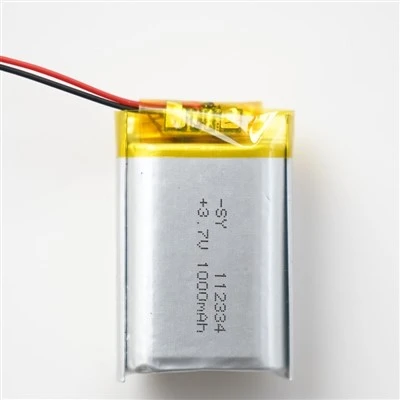
If you’ve got more questions, whether it’s about what charger to get for your specific setup, troubleshooting a charge issue, or you’re ready to stock 80 Series Batteries for your business, hit us up. We don’t do weird automated sales calls or spammy emails—just real answers to real battery questions, and fair pricing for bulk orders. Don’t be the guy who fries a battery and has to buy a new one in 6 months—get it right the first time.
60 Series Battery References:
- Lithium-Ion Battery Charging Guidelines, International Electrotechnical Commission (IEC 62660-1)
- Deep-Cycle Lithium Battery Lifecycle Analysis, Department of Energy Office of Energy Efficiency & Renewable Energy
- Automotive Alternator Charging for Lithium Batteries, Society of Automotive Engineers (SAE J1667)
- Off-Grid Solar System Best Practices, National Renewable Energy Laboratory (NREL)
Hubei Shuoyue Electronics Technology Co., Ltd.
As one of the most professional 80 series battery manufacturers and suppliers in China, we also support custom service. Please feel free to wholesale bulk cheap 80 series battery from our factory. For price consultation, contact us.
Address: Hubei Shuoyue Industrial Park Management Co., Ltd., No. 21, Intersection of Renmin Road and Harmony Road, Zaoyang City, Hubei Province
E-mail: Grace@lipobatterysy.com
WebSite: https://www.hbsy-battery.com/
