If you’ve ever walked through a surgical suite, watched a nurse adjust a powered infusion pump, or held a portable ultrasound probe, you’ve interacted with a medical device that relies on a tiny but critical component: a brushless motor. These motors are the quiet workhorses of modern healthcare, delivering the precise torque, speed control, and reliability that life-saving and daily patient care tools demand. As a supplier of medical brushless motors, I get asked one question more than any other: “Can these motors be customized?” The short answer is yes—but the longer, more honest answer is that customization in medical applications isn’t a one-size-fits-all process. It’s a collaboration rooted in strict regulatory standards, clinical needs, and decades of engineering experience, and it’s what sets apart a component that works and one that transforms care. Medical Brushless Motor

Let me start with why customization isn’t just a nice-to-have for medical motors—it’s often a necessity. Off-the-shelf brushless motors are built for general industrial use: they’re affordable, available quickly, and designed to work in a range of stable conditions. But medical environments are anything but standard. Take a handheld surgical drill, for example. A motor for that tool can’t vibrate so much that it makes the surgeon’s hand shake, which would compromise precision during delicate procedures like neurosurgery. It also has to be lightweight enough to hold for hours, sterilizable with high heat or chemical wipes (or both), and quiet enough that the surgical team can hear vital equipment alarms over its hum. An off-the-shelf motor would probably fail on one or more of these counts. A motor for an implantable pump? It has to fit inside a human body, so its size can’t be bulky, it has to run on minimal battery power for years, and it can’t leach any materials that would cause a harmful reaction. Off-the-shelf motors aren’t engineered for biocompatibility. Even simpler devices, like blood pressure pumps or insulin infusion systems, need to move exact volumes of fluid every time, with zero variation. Generic motors can drift in speed, leading to incorrect medication dosages or inaccurate readings. That’s why customization isn’t a luxury—it’s a requirement for devices that touch patients’ lives directly.
Over the past 12 years, I’ve worked with clinicians, device designers, and regulatory teams to customize hundreds of medical brushless motor designs, and I’ve learned that successful customization starts long before the first part is drawn up. The first step is always sitting down with the customer to parse the non-negotiables. For a team developing a new cardiac ablation catheter, for instance, the core requirements might be: 2mm outer diameter (to fit through a blood vessel), 10,000 RPM maximum speed, 100 mN·cm of torque, and biocompatibility with body tissue for extended contact. But there are hidden constraints, too: the motor has to work with the catheter’s existing sensor suite, run on a 5V power source from the device’s console, and be able to withstand the small amount of bodily fluid that might seep into the catheter’s handle. Those details are what turn a generic brushless motor into a purpose-built component.
Let me walk through a recent project to make this concrete. A customer came to me a year ago with a request for a motor to power a portable nebulizer for pediatric asthma patients. Existing nebulizer motors were too loud (scaring kids) and too heavy (making the device hard to carry to school or a friend’s house). The core specs they shared were: 30mm diameter, 10,000 RPM, 5W power, and the ability to run for 8 hours on a single AA battery. But after talking to their clinical team, we uncovered critical secondary needs: the motor had to operate at 25 decibels or less (about the volume of a quiet library, compared to the 45 decibels of a standard nebulizer), and it had to withstand 1,000 cycles of being dropped from 3 feet onto a hard linoleum floor—something generic motors never test for.
Customizing this motor meant making three key adjustments that off-the-shelf parts can’t handle. First, we redesigned the motor’s stator core. The standard 30mm stator uses 0.5mm thick laminations; we swapped those for 0.2mm laminations made from grain-oriented electrical steel, which reduced core noise by cutting magnetic resonance, the main source of motor hum. Second, we replaced the generic ball bearings with hybrid ceramic bearings, which are smoother, produce less friction, and have a longer lifespan—critical for the 8-hour battery life the customer needed. And third, we encased the motor in a biocompatible, food-grade polycarbonate housing instead of the standard aluminum, which was lighter and cheaper to mold into the nebulizer’s shape. The final product didn’t just meet the customer’s specs; it exceeded them: it clocked in at 22 decibels, ran for 9 hours on a single AA, and survived 1,500 drop tests. That’s the value of customization—it’s not just changing a part, it’s solving a problem that generic components can’t touch.
But here’s the catch: customization in medical motors isn’t as simple as tweaking a design in a CAD file. There are non-negotiable regulatory hoops to jump through, and that’s where many component suppliers fall short. Medical devices are governed by strict standards like ISO 13485, the global quality management system for medical devices, and FDA 21 CFR Part 820 in the U.S. Any custom motor has to be designed, tested, and documented to meet these standards, or it can’t be used in a cleared or approved medical device.
For example, when we customize a motor for an implantable device, we have to complete a full biocompatibility evaluation per ISO 10993, which tests for cytotoxicity, sensitization, and irritation from all materials that touch bodily fluid or tissue. Generic motors don’t undergo this testing—they’re built for industrial settings, so their internal wiring, lubricants, and housing might have chemicals that would harm a patient. We also have to validate every performance metric in a way that’s traceable to the final device. If a surgeon’s drill motor needs to deliver exactly 5 N·cm of torque at 5,000 RPM, we can’t just run a test in our lab; we have to document every step of the testing process, from the calibration of our torque sensors to the ambient temperature of the test chamber, so that a regulator can audit it later.
I’ve seen too many device designers work with suppliers who promise “customization” but deliver a motor that can’t be used in a clinical setting because it lacks the required documentation. A few years ago, a startup developing a wearable insulin pump came to us after working with another component supplier that modified a standard brushless motor for their pump. The motor looked right, but it didn’t have the ISO 10993 biocompatibility data, and its speed tolerance was off by 7%—meaning it could deliver 7% more insulin than prescribed, which is a dangerous error for diabetic patients. The startup had to scrap six months of work when their regulator rejected the design, because the supplier couldn’t provide the required validation. That’s why for us, customization doesn’t start with design—it starts with understanding the regulatory journey the customer’s device has to take. We build every custom motor to be “regulator-ready” from day one, so our customers don’t have to backtrack later.
Another common misconception about custom medical brushless motors is that they’re only for large, high-cost devices. That’s not true. We’ve customized motors for small, high-volume devices too, like single-use surgical staplers and at-home glucose monitors. A few months ago, a customer needed a tiny motor for a disposable insulin pen auto-injector. The motor had to be 8mm in diameter, generate 2 N·cm of torque, and be designed to be used once and disposed of—so it didn’t need a 10-year lifespan, just consistent performance over 1,000 actuations. An off-the-shelf 8mm motor was too low-torque, and standard disposable motors had inconsistent actuation force, leading to failed injections. We worked with their design team to use a molded plastic rotor instead of a metal one (cutting cost and simplifying manufacturing) and adjusted the winding pattern to deliver the exact torque needed for the pen’s plunger. The final motor cost 30% less than a modified industrial motor, passed all ISO biocompatibility tests, and had zero failure rates in our actuation testing. That’s customization for high-volume, low-cost tools—and it’s just as important as customizing motors for surgical robots.
Of course, there are limits to what we can customize, and that’s a good thing. We never compromise on safety, regulatory compliance, or material integrity to meet a customer’s deadline or budget. For example, a few years ago, a customer asked us to modify a motor to run on a lithium-ion battery that had a higher voltage rating than our standard designs. We could have rewound the stator to adjust for the voltage, but we quickly realized that the motor’s insulation wasn’t rated for that higher voltage—so running it would create a fire hazard. We told the customer upfront that the modification would be unsafe, and instead worked with them to adjust their device’s power circuitry to match our standard motor’s voltage, which was still within their requirements. That’s part of being a trusted partner, not just a supplier: we balance the customer’s clinical needs with the realities of safety and compliance.
So, if you’re a medical device designer or engineer asking, “Can I get a custom brushless motor for my next project?” the answer is a resounding yes—but it’s important to approach the process the right way. Bring your clinical needs, your regulatory timeline, and your performance goals to the table, not just a part number and a wish list. Ask your potential motor supplier about their experience with medical regulatory standards, their process for biocompatibility testing, and their track record of delivering custom motors that work for clinical use, not just on a CAD screen.
Over the years, I’ve seen how a custom motor can turn a good device into a life-changing one. I think about the pediatric nebulizer team I worked with, who told us that after switching to our custom low-noise motor, kids would ask to use their nebulizer instead of hiding from it. I think about the insulin pen team, who said their injection failure rate dropped from 1.2% to zero, cutting patient frustration and waste. Those moments are why I do this work: medical motors aren’t just components—they’re part of the care that patients receive every day.
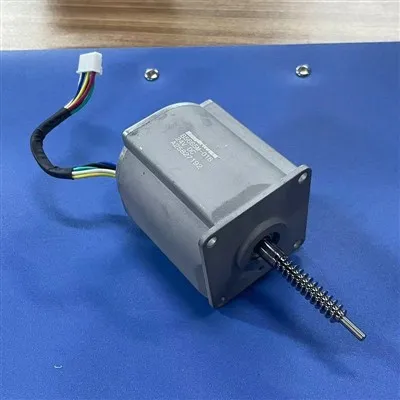
If you’re developing a new medical device and need a motor that works for your specific needs, not just a generic off-the-shelf part, reach out to our team to discuss your project. We bring decades of experience in custom medical brushless motor design, strict adherence to global regulatory standards, and a focus on solving the real clinical challenges that matter most to your team and your patients.
Automotive Brushless Motor References
ISO 13485:2016, Medical devices — Quality management systems — Requirements for regulatory purposes
ISO 10993, Biological evaluation of medical devices
U.S. Food and Drug Administration. (2023). 21 CFR Part 820: Quality System Regulation
Brushless Motor Technology for Medical Applications: A Review of Design Considerations and Regulatory Requirements. Journal of Medical Engineering & Technology, Vol. 45, No. 7, 2021, pp. 389-402.
Shenzhen HengDrive Technologies Co., Ltd.
Shenzhen HengDrive Technologies Co., Ltd. is one of the most professional medical brushless motor manufacturers and suppliers in China, specialized in providing high quality customized service. We warmly welcome you to buy the newest medical brushless motor in stock here from our factory.
Address: Building A & F, FuNing Hi-Tech Park, XinTian Road, FuHai Street, BaoAn District, ShenZhen, GuangDong Province, China.
E-mail: Marketing001@hengdrive.com
WebSite: https://www.hengdrivemotor.com/
